



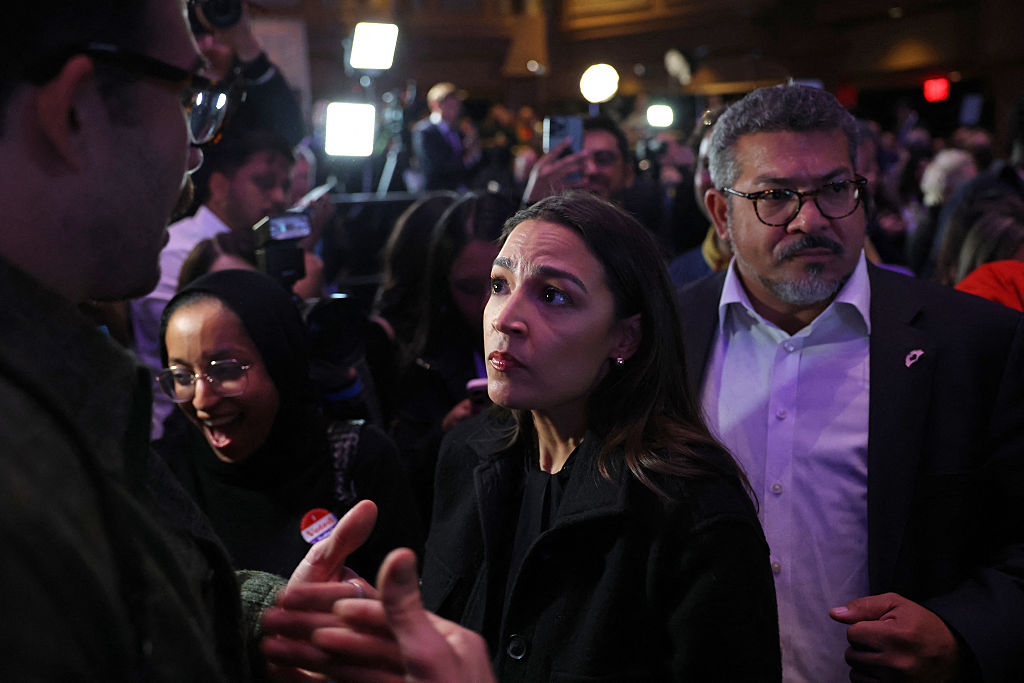
The political landscape around climate activism has shifted dramatically in recent years, but one of the nation’s most prominent climate voices is staying noticeably quiet about a key prediction she once championed.
According to Fox News, Rep. Alexandria Ocasio-Cortez burst onto the national stage in 2019 when she introduced the Green New Deal and warned that the United States had a decade to radically overhaul its energy systems.
In pitch after pitch, she described climate change as an urgent crisis demanding wartime-level mobilization.
Her argument leaned heavily on a United Nations climate report forecasting that global temperatures could reach 2.7 degrees Fahrenheit above pre-industrial levels by 2030.
She framed that benchmark as a turning point that would trigger extreme drought, destructive wildfires, severe flooding, and widespread food shortages.
The timeline became one of the most memorable — and controversial — parts of her messaging.
In defending the Green New Deal, she famously said, “millennials and people, you know, Gen Z and all these folks that will come after us are looking up, and we’re like: ‘The world is gonna end in 12 years if we don’t address climate change. And your biggest issue is, ‘How are we going to pay for it?’ Like, this is our World War II.”
Now, six years later, Ocasio-Cortez is one of the Democratic Party’s most recognizable figures and a rumored contender for the 2028 presidential race.
But as global temperatures have continued to climb, she has offered no public update on whether she still stands by her original ten-year warning.
According to the World Meteorological Organization, 2024 marked the warmest year ever recorded, with global temperatures rising by 2.79 degrees — a threshold that has not, at least so far, resulted in the catastrophic collapse once predicted by activists.
Ocasio-Cortez has maintained strong support for climate-focused policy, highlighting on her website what she describes as federal progress in reducing emissions and creating green jobs. She points to “$369 billion to fight climate change, 9 million green jobs and net zero carbon emissions by 2030” as evidence of momentum.
While she remains committed, others who once emphasized climate action as the top global priority have redirected their focus.
Among them is billionaire philanthropist Bill Gates, long known for urging aggressive climate action.
In an October essay, he argued that policymakers should devote more resources to improving life for people living in warming regions — not just slowing temperature increases.
“Climate change, disease, and poverty are all major problems,” Gates wrote. “We should deal with them in proportion to the suffering they cause.”
He cautioned that global temperature readings alone don’t reflect the day-to-day realities people face.
“Although climate change will have serious consequences — particularly for people in the poorest countries — it will not lead to humanity’s demise,” he wrote. Instead, he urged leaders to prioritize “improving lives” and preventing suffering.
Gates emphasized he still supports emissions reductions, noting, “Every tenth of a degree of heating that we prevent is hugely beneficial because a stable climate makes it easier to improve people’s lives.”
But he added that for many people in developing nations, climate change is “not the only or even the biggest threat to their lives and welfare.”
As for Ocasio-Cortez, her early climate warnings remain part of her political legacy. Whether she will publicly revisit or revise her ten-year climate deadline remains an open question as both policy debates and temperature charts continue to evolve.