



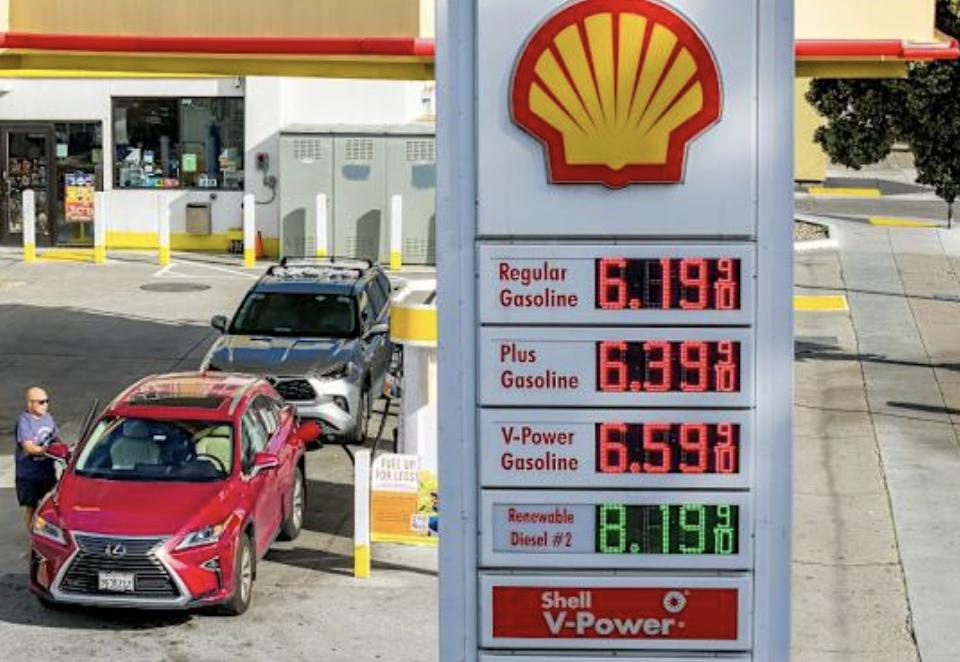
California’s fuel situation has taken a sharp turn, with diesel prices in San Francisco climbing past $8 a gallon — a level not seen before in any U.S. city. Statewide, the average is now hovering around $7.67 per gallon, according to AAA, also a record for California.
What makes the spike stand out is how quickly it happened. At the beginning of March, diesel was sitting at $3.90 a gallon. In just a few weeks, prices have nearly doubled. That kind of jump doesn’t just stay at the pump — it works its way through the entire economy.
Diesel isn’t just another fuel option. It powers the trucks that move food, construction materials, medical supplies, and retail goods. When that cost rises this fast, businesses don’t have much room to absorb it. They pass it along. Industry groups are already warning that consumers will start to notice higher prices by the summer, especially at grocery stores where transportation plays a constant role.
Interestingly, this surge is mostly a California problem right now. Across the rest of the country, diesel prices have started to stabilize after earlier volatility tied to global tensions and supply disruptions. In some regions, prices have even dipped slightly. California, though, is moving in the opposite direction, with a much steeper weekly increase than anywhere else.
A big part of that comes down to how the state gets its fuel. California doesn’t have direct pipeline connections bringing in supply from other regions. Instead, it relies heavily on shipments by sea, rail, or truck. That setup leaves it more exposed when there are disruptions or sudden shifts in supply.
On top of that, the state has a relatively small number of refineries, and its fuel standards are stricter than most of the country. Those rules are designed with environmental goals in mind, but they also make it harder to quickly adjust when something goes wrong. If a refinery goes offline or supply tightens, there aren’t many easy alternatives.
Businesses that depend heavily on fuel are already feeling the pressure. Trucking companies, in particular, are warning that higher diesel costs will show up in everything from building materials to everyday retail items. Grocery groups say shoppers could start seeing noticeable price increases by mid-summer.
There’s also a tax angle that’s hard to ignore. California’s sales taxes on diesel can reach as high as 13%, which means the state collects more revenue as prices rise. With billions of gallons consumed each year, even a modest increase per gallon adds up quickly.
For workers and small business owners, the impact is immediate. Fishing operations, for example, can burn thousands of gallons on a single trip. At current prices, the margin for error shrinks fast — a bad haul can mean real financial trouble.
All of this is happening against a backdrop of already high living costs. For many Californians, rising diesel prices won’t feel like an isolated issue. It will show up in everyday expenses, from food to transportation, adding more strain to budgets that are already stretched.