



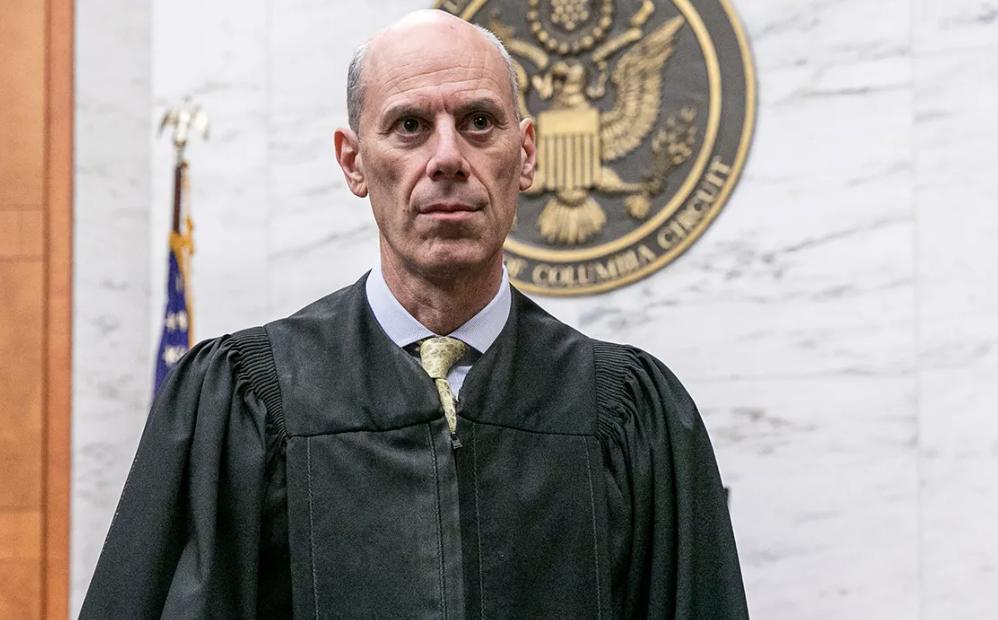
In a 2-1 decision, the D.C. Circuit Court of Appeals said the inquiry went beyond the district court’s authority and interfered with the executive branch. Judges Neomi Rao and Justin Walker, both appointed by former President Donald Trump, wrote for the majority, directing Boasberg to terminate the proceedings.
The dispute centers on the Trump administration’s use of the 1798 Alien Enemies Act to deport hundreds of Venezuelan migrants in March of last year. Officials argued that the migrants were in the country illegally and, in some cases, had ties to the gang Tren de Aragua. The migrants were sent to El Salvador, including to a high-security prison.
Boasberg had issued an emergency order on March 15 attempting to halt the deportation flights. His later contempt inquiry sought to determine whether administration officials knowingly ignored that order by allowing the flights to continue.
The appeals court majority said the judge’s order was not clear enough to justify such a far-reaching investigation. They also raised concerns about the scope of the inquiry, noting that it risked delving into sensitive executive branch discussions tied to national security and foreign policy.
“The district court proposes to probe high-level Executive Branch deliberations about matters of national security and diplomacy,” Rao and Walker wrote, calling the inquiry an abuse of discretion.
Judge J. Michelle Childs, appointed by President Joe Biden, disagreed sharply in an extensive dissent. She argued that the ability of courts to enforce their own orders is fundamental to the legal system. Without that authority, she warned, the rule of law could be undermined.
Today, the D.C. Circuit issued an opinion, once again, in the appeal on Boasberg’s attempt (extrajurisdictionally) to hold officials in contempt.
The Court found Boasberg’s “inquest” was both wrong on the law and a violation of our Separation of Powers.
Let’s break it down. pic.twitter.com/6WkdTPqckC
Should the court have stopped Boasberg's inquiry into deportation flights?— Senator Eric Schmitt (@SenEricSchmitt) April 14, 2026
The ruling marks a significant win for the Justice Department, which had repeatedly asked the appeals court to step in and stop the inquiry. Government lawyers had described the probe as misguided and outside the lower court’s jurisdiction.
Acting Attorney General Todd Blanche welcomed the decision, saying it should put an end to what he described as a prolonged and unnecessary investigation into government attorneys carrying out their duties.
Supporters of the inquiry, including attorneys representing the migrants, saw the decision differently. Lee Gelernt of the ACLU said the ruling weakens the expectation that the executive branch must follow court orders. He argued there is clear evidence that the administration violated the judge’s directive.
The case has also highlighted broader tensions between the judiciary and the Trump administration. Boasberg had defended the inquiry as necessary, while Trump himself had publicly criticized the judge and even called for his impeachment, prompting a rare public response from Chief Justice John Roberts at the time.
It remains unclear whether the plaintiffs will appeal the decision. They could ask the full appeals court to review the case or take it to the Supreme Court.












