



A mosquito-borne virus outbreak in China has passed 10,000 cases and is now spreading beyond its borders, with Taiwan confirming its first case Friday, according to the country’s CDC.
The patient, a Taiwanese woman, had traveled from Foshan — the epicenter of the outbreak in Guangdong Province — and returned on July 30. Officials say at least 12 other cities in Guangdong have reported infections, with around 3,000 cases recorded in the past week alone, according to the Daily Mail.
The U.S. CDC has issued a Level 2 travel advisory for Guangdong, urging Americans to take extra precautions. But some experts warn the virus could already be stateside.
“This outbreak in China is very concerning. It [the virus] could already be here in the US; and really it’s just one plane flight away,” said Dr. Louisa Messenger, a mosquito researcher in Nevada, to Daily Mail.
The disease, chikungunya, is carried by the same Aedes mosquitoes that spread dengue and Zika. While rarely fatal, it can cause fever, severe joint pain, and in extreme cases life-threatening heart or brain complications.
Roger Hewson, virus surveillance lead at the UK’s Wellcome Sanger Institute, told Al Jazeera the current outbreak in China is the largest ever recorded there.
The surge began globally in early 2025, hitting La Réunion, Mayotte, and Mauritius in the Indian Ocean before spreading to Madagascar, Somalia, Kenya, India, and into the Pacific. The European Centre for Disease Prevention and Control reports 240,000 cases and 90 deaths in 16 countries this year.
The U.S. has logged 46 travel-related cases so far in 2025 — no deaths — but with 1.6 million people traveling annually between the U.S. and China, experts warn it only takes one infected traveler for the virus to establish local transmission. The U.S. last saw limited spread in 2014–2015 in Florida and Texas.
To slow the outbreak, Chinese officials initially ordered 14-day quarantines for travelers from Foshan — reminiscent of COVID-era rules — but later dropped the requirement. Infected patients are being kept in mosquito-netted hospital wards until they test negative.
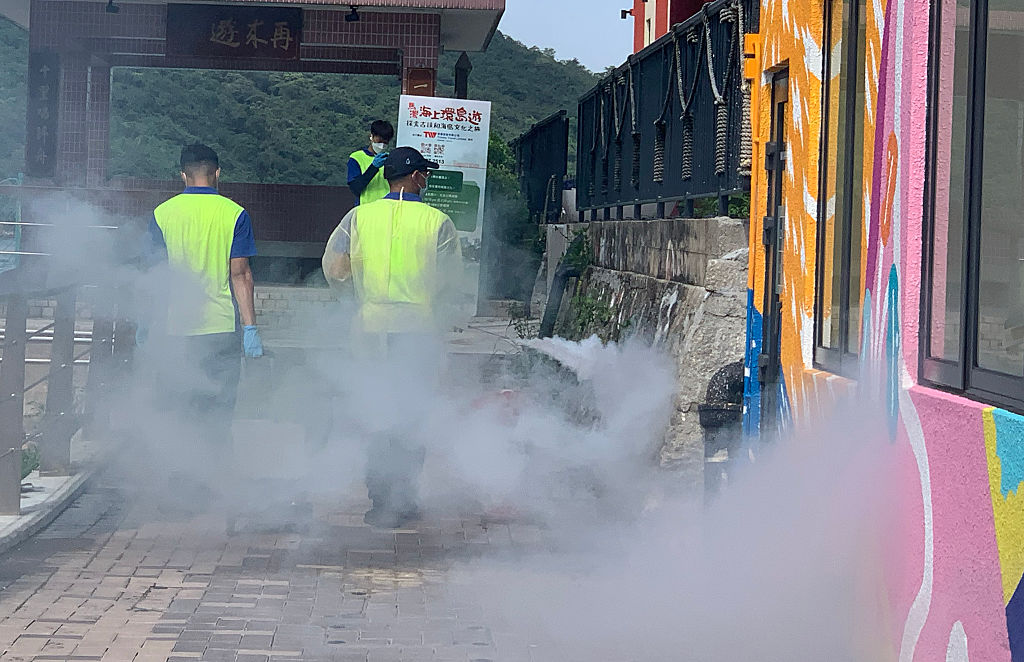
State media shows workers spraying insecticide and disinfectant in streets, construction sites, and residential areas, while drones search for breeding grounds. Residents have been told to eliminate standing water or face fines up to $1,400 and even electricity cutoffs.
The CDC warns there’s no antiviral treatment. Travelers should use insect repellent, wear long sleeves, and stay in air-conditioned or screened rooms. Fever, rash, or joint pain after travel to outbreak areas should prompt immediate medical testing.
Dr. Diana Rojas Alvarez of the World Health Organization cautioned: “We are seeing history repeating itself,” referencing the massive 2004–2005 epidemic that sickened nearly half a million worldwide.
With the virus now confirmed in Taiwan and continuing its rapid spread, health agencies say prevention efforts — both at home and abroad — will be critical to keeping chikungunya from becoming the next major global health crisis.












