



While President Donald Trump and his White House team focus on ways to force the reopening of the Strait of Hormuz to ease the global supply crunch for oil and an array of other key commodities, other administration officials are working on options for long-term solutions that would bypass that vulnerable chokepoint. It involves a vision that has long been planned; now, many believe the time to execute it has arrived.
The glaring need for alternative routes was further spotlighted by the events of April 7 and 8. Just a few hours after Trump and Iranian leaders agreed to a two-week ceasefire deal that included a reopening of the Strait of Hormuz, Iran reneged, citing ongoing hostilities between Israel and its Lebanon-based terrorist proxy, Hezbollah.
One alternative concept now in play is called the India/Middle East/Europe corridor (IMEC), with the Israel port of Haifa targeted as the key export hub directly into the Mediterranean Sea. Far from just a single pipeline to move oil out of the Persian Gulf region, the IMEC plan — led by the U.S. — would involve the build-out of a full multimodal network of pipelines, trains, and roads to eliminate the Hormuz bottleneck entirely.
The ultimate goal of the plan would be to connect India to the Mediterranean while bypassing potential transport bottlenecks, something IMEC would accomplish if carried to completion. In addition to Hormuz, IMEC would also remove two other major potential bottlenecks from potential disruption of global supplies of crude oil, LNG, and other major commodities. Those chokepoints include the Suez Canal at the northern extent of the Red Sea, and the Bab el-Mandeb Strait at the Red Sea’s southern entrance.
Many have hailed Saudi Arabia’s East-West Pipeline as “a stroke of genius” amid the current crisis, but its loading point at the west coast Port of Yanbu means tankers must exit the Red Sea via one of those chokepoints. While the Suez Canal has been largely insulated from terrorist threats in recent years, it has limited utility to facilitate crude oil shipments since it cannot accommodate VLCCs, the largest class of oil tankers. This reality forces the biggest tankers carrying Saudi crude to exit the Red Sea via Bab el-Mandeb to reach the global market.
That’s fine, so long as that Strait remains open. But that isn’t always the case. In the past six years alone, the Iran-funded Houthi Rebels based in Yemen have mounted military campaigns targeting Bab el-Mandeb shipping on three separate occasions with a high degree of success. The Houthis threatened to launch another campaign on April 2 should the Arab Gulf States decide to enter the U.S./Israel campaign. On his X account, ZeroHedge reported Tuesday that Iran’s regime threatened to have the Houthis mount another effort if talks with the U.S. fail.
All these factors and more highlight an urgent need to build a direct trade route to the Mediterranean for Middle East-produced commodities that are so vital to global supply. That is the vision of the IMEC plan.
NewMed Energy CEO Yossi Abu told the Financial Times: “You need oil pipelines, railway connectivity throughout the region, onshore, without giving others bottlenecks to choke us,” adding that alternatives to shipping via Hormuz were needed for people “to control their own destinies, with their friends.”
Israeli Prime Minister Benjamin Netanyahu favors the plan, telling NewsMax in an interview that, “Long-term solutions include rerouting energy pipelines westward, across Saudi Arabia to the Red Sea and Mediterranean, bypassing Iran’s geographic choke point.” To that end, Cat Group CEO Christopher Bush told FT that the company had already received inquiries about various potential pipeline routes.
It seems beyond argument that the ongoing Iran crisis has starkly illustrated the risks involved in allowing the terrorist regime to threaten global supply chains – and thus, the health of the global economy – for 47 long years without developing alternative routes. This is madness that cannot be allowed to persist.
The major holdup to moving forward with the IMEC plan is gaining Saudi Arabia’s approval of funneling the oil and other key commodities through Israel to Haifa. In addition to the longstanding religious conflicts between the two nations, there is the fact that Haifa has also been vulnerable to terrorist attacks by Hezbollah and other Iranian proxy groups.
So, IMEC is not a perfect solution, but any alternative will also face risks in this historically high-risk region of the world. A perfect alternative may not even be possible, but preserving the status quo is the highest risk option of all.
David Bossie is the president of Citizens United and served as a senior adviser to the Trump-Pence 2020 campaign. In 2016, Bossie served as deputy campaign manager for Donald J. Trump for President and deputy executive director for the Trump-Pence Transition Team.
The views and opinions expressed in this commentary are those of the author and do not reflect the official position of the Daily Caller News Foundation.
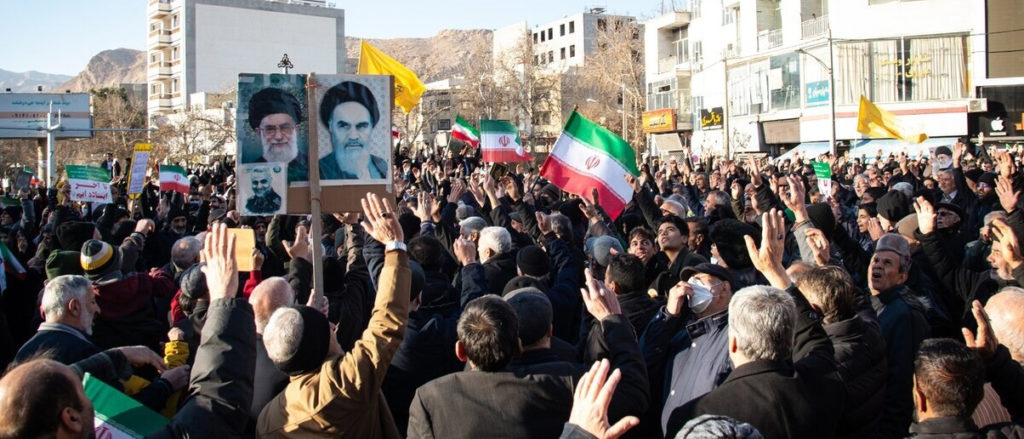
(Featured Image Media Credit:Wikimedia Commons/Public/Mehr)
All content created by the Daily Caller News Foundation, an independent and nonpartisan newswire service, is available without charge to any legitimate news publisher that can provide a large audience. All republished articles must include our logo, our reporter’s byline and their DCNF affiliation. For any questions about our guidelines or partnering with us, please contact [email protected].