
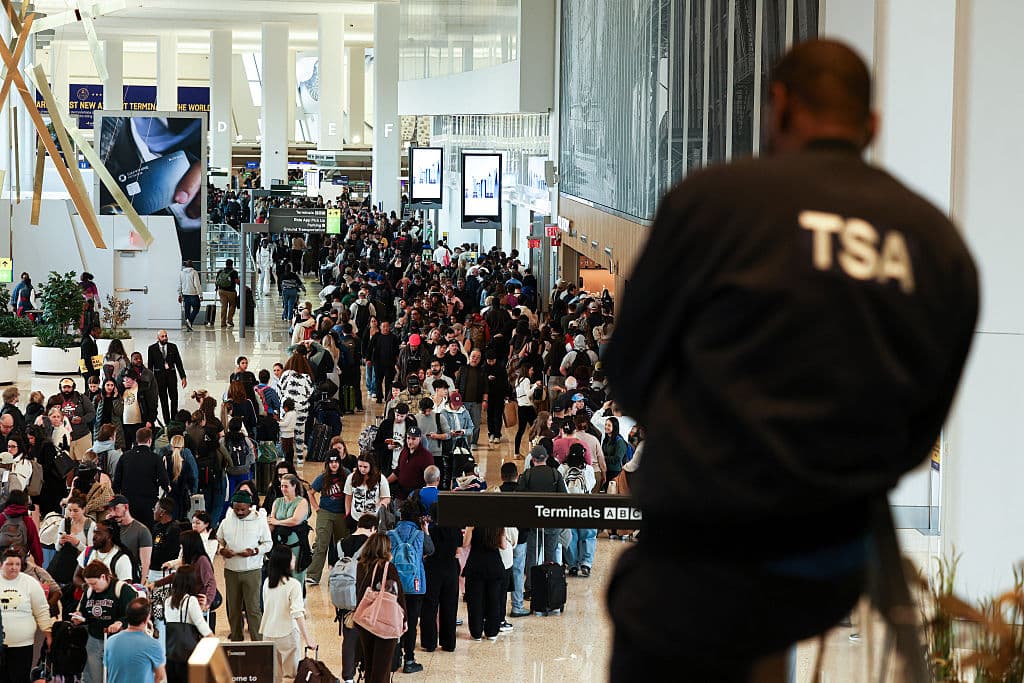
After weeks of uncertainty and mounting pressure, lawmakers moved to restore Funding to key national security agencies, ending what had become the longest lapse of its kind in U.S. history.
According to the New York Post, the House approved a measure Thursday to resume Funding for most parts of the Department of Homeland Security, clearing the way for President Donald Trump to sign it into law.
The vote came 75 days after Democrats blocked the initial spending effort, creating a Funding gap that disrupted operations across multiple agencies.
Under the measure, several major components of DHS will regain full financial support, including the United States Coast Guard, United States Secret Service, Federal Emergency Management Agency, and Transportation Security Administration.
The lapse had tangible effects. TSA workers went weeks without pay stubs, and staffing shortages began to ripple through airports nationwide as some employees called out, leading to long security lines.
Trump previously authorized temporary Funding through executive action to keep operations going.
Warnings about the situation intensified earlier this week when the Office of Management and Budget alerted Congress that emergency funds would soon run dry.
“My payroll through DHS is just over $1.6 billion every two weeks, so the money is going extremely fast, and once that happens, there is no emergency funds after that,” Mullin also told “Fox & Friends” last week.
“I’ve got one payroll left, and there is no more emergency funds, so the president can’t do another executive order because there’s no more money there.”
Momentum to finalize Funding picked up following the April 25 shooting at the White House Correspondents’ Dinner, where top government officials were in attendance.
Notably, the new measure does not include Funding for Immigration and Customs Enforcement or Customs and Border Protection. Those agencies are expected to be addressed separately in a future budget resolution.
The impasse stemmed in part from Senate Democrats blocking earlier legislation, citing concerns tied to fatal encounters involving federal immigration agents.
Lawmakers had pushed for new requirements, including visible identification for agents and the use of judicial warrants during arrests.
An earlier version of the Funding bill cleared the Senate in late March but stalled in the House, where Republicans argued it failed to adequately support border security.
“It was haphazardly drafted,” said Mike Johnson, who argued a revised version should not “orphan two of the primary agencies of DHS.”
That alternative never materialized. Instead, lawmakers advanced a broader budget blueprint that would allocate more than $70 billion for border-related agencies in a separate process.
Trump has pushed for that reconciliation package to pass by June 1, though some Republicans have raised concerns about the level of spending cuts included.
With the Funding measure now approved, Congress is preparing to leave Washington for a scheduled recess, with the House set to return May 12 and the Senate following on May 11.