For anyone who wants a verse ready to recall on demand, short mixed loops turn the words into lasting memory.
A Bible verse becomes yours when you move the same words through eyes, voice, and hand in short loops. Those loops make the phrase rise later without the page.
Have your Bible or a printed card of the verse, a notebook, and a pen. Sit at a quiet table.
Step 01
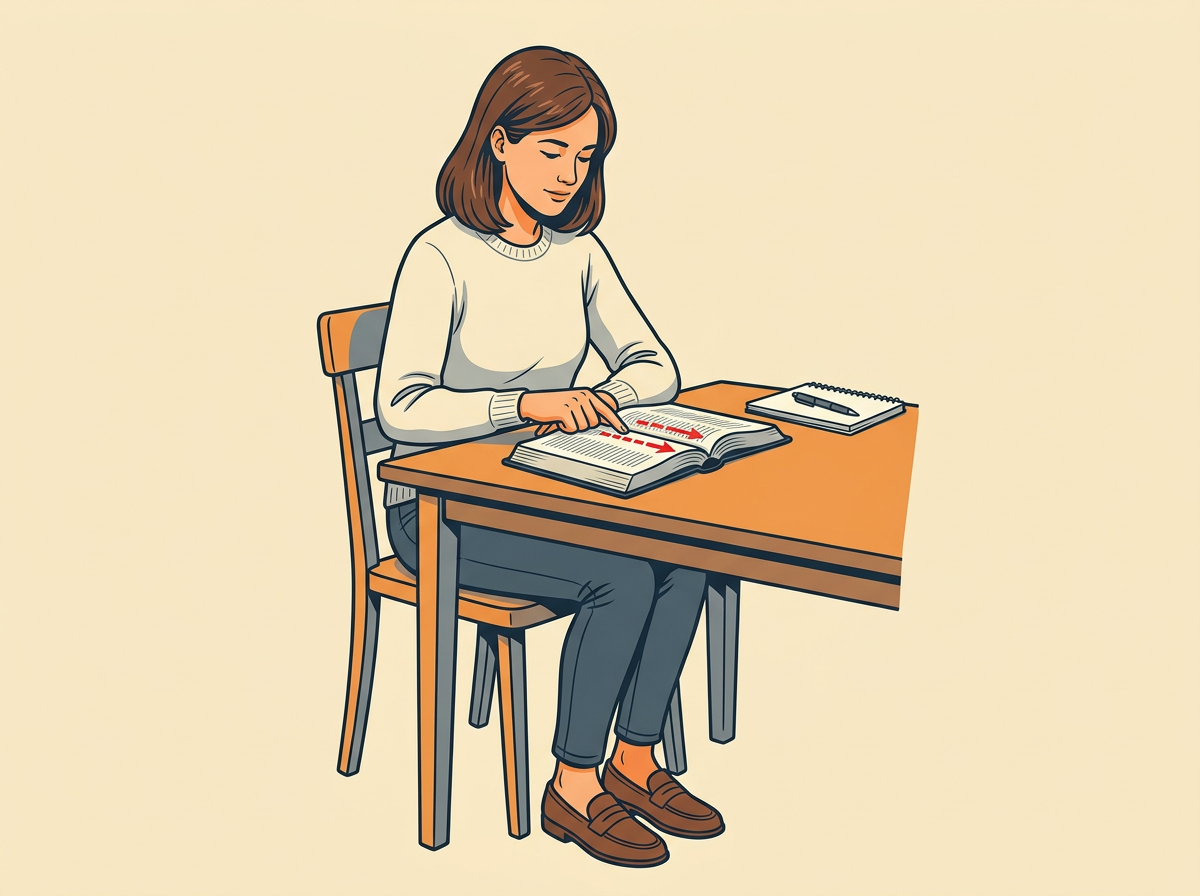
READ the verse aloud three times while your finger traces each word.
Match sound to the page exactly. If any word blurs, slow that spot and repeat it alone. Clear even pacing means your ear has the line.
Step 02
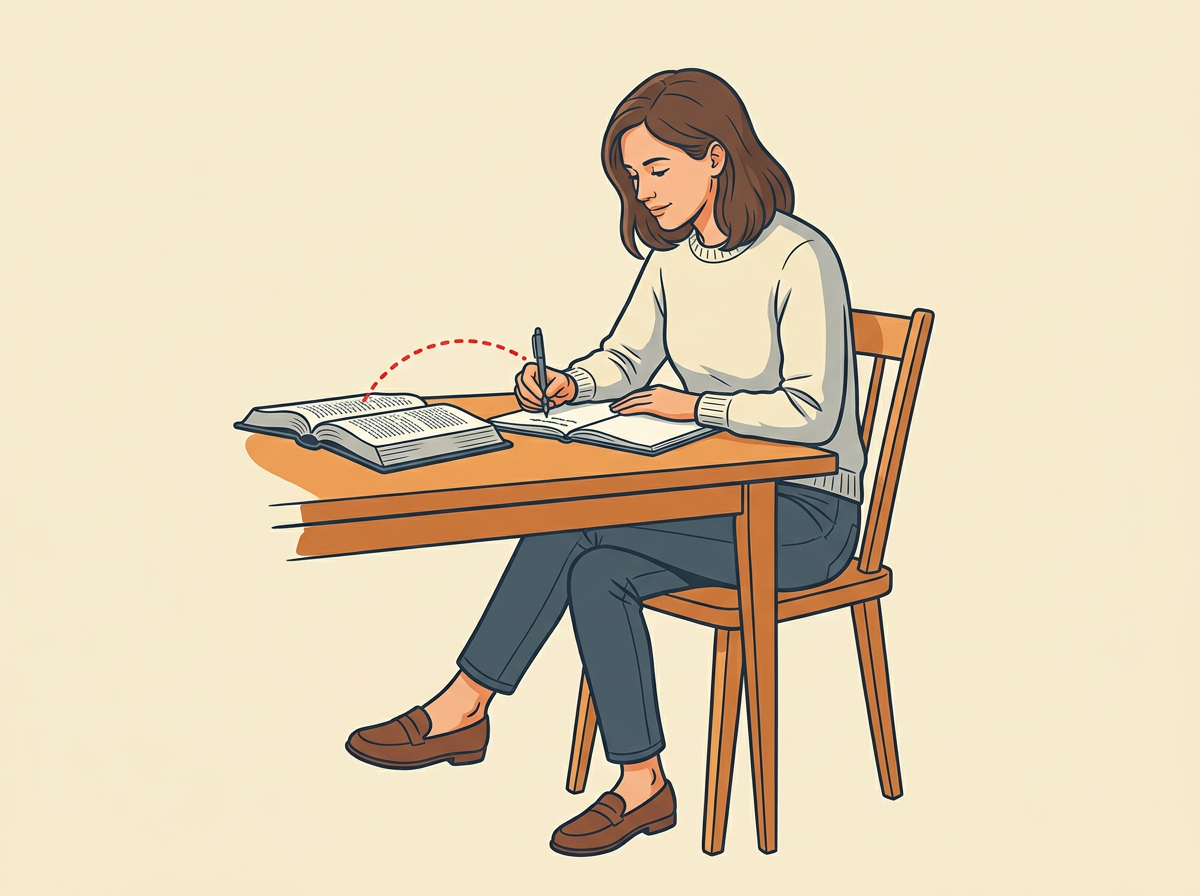
WRITE the full verse once in your notebook while saying every word.
Keep the Bible open next to the page. Check spelling and punctuation against the original. When the handwritten line matches the print stroke for stroke, the hand version is ready.
Step 03
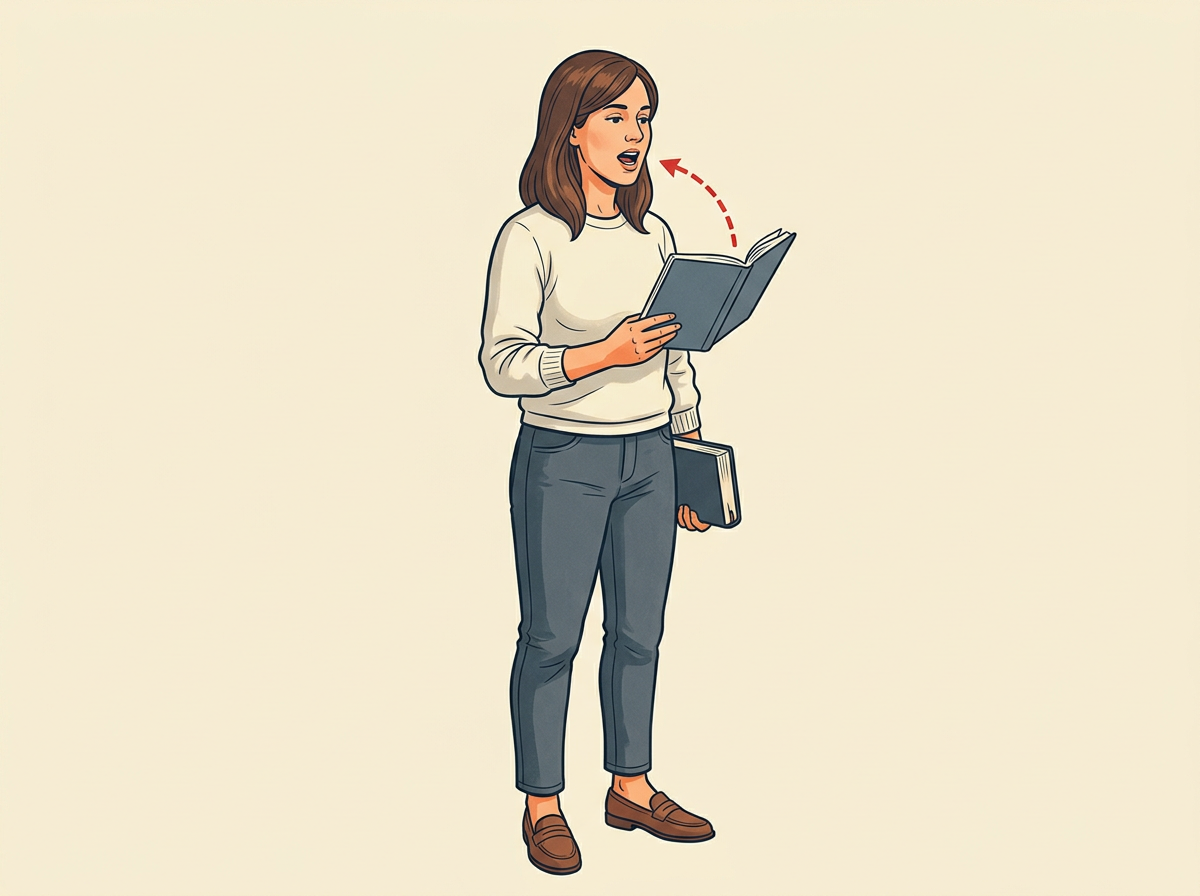
SPEAK the verse from your handwritten copy with the Bible closed.
Look only at your own writing. If you stall, glance at one short phrase then finish the rest aloud. Smooth flow without long gaps shows the copy has stuck.
The most common mistake
The most common mistake is trying to lock the entire verse on the first pass. Master one short phrase before you link the next.
Pro tip
Say the verse once more just before sleep and once the next morning so the rest between locks it deeper.
Say it every time
Read it, write it, speak it, split it, cover it, test it.
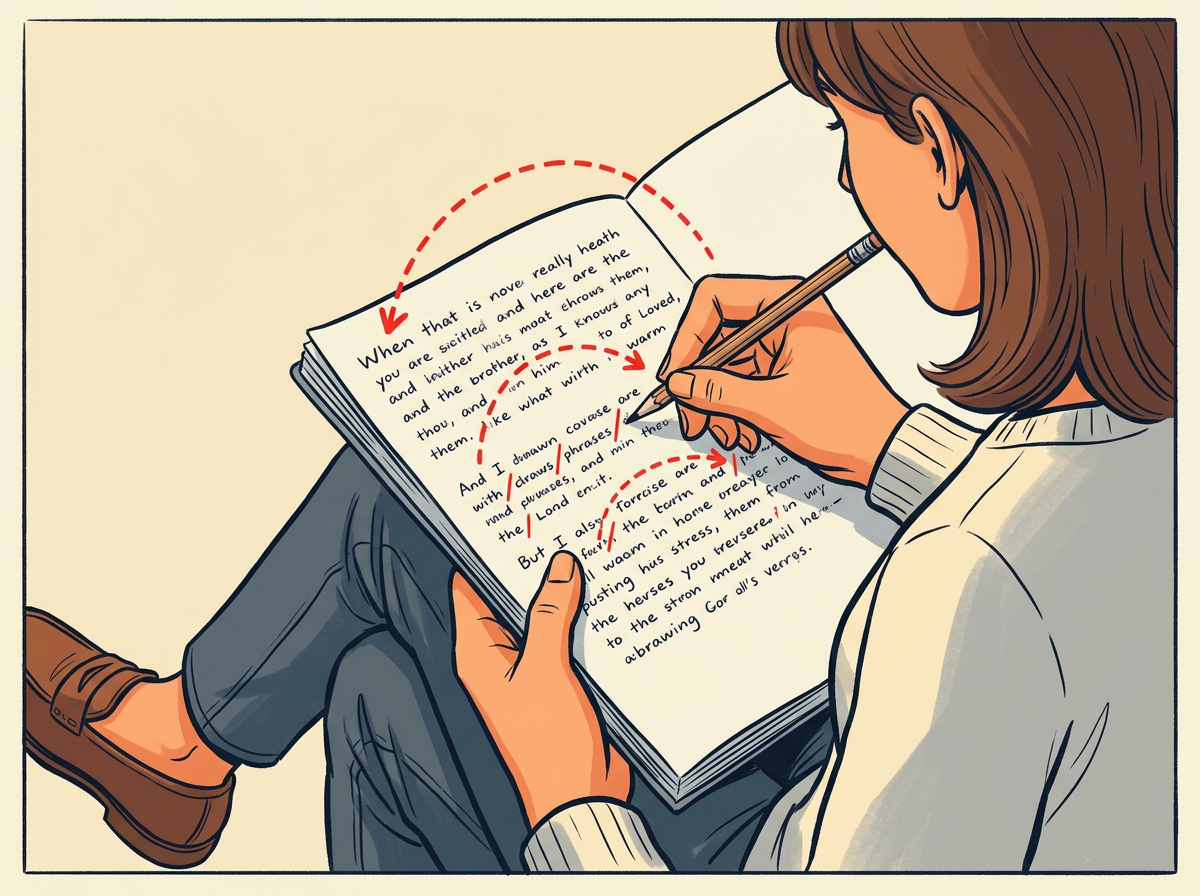
SPLIT the verse into short phrases of a few words each on your copy.
Mark light pencil breaks where the sense naturally pauses. Practice the first phrase alone until it flows, then add the next. Lengthen any chunk that feels choppy; shorten any that drops words.
Step 05
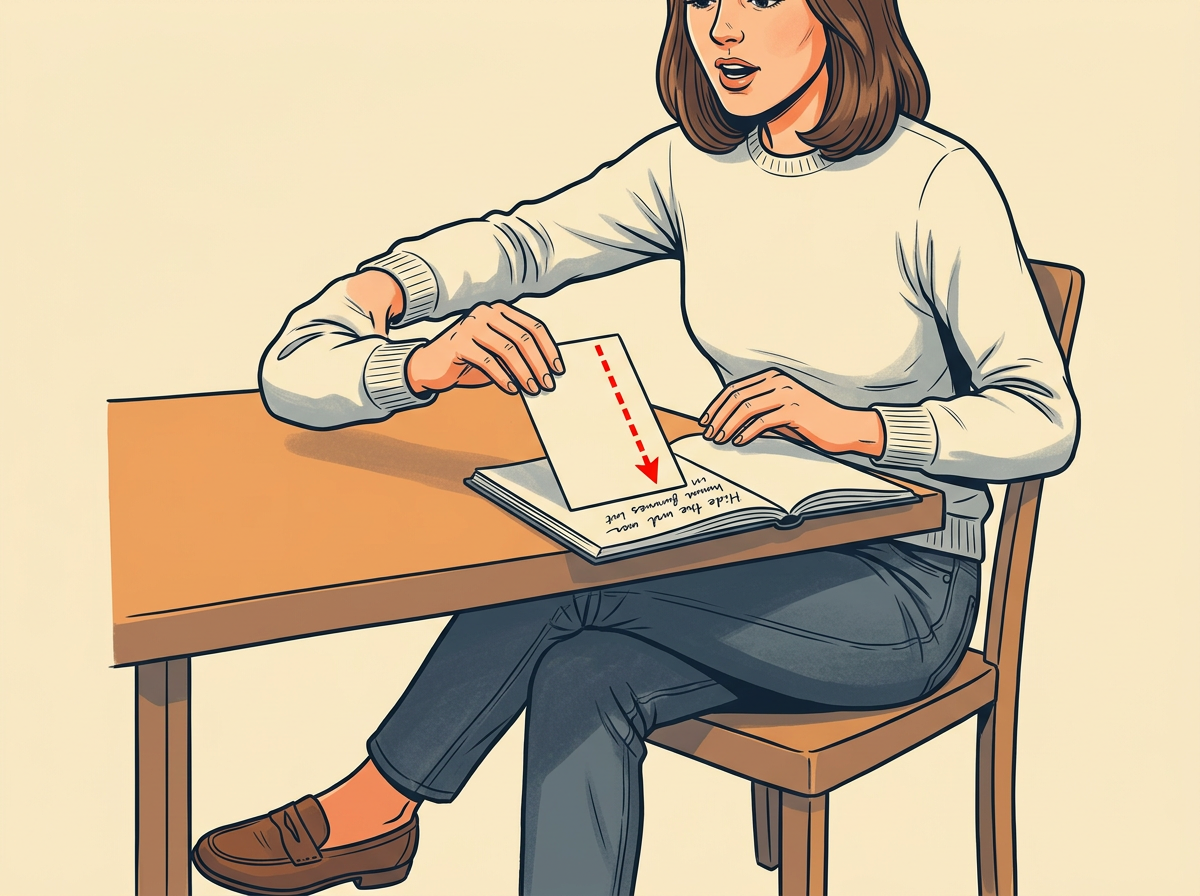
COVER each phrase in turn and recite it with the words hidden.
Slide a blank card or your hand over the line. Speak only after it is hidden. If the words come out wrong, uncover, reread once, then hide and retry that single phrase.
Step 06
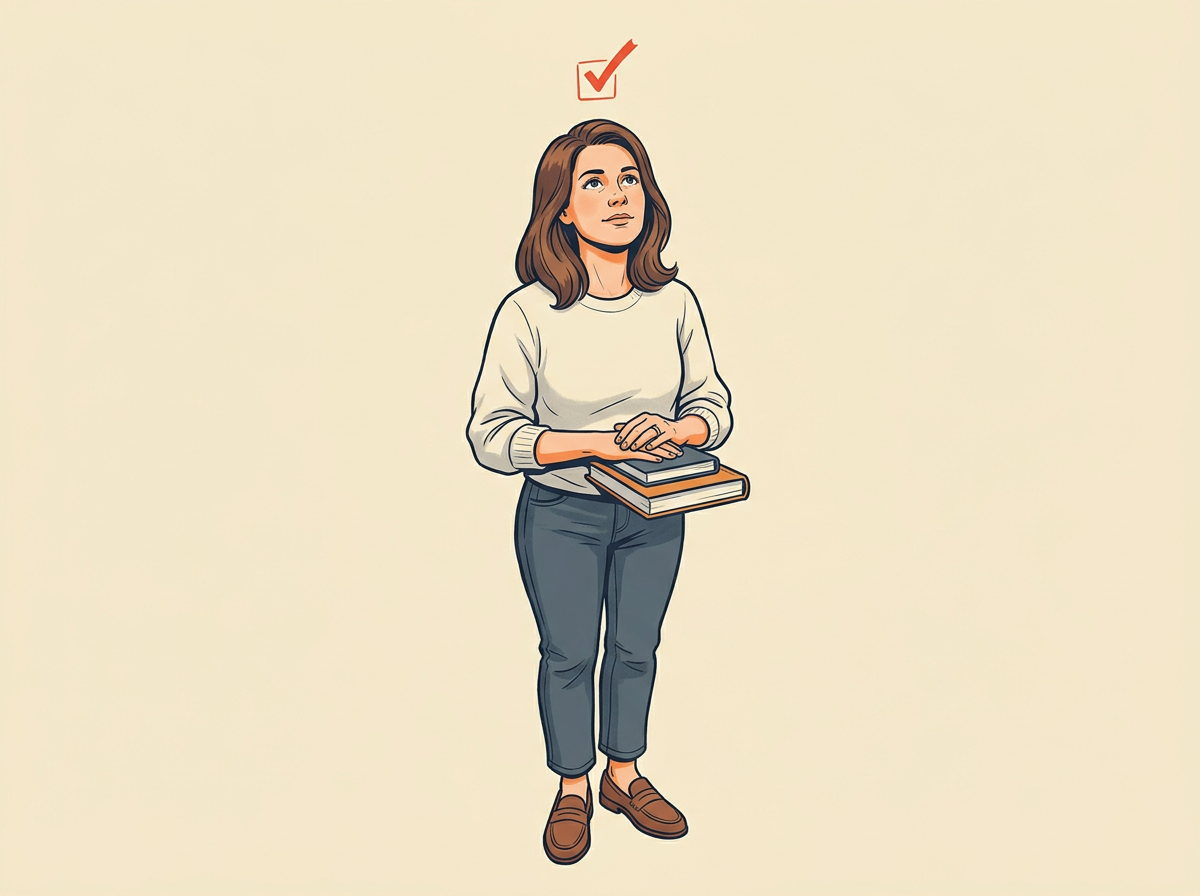
TEST the whole verse start to finish with Bible and notebook both closed.
Say it in one clean pass. Then write it once more from memory and compare side by side. Gaps mean return to the weak phrase; a full match means the verse holds.




 How To6 steps