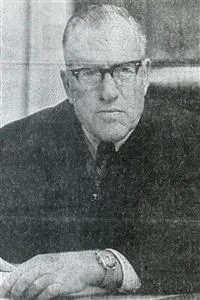
The case involved a plaintiff suing the Oklahoma Historical Society and one of its employees, alleging violations of 42 U.S.C. § 1981 and Title VII (42 U.S.C. § 2000e) along with a state-law claim for intentional infliction of emotional distress. The court granted the defendants' motion to dismiss all claims. It held that the § 1981 claim was barred by Eleventh Amendment immunity because the Historical Society is a state agency whose funds are controlled by the state, that the Title VII claim could not proceed because the right-to-sue notice had been issued by the EEOC rather than the Attorney General as required for governmental defendants, and that the remaining state tort claim had to be dismissed for lack of ancillary jurisdiction.
This case involved plaintiffs seeking treble damages under RICO against the FDIC as receiver for the failed Penn Square Bank. The court granted the FDIC's motion to strike the treble damages claim, holding that only actual damages would be recoverable if the plaintiffs prevailed. The core reasoning was that RICO treble damages, modeled on the Clayton Act, are penal in nature under a three-part test evaluating the statute's public purpose, who receives the recovery, and the disproportion to harm suffered; imposing them would unfairly punish innocent depositors and creditors rather than the wrongdoer.
In the consolidated securities litigation involving Longhorn Oil and Gas limited partnerships, the FDIC, as receiver for the failed Penn Square Bank, moved to dismiss the plaintiffs' claims under Federal Rule of Civil Procedure 12(b)(6), arguing that the federal common law estoppel rule from D’Oench, Duhme & Co. v. FDIC barred the claims. The court denied the motion, holding that the D’Oench, Duhme doctrine did not apply because the allegations did not involve secret agreements by the plaintiffs that would tend to deceive the FDIC or banking authorities. The court reasoned that the elements of D’Oench, Duhme estoppel were not met, particularly noting the independent nature of letter of credit contracts in the transactions at issue.
This multidistrict litigation consolidated securities cases originally filed in federal courts in Colorado, Kansas, Louisiana, and Michigan, all involving claims against Penn Square Bank, N.A., a failed national bank. The FDIC, as receiver, moved to dismiss for improper venue under Federal Rule 12(b)(3), citing 12 U.S.C. § 94's requirement that actions against national banks be brought only in the district where the bank is established. The court converted the motions to requests under 28 U.S.C. § 1406(a) and held that venue was improper in the transferor districts because the statute is mandatory and exclusive, even when the FDIC acts as receiver. It concluded that transfer to the Oklahoma district (where the bank was located) would serve the interests of justice by promoting judicial economy and uniform decisions, and it ordered most cases transferred to itself while severing and transferring part of one case. The ruling rested on the MDL transferee court's authority to handle venue transfers and the plain command of the National Bank Act venue provision.
This case involved Equico Lessors, Inc. seeking a deficiency judgment against the Wetsel defendants under an equipment lease agreement and related guaranties after repossessing and selling computer equipment used in the defendants' business. The court examined whether the lease qualified as a security interest under Oklahoma's UCC, specifically 12A O.S. § 1-201(37), based on the transaction's economic realities such as payment terms, interest rate, and ownership intent. It concluded the agreement was a lease intended as security, triggering the notice requirements of 12A O.S. § 9-504(3) for the private sale, which the plaintiff did not meet. However, because the defendants presented no evidence of loss from the notice failure under § 9-507(1), the plaintiff remained entitled to recover the deficiency, which the court calculated at $16,103.80 after accounting for payments made, present value of remaining obligations, late charges, and sale proceeds.
This case involved the FDIC, acting as receiver for the failed Penn Square Bank, seeking court approval under 12 U.S.C. § 192 to sell three tracts of real estate including a motor bank facility. Competing offers were presented, including a higher bid from Western Trust & Savings contingent on multiple regulatory approvals for a new bank charter, use of the facility, and deposit insurance, versus a lower but less conditional offer from M. Stanley Lee & Associates that was later amended to remove some contingencies. Other banks requested a continuance, which the court denied before authorizing the receiver to accept the Lee Group offer. The core reasoning was that the Western offer imposed excessive uncertainties and risks that the receiver should not have to speculate on, while the Lee offer provided greater certainty, immediate economic advantages including a favorable lease on the main bank building, and non-interruption of operations, making the receiver's actions neither arbitrary nor in bad faith.