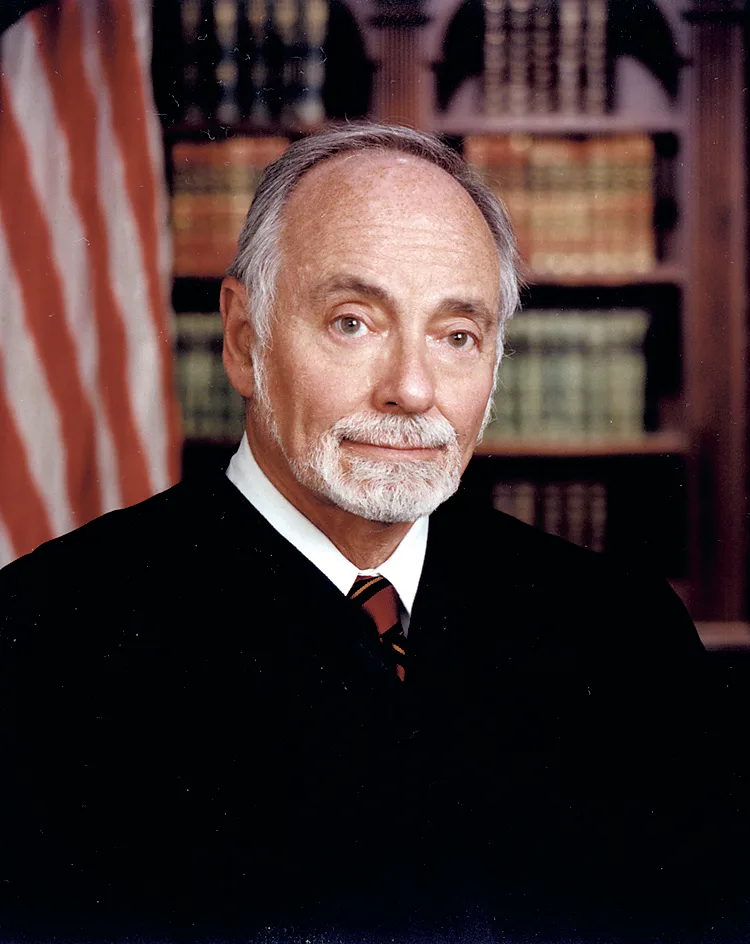
United States v. Salyer
District Court, E.D. California · 2011-09-01
In United States v. Salyer, defendant Salyer moved to suppress evidence obtained from warrantless searches and seizures conducted by a government confidential informant at the premises of SK Foods. The court had previously denied the motion for lack of standing and, upon reconsideration, denied it again. The defendant bears the burden of establishing a reasonable expectation of privacy in the places or items searched to have Fourth Amendment standing, which requires a threshold showing of disputed facts that could support suppression if an evidentiary hearing is requested. Here, Salyer made no showing that the informant searched his personal office, seized his personal items, or that the circumstances matched those granting standing in cases like Gonzalez, so the motion was denied without a hearing.
criminal law
South Yuba River Citizens League v. National Marine Fisheries Service
District Court, E.D. California · 2011-07-26 · cited 8×
The case concerned whether interim protective measures were needed for threatened fish species (Chinook salmon, steelhead, green sturgeon) while the National Marine Fisheries Service prepared a new Biological Opinion on the effects of dam operations on the Yuba River, after the court previously found the 2007 BiOp arbitrary and capricious under the Endangered Species Act. The court decided to grant in part and deny in part the plaintiffs' request for an injunction, ordering specific interim actions such as improving fish ladders, managing debris, and developing plans to prevent interbreeding with hatchery fish, while denying others. The reasoning focused on the need to minimize harm to the species during the remand period given the identified flaws in the original BiOp's analysis of population stability, stressors, and critical habitat, without vacating the existing BiOp.
environmentfederal powerbusiness & regulatory
Gorton v. Todd
District Court, E.D. California · 2011-06-29 · cited 36×
The case involved an indigent state prisoner who sued prison medical officers and U.C. Davis physicians under the Eighth Amendment, alleging that delays and inadequate treatment of his kidney disorders caused him pain and permanent harm. After the magistrate judge denied the plaintiff's request for appointment of a neutral medical expert witness and recommended summary judgment for the U.C. Davis defendants largely because of the absence of expert testimony, the district court reviewed that denial. The court concluded that the magistrate's ruling was clearly erroneous under Federal Rule of Evidence 706 because an impartial expert would assist the trier of fact in evaluating the complex medical issues, but it declined to appoint such an expert itself. Instead, the court held that the plaintiff's volunteer counsel could seek reimbursement of expert witness costs from the court's non-appropriated fund.
criminal lawcivil rightsprocedure
McCoy v. Department of Army
District Court, E.D. California · 2011-06-01 · cited 6×
Roslyn McCoy, a former clerical employee of the Army Corps of Engineers with dyslexia, sued the Department of the Army under the Rehabilitation Act of 1973, alleging that her termination during her probationary period constituted both retaliation and disparate treatment based on her disability. The defendant moved for summary judgment. The court granted the motion solely as to the claim for compensatory damages on the retaliation claim, reasoning that Ninth Circuit precedent equates remedies under the ADA and Rehabilitation Act and holds that compensatory damages are unavailable for retaliation claims. The motion was denied on all other grounds, permitting the disparate treatment claim and other aspects of the case to proceed to trial.
labor & employmentcivil rights
Kennedy v. WORLD ALLIANCE FINANCIAL CORP.
District Court, E.D. California · 2011-05-31 · cited 1×
The case involved plaintiff Gertrude Kennedy, a 71-year-old widow, who alleged that defendant World Alliance Financial Corp. fraudulently misrepresented the terms of a reverse mortgage on her home, including the loan amount, available draws, and interest rate, leading her to enter an agreement that differed from what was promised. Kennedy sought rescission and brought claims for fraud, unfair business practices, and breach of fiduciary duty. The court granted the defendant's 12(b)(6) motion to dismiss in part and denied it in part, dismissing some claims for failure to meet the heightened pleading requirements of Rule 9(b) for fraud or due to the absence of a fiduciary duty in standard lender-borrower transactions, while permitting amendment of others. The core reasoning centered on Federal Rules of Civil Procedure 8(a)(2) and 9(b) standards requiring non-conclusory factual allegations that plausibly support relief, alongside the impact of the defendant's compliance with HUD regulations for reverse mortgages under 24 C.F.R. Part 206.
propertybusiness & regulatoryproceduretorts & liability
Sliger v. Prospect Mortgage, LLC
District Court, E.D. California · 2011-05-27 · cited 36×
This case is a wage and hour class and collective action brought by former loan officers against Prospect Mortgage, LLC, alleging violations of federal and California laws including failure to pay overtime and minimum wage, waiting time penalties, and failure to provide meal and rest periods, stemming from a commission-only pay structure that sometimes resulted in no pay for periods without sales and uncompensated overtime work. The defendant moved to dismiss the first amended complaint or strike class allegations. The court denied the motion, determining that the plaintiffs' factual allegations were sufficient to state plausible claims under the applicable pleading standards and that the class action nature supported a claim for attorneys' fees under California law due to the significant public benefit.
labor & employment
Ellison Framing, Inc. v. Zurich American Insurance
District Court, E.D. California · 2011-04-04 · cited 12×
Ellison Framing Inc. sued Zurich American Insurance Company for declaratory and injunctive relief plus damages, alleging overcharges of $195,000 in fees under workers' compensation policies and fraud, while also challenging the arbitration agreement's venue provision requiring proceedings in Illinois as unconscionable. Zurich moved to stay the federal action and compel arbitration under the deductible agreements' arbitration clause and the Federal Arbitration Act. The court granted the motion, determining that a valid arbitration agreement existed that covered the disputes, the AAA's venue ruling was entitled to deference absent manifest disregard of law or partiality, and procedural objections such as waiver or failure to answer did not bar relief.
business & regulatorylabor & employmentprocedure
Conservation Congress & Klamath Forest Alliance v. United States Forest Service
District Court, E.D. California · 2011-03-24 · cited 2×
This case concerns a challenge by environmental groups to the U.S. Forest Service's Pilgrim Vegetation Management Project, a timber sale in the Shasta-Trinity National Forest, alleging violations of the National Forest Management Act and National Environmental Policy Act due to inadequate analysis of impacts on wildlife species using a proxy-on-proxy habitat monitoring approach. After initially enjoining the project and remanding for further review, the district court later dissolved the injunction upon finding the agency's supplemental environmental impact statement sufficient to support the project's compliance with statutory obligations. Plaintiffs then sought an injunction pending appeal to the Ninth Circuit. The court denied the broad injunction request, concluding that plaintiffs had not demonstrated a serious legal question or that the balance of hardships and public interest tipped sharply in their favor under the applicable four-factor test, but it granted a temporary 10-day injunction to allow plaintiffs to seek relief from the appellate court and a limited injunction barring harvest in two specific project units.
environmentprocedure
Adoma v. UNIVERSITY OF PHOENIX, INC.
District Court, E.D. California · 2011-03-11 · cited 1×
In Adoma v. University of Phoenix, Inc., class plaintiffs who worked as non-exempt enrollment counselors sued the for-profit university and its parent company, alleging wage and hour claims under California law, including failure to include the value of an employee tuition benefit program when calculating the regular rate of pay for overtime purposes. The parties filed cross-motions for partial summary judgment limited to whether the tuition benefit (providing 100% waiver for internal courses and other discounts) must be treated as compensation for work and included in the regular rate. The court denied both motions without prejudice, concluding that genuine issues remained as to whether the benefit qualified as wages under California Labor Code provisions paralleling the FLSA, including questions about its purpose, conditions, and relation to other excludable benefits like health insurance.
labor & employment
Albee v. CONTINENTAL TIRE NORTH AMERICA, INC.
District Court, E.D. California · 2011-01-21 · cited 3×
This case involves strict liability and negligence claims by plaintiff Donald Albee against Ford Motor Company and Continental Tire North America arising from a 2008 rollover accident in a Ford Explorer, allegedly caused by tread separation in an aftermarket tire manufactured by CTNA and the vehicle's handling characteristics. Ford moved for summary judgment on the claims against it, arguing lack of evidence that any defect was a substantial factor in the injuries, while plaintiff sought to amend the complaint to add a conservator and drop punitive damages, and CTNA moved to exclude experts and for sanctions related to discovery. The court denied Ford's summary judgment motion, finding genuine issues of material fact regarding the Explorer's design defects and their role in the accident under California law. It granted the motion to amend, denied the expert exclusion motions, and partially granted the sanctions motion, ordering a detailed fee affidavit. The decisions rested on Federal Rule of Civil Procedure 56 standards for summary judgment, allowance of amendments under Rule 15, and admissibility of expert testimony under Daubert.
torts & liabilityprocedure
League to Save Lake Tahoe v. Tahoe Regional Planning Agency
District Court, E.D. California · 2010-11-24 · cited 9×
The case concerned a challenge by the League to Save Lake Tahoe and the Sierra Club to the Tahoe Regional Planning Agency's 2008 amendments to its shorezone ordinances regulating piers, buoys, and related development around Lake Tahoe. Plaintiffs contended that the amendments violated the Tahoe Regional Planning Compact and implementing Code of Ordinances by failing to adequately protect water clarity, recreational access, and other environmental thresholds. On cross-motions for summary judgment, the court reviewed the administrative record to assess TRPA's findings of no significant adverse impacts, particularly on non-motorized recreation and scenic values, and evaluated whether the environmental impact statement and mitigation measures complied with the Compact's requirements for achieving and maintaining environmental standards.
environmentbusiness & regulatory
Lum v. County of San Joaquin
District Court, E.D. California · 2010-11-18 · cited 12×
This case is a § 1983 civil rights and state-law wrongful death suit brought by the parents of Jeremy Lum against San Joaquin County, the City of Lathrop, and several officers, arising from Lum’s arrest for being under the influence in public, his booking and release from county jail without medical or psychiatric evaluation despite known bipolar disorder and hallucinations, and his subsequent death by drowning. The defendants moved to dismiss portions of the first amended complaint, including claims for unlawful arrest, ADA disability discrimination, and wrongful death, while also challenging standing. The court granted the motions in part and denied them in part, dismissing the ADA claim against the arresting officers and the wrongful death claim to the extent it rested on failure to diagnose but allowing it to proceed on allegations of obvious need for medical attention; it denied the standing challenge and granted leave to amend. The rulings rest on the sufficiency of the pleaded facts regarding the officers’ and jail staff’s knowledge and conduct under federal and state standards for arrest, detention, and medical care.
civil rightscriminal lawhealthcareprocedure
U.S. Trustee v. Lebbos (In Re Lebbos)
District Court, E.D. California · 2010-10-06 · cited 3×
This case is an appeal from the bankruptcy court in which the debtor challenged two orders: one denying her consolidated motion to transfer venue, dismiss her bankruptcy petition, and recuse the judge, and another denying discharge of her debts after trial. The district court reviewed the bankruptcy court's factual findings for clear error and legal conclusions de novo, then affirmed both orders. The court determined that the debtor had willfully and knowingly violated bankruptcy court orders requiring her to appear at examinations and produce documents, justifying denial of discharge under 11 U.S.C. § 727(a)(6)(A), and found no clear error in the bankruptcy judge's credibility assessments or rejection of her Rehabilitation Act claims based on alleged disabilities.
procedure
O'Campo v. Chico Mall, Lp
District Court, E.D. California · 2010-08-13 · cited 6×
In this case, plaintiff Dimas O'Campo, who has severe brain damage and uses a cane, sued a shopping mall and several stores including Hot Topic for allegedly denying him access through physical barriers such as narrow aisles, high counters, and inadequate dressing room benches, in violation of federal and state disability access laws. Hot Topic moved for a stay and early evaluation conference under California's Construction-Related Accessibility Standards Compliance Act, as well as dismissal for lack of subject matter jurisdiction and failure to state a claim. The court denied all motions, reasoning that the state procedural mechanisms for a stay and conference do not apply in federal court under the Erie doctrine because they are not outcome-determinative, that the complaint's allegations sufficiently pleaded barriers and deterrence to survive a facial jurisdictional challenge and Rule 12(b)(6) motion, and that plaintiff must separately show cause regarding standing for injunctive relief. The court ordered Hot Topic's applications denied and directed the plaintiff to address standing.
civil rightsprocedurebusiness & regulatory
ARC Students for Liberty Campaign v. Los Rios Community College District
District Court, E.D. California · 2010-08-11 · cited 3×
This case concerned the 2009 election for Student Trustee at Los Rios Community College District, where perceived irregularities in polling hours at one college prompted the district to invalidate the election results and instead allow student leaders from each college to select the trustee. The plaintiff moved for summary judgment on due process grounds, claiming the action disenfranchised voters, while defendants moved to dismiss the case as moot following the end of the trustee's term and a subsequent election. The court granted the plaintiff's motion for summary judgment and denied the motion to dismiss, holding that the district's selection process violated state law requirements for student choice of the trustee and that the dispute was not moot because of ongoing regulations allowing similar actions in future elections.
electionscivil rights
Webb v. County of Trinity
District Court, E.D. California · 2010-08-10 · cited 6×
The case involves plaintiff Barbara Webb, a former County of Trinity social worker supervisor, who alleged she was demoted and terminated without good cause after complaining about departmental underfunding and preparing to disclose funding diversions to auditors; she also claimed the county refused to comply with a State Personnel Board reinstatement order. Her operative complaint raised nine claims, including substantive and procedural due process violations, conspiracy under 42 U.S.C. § 1985(3) based on religious discrimination against Christians, intentional infliction of emotional distress, and First Amendment retaliation. The court granted defendants' motion to dismiss all claims except the First Amendment retaliation allegation, interpreting non-opposition to the others and finding the remaining claims failed to adequately plead the required elements under the relevant constitutional and statutory standards.
labor & employmentcivil rightsfree speechreligious liberty
Public Lands for the People, Inc. v. United States Department of Agriculture
District Court, E.D. California · 2010-08-05 · cited 13×
In this case, a nonprofit organization of miners and several individual plaintiffs challenged the U.S. Forest Service's 2008 Travel Management Plan for the Eldorado National Forest, which restricts motorized vehicle use to designated roads and trails while prohibiting cross-country travel, arguing that the restrictions interfere with access to mining claims under NEPA and other federal statutes. The defendants moved for a more definite statement on the first claim and to dismiss the remaining claims (II-XVIII and XX). The court granted both motions, dismissing most claims on grounds including lack of standing, ripeness, and failure to state a claim, while noting that miners may still seek case-by-case authorizations for vehicle use under existing regulations.
environmentfederal powerproperty
Gentry v. State Farm Mutual Automobile Insurance
District Court, E.D. California · 2010-07-26 · cited 11×
The case involved a plaintiff's claims against State Farm for breach of contract and breach of the implied covenant of good faith and fair dealing, stemming from the insurer's handling of an underinsured motorist claim following a 2004 car accident that caused knee injuries. The plaintiff settled with the at-fault driver's insurer for $25,000 and sought additional UIM benefits up to the $100,000 policy limit, but the claim took over four years to resolve through arbitration after disputed low offers and evaluations of medical expenses. Defendant moved for summary judgment on both claims. The court denied the motion, finding genuine issues of material fact as to whether the insurer's conduct—including initial low evaluations of medical specials, delayed payments, and offers that a jury could view as unreasonable—was in bad faith under California law, despite some disputes over injury scope and collateral source rules.
torts & liabilitybusiness & regulatory
South Yuba River Citizens League v. National Marine Fisheries Service
District Court, E.D. California · 2010-07-08 · cited 16×
The case concerns two dams on the Yuba River operated by the Army Corps of Engineers and their effects on threatened populations of Chinook salmon, steelhead, and green sturgeon protected under the Endangered Species Act. Plaintiffs, environmental groups, challenged a 2007 Biological Opinion from the National Marine Fisheries Service concluding that the operations would not violate the ESA, alleging the opinion was arbitrary and capricious and that the operations caused prohibited take of the species. The court held that plaintiffs had standing, found the BiOp arbitrary and capricious for inadequately analyzing whether mitigation measures offset the dams' ongoing stressors on the species and habitat, granted defendants summary judgment on one theory of take liability, and requested supplemental briefing on the remaining issues and a preliminary injunction motion.
environmentfederal powerprocedure
Falcocchia v. Saxon Mortgage, Inc.
District Court, E.D. California · 2010-05-27 · cited 3×
This case concerns plaintiffs' claims against Saxon Mortgage, Inc., Saxon Mortgage Services, Inc., and Deutsche Bank Trust Company Americas arising from their mortgage, including alleged violations of the Truth in Lending Act (TILA) and Real Estate Settlement Procedures Act (RESPA) as well as state-law claims for breach of contract, negligence, breach of the implied covenant of good faith and fair dealing, unfair competition, and wrongful foreclosure. In a prior order the court had dismissed most claims with leave to amend; after plaintiffs filed an amended complaint, defendants renewed their motion to dismiss. The court granted the motion in large part, dismissing the TILA disclosure and rescission claims (except to the extent tender was adequately alleged), negligence, wrongful foreclosure, Rosenthal Act, and certain other claims for failure to plead plausible facts or a cognizable legal theory under the Twombly/Iqbal standard and because judicially noticed documents contradicted the allegations. The court denied dismissal of the RESPA claim, the derivative unfair-competition claim, and the breach-of-contract and good-faith claims, finding those allegations sufficient.
propertybusiness & regulatoryprocedure