Deference to government powerSkepticism of government power
Opinions uphold federal tax assessments and state regulatory compliance requirements while enforcing private contractual rights against government or quasi-government actors. Tsouprake v. United States ↗ Meek v. Martinez ↗
Affiliations
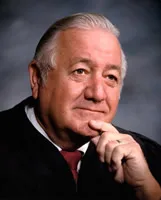
District Court, S.D. Florida — appointed by Jimmy Carter
Party: Democratic →A.A., University of FloridaBA, University of FloridaJD, University of Florida
This case involved claims by several former and current Burger King franchisees from minority backgrounds who alleged that the company discriminated against them on the basis of race in the awarding and operation of franchises, conspired with white franchisees to allocate markets, and committed related acts of deceit and interference. The plaintiffs asserted violations of the Civil Rights Act of 1866, the Sherman Antitrust Act, and state-law claims for deceit and tortious interference. After class certification was denied and most plaintiffs withdrew, the court considered the remaining individual claims and granted Burger King's motions for summary judgment. The court reasoned that the claims were barred by mutual releases signed by the plaintiffs, were time-barred by statutes of limitations, failed to state viable claims, and lacked supporting evidence of conspiracy or discrimination.
This case involved Burger King Corporation seeking a permanent injunction against former franchisees Idrees S. Agad and Mohammad Iqbal Balagamwala for continuing to operate Burger King Restaurant No. 171 in Atlanta, Georgia, after their franchise and sublease agreements expired on December 30, 1994. The court decided to grant the injunction, prohibiting the defendants from operating the restaurant or using Burger King's trademarks. The reasoning was that the agreements explicitly expired without provision for renewal, the defendants' continued use of the marks violated the contract terms and constituted trademark infringement likely to confuse consumers, and Burger King had not waived its rights by accepting any post-expiration payments.
The case involves Burger King Corporation seeking to enjoin former franchisees from continuing to operate Burger King restaurants and using its trademarks after their franchises were terminated for nonpayment of royalties and fees. The court granted Burger King's motion for a preliminary injunction, ordering the defendants to cease operations, vacate the premises, return materials, and stop using the marks, while denying the defendants' motion for a restraining order in the related action. The reasoning was based on the valid termination of the franchise agreements due to nonpayment, the incontestability of the trademarks, the limited nature of the license granted to franchisees, and the likelihood of consumer confusion and irreparable harm from unauthorized continued use.
The case involved Ted E. Tsouprake seeking a refund of a $300 payment toward a 100% penalty assessment under 26 U.S.C. § 6672 for $47,633.88 in unpaid withholding taxes owed by Fire Tech, Inc., a corporation of which he was sole shareholder and chairman; the United States counterclaimed for the unpaid balance. The court found Tsouprake liable as a responsible person who willfully failed to pay over the taxes. It based this on his ownership and board control, check-signing authority, personal guarantees of corporate loans, knowledge of the tax delinquencies, instructions to bookkeepers, and continued involvement until dissolution despite awareness of nonpayment. The court therefore denied the refund and granted the counterclaim.
This case involves an adversary proceeding filed by Growers Packing, a Chapter 11 debtor-in-possession, against Community Bank of Homestead, seeking to avoid fraudulent conveyances under federal and Florida law, obtain equitable subordination, and recover a preference related to loan guarantees and repayments via a lockbox arrangement. Community Bank demanded a jury trial and moved to withdraw the reference from the bankruptcy court, while Growers Packing moved to strike the jury demand on Counts III and IV. The court granted withdrawal of the reference and held that the preference claim (Count IV) is legal in nature under Granfinanciera because it seeks a definite sum of money and was not asserted against the estate, preserving the Seventh Amendment jury right, whereas the equitable subordination claim (Count III) is equitable and does not carry such a right. The fraudulent conveyance counts were not at issue for the jury strike motion.
This case involves Burger King Corporation (BKC) seeking to stop former franchisee Carole Hall from continuing to use its registered trademarks and service marks at her Detroit restaurant after BKC terminated the franchise agreement. The court granted BKC's motion for a preliminary injunction, finding that Hall had defaulted on royalty and advertising payments, leading to termination of her limited license to use the marks, and that her ongoing use was likely to cause consumer confusion about the restaurant's affiliation with BKC. The decision rested on the incontestability of BKC's marks under federal law, the franchise agreement's explicit termination provisions, and the public interest in preventing deception regarding the source and quality of goods and services. The injunction requires Hall to remove all BKC signage and materials within three days and prohibits any further use or representations of affiliation.