Judicial data via CourtListener (Free Law Project). Social links via Wikidata.
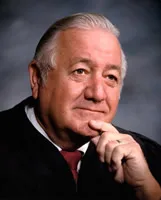
Hall v. Burger King Corp.
District Court, S.D. Florida · 1995-11-13 · cited 33×
This case involved claims by several former and current Burger King franchisees from minority backgrounds who alleged that the company discriminated against them on the basis of race in the awarding and operation of franchises, conspired with white franchisees to allocate markets, and committed related acts of deceit and interference. The plaintiffs asserted violations of the Civil Rights Act of 1866, the Sherman Antitrust Act, and state-law claims for deceit and tortious interference. After class certification was denied and most plaintiffs withdrew, the court considered the remaining individual claims and granted Burger King's motions for summary judgment. The court reasoned that the claims were barred by mutual releases signed by the plaintiffs, were time-barred by statutes of limitations, failed to state viable claims, and lacked supporting evidence of conspiracy or discrimination.
civil rightsbusiness & regulatoryprocedure
Burger King Corp. v. Agad
District Court, S.D. Florida · 1995-09-29 · cited 86×
This case involved Burger King Corporation seeking a permanent injunction against former franchisees Idrees S. Agad and Mohammad Iqbal Balagamwala for continuing to operate Burger King Restaurant No. 171 in Atlanta, Georgia, after their franchise and sublease agreements expired on December 30, 1994. The court decided to grant the injunction, prohibiting the defendants from operating the restaurant or using Burger King's trademarks. The reasoning was that the agreements explicitly expired without provision for renewal, the defendants' continued use of the marks violated the contract terms and constituted trademark infringement likely to confuse consumers, and Burger King had not waived its rights by accepting any post-expiration payments.
business & regulatory
Burger King Corp. v. Majeed
District Court, S.D. Florida · 1992-08-21 · cited 20×
The case involves Burger King Corporation seeking to enjoin former franchisees from continuing to operate Burger King restaurants and using its trademarks after their franchises were terminated for nonpayment of royalties and fees. The court granted Burger King's motion for a preliminary injunction, ordering the defendants to cease operations, vacate the premises, return materials, and stop using the marks, while denying the defendants' motion for a restraining order in the related action. The reasoning was based on the valid termination of the franchise agreements due to nonpayment, the incontestability of the trademarks, the limited nature of the license granted to franchisees, and the likelihood of consumer confusion and irreparable harm from unauthorized continued use.
business & regulatory
Tsouprake v. United States
District Court, S.D. Florida · 1992-02-12 · cited 3×
The case involved Ted E. Tsouprake seeking a refund of a $300 payment toward a 100% penalty assessment under 26 U.S.C. § 6672 for $47,633.88 in unpaid withholding taxes owed by Fire Tech, Inc., a corporation of which he was sole shareholder and chairman; the United States counterclaimed for the unpaid balance. The court found Tsouprake liable as a responsible person who willfully failed to pay over the taxes. It based this on his ownership and board control, check-signing authority, personal guarantees of corporate loans, knowledge of the tax delinquencies, instructions to bookkeepers, and continued involvement until dissolution despite awareness of nonpayment. The court therefore denied the refund and granted the counterclaim.
taxesbusiness & regulatoryfederal power
Growers Packing Co. v. Community Bank of Homestead
District Court, S.D. Florida · 1991-07-30 · cited 3×
This case involves an adversary proceeding filed by Growers Packing, a Chapter 11 debtor-in-possession, against Community Bank of Homestead, seeking to avoid fraudulent conveyances under federal and Florida law, obtain equitable subordination, and recover a preference related to loan guarantees and repayments via a lockbox arrangement. Community Bank demanded a jury trial and moved to withdraw the reference from the bankruptcy court, while Growers Packing moved to strike the jury demand on Counts III and IV. The court granted withdrawal of the reference and held that the preference claim (Count IV) is legal in nature under Granfinanciera because it seeks a definite sum of money and was not asserted against the estate, preserving the Seventh Amendment jury right, whereas the equitable subordination claim (Count III) is equitable and does not carry such a right. The fraudulent conveyance counts were not at issue for the jury strike motion.
procedurefederal powerbusiness & regulatory
Burger King Corp. v. Hall
District Court, S.D. Florida · 1991-05-21 · cited 14×
This case involves Burger King Corporation (BKC) seeking to stop former franchisee Carole Hall from continuing to use its registered trademarks and service marks at her Detroit restaurant after BKC terminated the franchise agreement. The court granted BKC's motion for a preliminary injunction, finding that Hall had defaulted on royalty and advertising payments, leading to termination of her limited license to use the marks, and that her ongoing use was likely to cause consumer confusion about the restaurant's affiliation with BKC. The decision rested on the incontestability of BKC's marks under federal law, the franchise agreement's explicit termination provisions, and the public interest in preventing deception regarding the source and quality of goods and services. The injunction requires Hall to remove all BKC signage and materials within three days and prohibits any further use or representations of affiliation.
business & regulatory
Levi Strauss & Co. v. Diaz
District Court, S.D. Florida · 1991-04-18 · cited 6×
The case involved Levi Strauss suing Roberto Diaz for trademark infringement, unfair competition, and counterfeiting after French customs seized 21,600 pairs of counterfeit Levi's 501 jeans that Diaz had brokered through his Florida corporation Sterling. The court found Diaz personally liable because he controlled the company, negotiated the transaction, and derived a $59,500 profit, and it rejected his innocent infringer defense. The court held that Diaz's failure to inquire about the seller's legitimacy or the goods' authenticity, despite prior warnings from Levi Strauss and clear signs of inferior quality, amounted to willful blindness. It therefore awarded treble damages and attorneys' fees under 15 U.S.C. § 1117(b) and entered a permanent injunction barring Diaz from further use or distribution of products bearing the Levi's and 501 marks.
business & regulatory
Meek v. Martinez
District Court, S.D. Florida · 1989-02-21 · cited 7×
This case involved a challenge by Florida residents and officials to the state's intrastate funding formula for distributing federal Title III grants under the Older Americans Act, which provide nutrition and services to elderly residents. Plaintiffs argued that the formula, based primarily on the number of elderly below the poverty level without additional weighting for minority status, violated the Act's requirements and Title VI of the Civil Rights Act by failing to prioritize low-income minority elderly individuals. The court found that the existing formula and the state's proposed revisions did not comply with federal mandates to give particular attention to low-income minorities, as evidenced by demographic data showing underfunding in areas with high concentrations of such populations. It denied the state's motion to approve its compliance efforts, requiring a revised formula with appropriate factors and weightings that meet statutory standards. The ruling emphasized the need for the formula to align with congressional intent for equitable distribution to those with the greatest economic and social needs.
civil rightsfederal powerhealthcare
International Brotherhood of Electrical Workers System Council U-4 v. Florida Power & Light Co.
District Court, S.D. Florida · 1987-09-04 · cited 4×
This case involved a dispute between the International Brotherhood of Electrical Workers System Council U-4 and Florida Power & Light Company over the company's implementation of a random drug testing program for union-represented employees, which the union challenged through a grievance under the parties' collective bargaining agreement. The union sought a temporary restraining order to halt the testing pending arbitration. The court treated the matter as a request for preliminary injunctive relief and granted it, enjoining the company from conducting random drug tests on the affected employees for up to sixty days or until an arbitration award was issued, while also ordering the parties to expedite arbitration. The court reasoned that the union had met the criteria for such relief by showing a non-frivolous position for arbitration, that harm to the arbitration process outweighed any delay to the company, that the public interest favored peaceful resolution of labor disputes through arbitration, and that no adequate legal remedy existed under the Norris-LaGuardia Act.
labor & employment
Troedel v. Wainwright
District Court, S.D. Florida · 1986-09-23 · cited 22×
In Troedel v. Wainwright, petitioner David Troedel filed a habeas corpus petition under 28 U.S.C. § 2254 challenging his Florida murder convictions and death sentences on multiple constitutional grounds, including the prosecution's use of false or misleading expert testimony. The district court granted the petition after an evidentiary hearing, vacating the convictions and sentences and ordering a new trial within 90 days. The core reasoning was that the state's expert witness gave materially misleading testimony at trial about neutron activation test results on gunpowder residue—claiming Troedel had fired the weapon while his co-defendant had not—despite the expert's own prior statements and later deposition indicating the test results could not scientifically distinguish who fired the gun, which violated due process under the Fourteenth Amendment as established in cases like Napue v. Illinois and Giglio v. United States.
criminal lawprocedure
Luther v. Fidelity and Deposit Co. of Maryland
District Court, S.D. Florida · 1986-08-15 · cited 10×
This case involved a dispute over whether an insurance company was required to advance defense costs to a former officer under a directors and officers liability policy before the resolution of underlying lawsuits. The plaintiff sought declaratory relief to compel the insurer to pay attorneys' fees and costs arising from lawsuits related to his business dealings, while the defendant argued it had discretion under the policy language. The court denied the plaintiff's motion for summary judgment and granted the defendant's, holding that the policy's clause stating the insurer "may at its option" advance expenses was unambiguous and did not create an obligation to pay prior to final disposition of the claims.
business & regulatoryprocedure
Modzelewski v. Dugan
District Court, S.D. Florida · 1985-08-27 · cited 2×
The case involved a pro se plaintiff who sued an IRS agent after the agent filed a federal tax lien on the plaintiff's property to collect unpaid income taxes and a $500 penalty for filing a false withholding exemption affidavit under 26 U.S.C. § 6682. The plaintiff argued he was exempt from withholding, that the IRS had not proven his liability, and that no hearing had occurred, seeking to challenge the tax assessment and lien. The court dismissed the complaint, holding that it failed to state a claim against the agent acting within the scope of his employment and that the court lacked subject matter jurisdiction because the plaintiff had not paid the tax and penalty in full before filing suit in district court. The decision relied on established procedures requiring either a Tax Court challenge under 26 U.S.C. § 6213 or full payment followed by a refund suit under 26 U.S.C. § 7422, and noted that the Anti-Injunction Act barred efforts to restrain collection absent exceptional circumstances not alleged here. The dismissal was without prejudice to filing an amended complaint.
taxesfederal powerprocedure
Zelman v. Cook
District Court, S.D. Florida · 1985-07-17 · cited 18×
The case involved plaintiff Jerry Zelman, a former shareholder of Cilco, Inc., suing other former shareholders and officers Cook and Dunworth, along with Rorer Group, Inc., for alleged violations of securities laws, common law, and the Florida Anti-Fencing Act. Zelman claimed that Cook and Dunworth diverted corporate assets to another company they owned and then secured an unfair allocation of merger proceeds, obtaining shareholder approval through fraud. After a non-jury trial, the court ruled in favor of all defendants on every claim. The core reasoning was that Zelman failed to prove reliance on any misrepresentations, did not exercise due diligence, and did not establish that the release or merger was induced by fraud or other improper means.
business & regulatorycriminal law
National Football League v. Alley, Inc.
District Court, S.D. Florida · 1983-12-29 · cited 17×
This case involved the National Football League and Miami Dolphins suing several Florida bar and restaurant owners for intercepting and publicly displaying satellite transmissions of NFL game telecasts, including blacked-out home games, without authorization. After a bench trial, the court had already ruled for the plaintiffs on copyright infringement and issued an injunction; on the remaining claims under the Federal Communications Act and Florida law, it found that the defendants violated Section 605 of the Communications Act by using dish antennas to receive and show the private satellite signals in their businesses for their own benefit. The court permanently enjoined the defendants from further unauthorized interception or use of such transmissions. It dismissed the state-law claims for right of publicity and common-law misappropriation, reasoning that the statutory exemption applied, any rights were waived by player contracts, and the plaintiffs lacked standing to assert unassigned common-law rights. The decision rested on findings that the satellite signals were not intended for public reception without consent and that the defendants' commercial use was unauthorized.
business & regulatoryproperty
Feldman v. Jackson Memorial Hospital
District Court, S.D. Florida · 1983-09-19 · cited 12×
A podiatrist sued 17 hospitals and 49 doctors under Sections 1 and 2 of the Sherman Act, claiming they conspired to restrain trade and monopolize by denying his applications for hospital staff privileges and attempting to drive him out of business. After nearly five weeks of testimony on liability, the court granted the defendants' motions for directed verdict. The court held that the plaintiff failed to present substantial evidence of a conspiracy (including a meeting of the minds among defendants), an effect on competition in the marketplace, economic injury caused by illegal acts, or monopolization of a relevant market. The ruling applied the directed-verdict standard requiring evidence of sufficient quality and weight that reasonable people could reach differing conclusions.
business & regulatoryhealthcare
Associates Commercial Corp. v. Sel-O-Rak Corp.
District Court, S.D. Florida · 1983-09-02
The case involved a dispute in bankruptcy court over whether a creditor had a perfected security interest in a debtor's collateral, specifically accounts receivable, inventory, and equipment. The Bankruptcy Court ruled that the creditor's failure to timely pay Florida's documentary stamp tax on the underlying loan documents rendered the security interest unperfected and unenforceable, treating the creditor as unsecured. On appeal, the District Court reversed, holding that payment of the tax after the bankruptcy filing perfected the security interest and allowed enforcement of the lien. The court reasoned that Florida law does not void the perfection for late payment of the tax, but at most delays enforcement until payment.
business & regulatorytaxespropertyprocedure
South Florida Chapter of the Associated General Contractors of America, Inc. v. Metropolitan Dade County
District Court, S.D. Florida · 1982-12-16 · cited 8×
This case involved White construction contractors challenging Metropolitan Dade County's ordinance that required race-conscious affirmative action for county construction contracts, specifically a set-aside provision reserving certain contracts exclusively for Black contractors and a goals provision mandating percentage subcontracting targets for Black contractors. The plaintiffs alleged violations of the Equal Protection Clause of the Fourteenth Amendment. The court held that the set-aside provision was unconstitutional because it entirely excluded non-minority bidders from competing for designated contracts, while the goals provision was constitutionally permissible as it fell within the county's discretion in addressing past discrimination. The decision was based on findings that the set-aside went beyond what was necessary to achieve the county's objectives under the Equal Protection Clause.
civil rightsbusiness & regulatory
Greenberg v. Schools
District Court, S.D. Florida · 1982-05-11 · cited 14×
In this bankruptcy appeal, Greenberg challenged the discharge of a debt owed by Schools that originated from a settlement agreement resolving state court claims of fraud, misappropriation, and misuse of corporate funds by Schools while acting as managing director of a jointly owned corporation. The bankruptcy court had ruled the debt dischargeable on the ground that it arose solely from breach of the settlement and promissory note rather than from the original alleged misconduct. The district court reversed, holding that under 11 U.S.C. § 523(a)(4) a debt for fraud or defalcation while acting in a fiduciary capacity is not discharged merely because the parties settled the underlying claim before bankruptcy, and remanded for the bankruptcy court to determine whether the debt in fact derived from such conduct.
business & regulatoryprocedure
United States v. Fernandez-Pertierra
District Court, S.D. Florida · 1981-09-30 · cited 2×
The case involved a defendant charged in a two-count indictment with conspiring and engaging in unlicensed transactions under the Trading With the Enemy Act and its Cuban Assets Control Regulations by accepting payments, compiling lists, and arranging vessels to transport specific Cuban nationals to the United States during the 1980 Mariel Boatlift. The defendant moved to dismiss, arguing that 31 C.F.R. § 515.415 was unconstitutional on its face and as applied because it exceeded executive authority, lacked a rational basis, was arbitrary, and was vague or overbroad, and that the indictment failed to state an offense. After reviewing the statute, regulations, and relevant case law, the court denied the motion, holding that the regulation is constitutional both facially and as applied to the alleged facts and that the charged conduct properly constitutes a federal offense under the TWEA.
criminal lawimmigrationfederal power
Bloom v. AH Pond Co., Inc.
District Court, S.D. Florida · 1981-07-27 · cited 53×
This case involved a Florida resident suing his former New York employer and three corporate officers under the federal Age Discrimination in Employment Act and Florida law, alleging his termination at age 61 was due to age. The defendants moved to dismiss for lack of personal jurisdiction and improper service after the case was removed to federal court. The court held that it had jurisdiction over the corporate defendant because it conducted business in Florida and service complied with state long-arm statutes, but lacked jurisdiction over the individual officers. The reasoning focused on Florida's statutory requirements for long-arm jurisdiction, which were met by the corporation's activities but not by the officers' actions taken solely in their corporate roles, as distinguished from cases imputing corporate acts to individuals.
procedurecivil rightslabor & employment