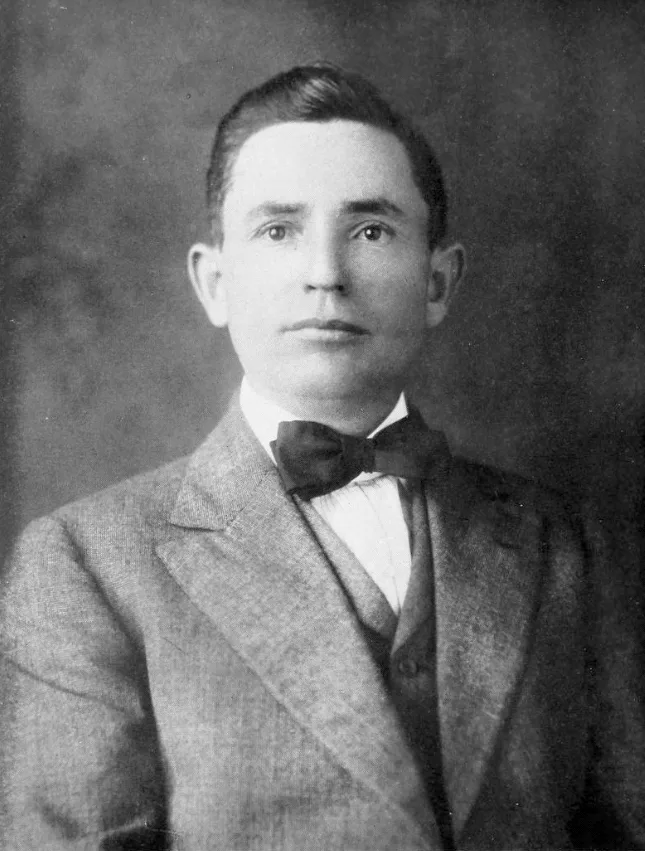
Turner v. Crime Detective
District Court, N.D. Oklahoma · 1940-08-01 · cited 3×
This case involved a lawsuit by the surviving relatives of Leonard Turner seeking damages for an alleged libel published about him after his death by the defendants in Crime Detective. The court considered a motion to dismiss by the served defendant, focusing solely on whether Oklahoma law permits recovery for libel against a deceased person by their estate or relatives. At common law, no such cause of action survived death or extended to relatives, and the court examined various Oklahoma statutes, including those defining libel (which includes vilifying the memory of the dead), providing for abatement of libel actions upon death, and addressing threats of libel. The court held that these statutes did not create a new right of recovery or alter the common law rule, as they either defined libel without imposing liability, dealt with intent in threats rather than executed publications, or explicitly provided for abatement. Accordingly, the motion to dismiss was sustained.
torts & liabilityprocedure
Seber v. Spring Oil Co.
District Court, N.D. Oklahoma · 1940-07-08 · cited 11×
The case involved a member of the Creek Nation suing an oil company in state court for an accounting of the value of casinghead gas produced and sold from her allotted lands under a federally approved oil and gas lease. The defendant removed the action to federal district court on the ground that it arose under federal law, and the plaintiff moved to remand. The court determined that the plaintiff's petition on its face showed the dispute required application of the Act of Congress of May 27, 1908, and Interior Department regulations incorporated into the lease, which expressly addressed casinghead gas and required royalties to be paid to the Superintendent of the Five Civilized Tribes. Because the petition alleged no failure by the lessee to comply with those lease terms and regulations, the court concluded no cause of action was stated, denied the motion to remand, and dismissed the case.
federal powerpropertyprocedurebusiness & regulatory
United States v. Phillips
District Court, N.D. Oklahoma · 1940-04-25 · cited 4×
This case involved a dispute between the United States and Oklahoma state officials, including the Governor, Attorney General, and members of the State Highway Commission, over the completion of a dam and hydroelectric project built by the Grand River Dam Authority with federal loans and grants. The state officials sought to halt construction because the dam would flood certain public roads and highways, using military force and state court orders to interfere. The court found that the United States held all outstanding bonds secured by a prior lien on project revenues and had made substantial grant payments, giving it superior property interests. It concluded that any state claims for damages or relocation costs were subordinate to those federal interests. The court therefore granted a preliminary injunction restraining further interference by state officials with the dam's closing and completion.
federal powerpropertyenvironment
Robinson v. EXCHANGE NAT. BANK OF TULSA, OKL.
District Court, N.D. Oklahoma · 1940-02-08 · cited 2×
This case involves a dispute over whether banks holding insurance policies pledged as security for a debt must surrender the policies and their proceeds after the statute of limitations barred any action to enforce the debt. The court ruled that under Oklahoma law, a pledgee in possession is entitled to retain the pledged property and collect on it until the underlying debt is satisfied, even though affirmative foreclosure actions are time-barred. The reasoning interprets the relevant statute (Sec. 10957, O.S.1931) as extinguishing only the right to sue on the obligation, not the possessory lien rights, drawing on Oklahoma precedents treating mortgagees in possession similarly and extending that protection to pledgees. The opinion also confirms the validity of the pledge arrangement through constructive possession by the banks via the insurance company holding the policies.
propertyprocedure
Grand River Dam Authority v. Going
District Court, N.D. Oklahoma · 1939-09-22 · cited 12×
This case involved the Grand River Dam Authority, a state-created public corporation, filing a federal condemnation action to acquire private lands for a reservoir as part of constructing a dam and hydroelectric power plant on the Grand River in Oklahoma. The defendants moved to dismiss on grounds that the Federal Power Commission lacked authority to issue a license because the river was non-navigable, that Congress could not constitutionally delegate licensing power, and that the license was void for lack of notice to affected landowners. The court overruled the motion, holding that the project would affect navigable stages of the Arkansas River and interstate commerce, that the Commission had properly issued the license under the Federal Power Act with any required notice presumed given, and that federal jurisdiction over the condemnation proceeding was conferred by Section 21 of the Act.
federal powerpropertyprocedure
Robinson v. EXCHANGE NAT. BANK OF TULSA, OKL.
District Court, N.D. Oklahoma · 1939-06-30 · cited 8×
The case concerned whether the administratrix of a bankrupt debtor's estate could recover sums paid to banks from the proceeds of life insurance policies that had been assigned as collateral for the debtor's loans. The debtor had obtained a bankruptcy discharge, after which the banks filed claims noting their security interests in the policies and other assets; following the debtor's death, the administratrix directed payment to the banks from the policies. She later sued, asserting that the debts had been discharged, that the assignments were invalid or junior, and that the payments resulted from mistake or unjust enrichment. The court held that the banks held valid, enforceable pledges that survived the discharge, that no mutual mistake of fact or law occurred, and that the voluntary payments could not be recovered, resulting in dismissal of the complaint.
propertyprocedure
Shanks v. Travelers Ins. Co.
District Court, N.D. Oklahoma · 1938-12-20 · cited 8×
This case involved a beneficiary's lawsuit against Travelers Insurance Company to recover on group life insurance certificates covering an employee of Mid-Continent Petroleum Corporation who died one day after being discharged. The court held that the insurance remained in effect at the time of death, allowing the plaintiff to recover. The reasoning centered on policy terms granting a 31-day period to convert coverage to an individual policy, combined with the fact that premiums for the month of February had been paid in advance and not refunded to the employee or beneficiary. The court interpreted Oklahoma law to treat the employer as the insurer's agent for premium collection and viewed the conversion clause as providing continued protection similar to a grace period, rather than immediate termination upon discharge.
business & regulatory
Ohio Casualty Ins. Co. v. Marr
District Court, N.D. Oklahoma · 1937-11-18 · cited 4×
This case involved an insurance company's suit for a declaratory judgment against its insured and the administrator of an estate pursuing a wrongful death claim arising from an auto incident. The insurer sought a ruling that it had no duty to defend or indemnify due to the insured's failure to provide timely notice of the accident as required by the policy. The court dismissed the complaint, holding that the Declaratory Judgment Act applies only when the plaintiff's own rights are at issue, not merely its obligations or potential liabilities under the policy. It relied on precedent interpreting the Act narrowly and declined to address the underlying policy interpretation or coverage dispute.
procedurebusiness & regulatorytorts & liability
Trower v. Stonebraker-Zea Live Stock Co.
District Court, N.D. Oklahoma · 1937-01-12 · cited 10×
This case concerns plaintiffs, Oklahoma residents in the oil and gas lease business, suing for a $15,000 brokerage commission on the 1935 sale of leases owned by a corporation that dissolved in 1931. The defendants, former directors now acting as trustees of the dissolved corporation's assets under Oklahoma law, are Missouri residents who removed the action from state court on diversity grounds. The court denied the plaintiffs' motion to remand, ruling that the case belongs in federal court. It reasoned that the trustees' personal citizenship controls for diversity jurisdiction and removal purposes, citing Supreme Court precedent, and that nonresident defendants may remove before being served or required to plead.
procedurefederal power
Eagle-Picher Lead Co. v. Madden
District Court, N.D. Oklahoma · 1936-06-18 · cited 3×
The case concerns a lead mining and manufacturing company seeking to enjoin the National Labor Relations Board from exercising jurisdiction over its employer-employee relations under the National Labor Relations Act of 1935. The court held that the Act does not authorize the Board to investigate or regulate labor relations involving employers engaged solely in intrastate commerce, as Congress lacks constitutional power to extend federal authority to such activities. It reasoned that mining and manufacturing operations are not interstate commerce merely because their products may later enter interstate channels, citing precedents such as Carter v. Carter Coal Co. and Champlin Refining Co. v. Corporation Commission that confine federal regulatory power to actual interstate intercourse. The evidence showed the plaintiffs operated intrastate, and the court concluded the Board would exceed its authority, causing irreparable harm without an adequate legal remedy, leading to the issuance of a temporary injunction.
labor & employmentfederal powerbusiness & regulatory
Arn v. Operators Royalty & Producing Co.
District Court, N.D. Oklahoma · 1936-03-03 · cited 7×
The case Arn v. Operators Royalty & Producing Co. involved disputes over the ownership and transfer of stock in a Delaware corporation formed to invest in oil and gas royalties, where promoters had purchased royalty interests and issued stock to themselves and sold portions to others, allegedly using proceeds for personal benefit. The court addressed claims regarding the validity of a pledgee's sale of Century Petroleum Company stock pledged to secure debts, and attempts by interveners to rescind their prior sale of that stock to the royalty company. The court held that the pledge sale was fair and effectively completed, thereby cutting off the pledgor's rights, as the principles applicable to mortgage sales under power of sale permitted credit terms and did not require immediate cash payment, and rejected the rescission claims finding all issues against them. The reasoning relied on analogies to mortgage law from Illinois precedents and the absence of any offer to redeem or evidence of unfairness in the sale process.
business & regulatoryproperty
Exchange Nat. Bank of Tulsa v. Davy
District Court, N.D. Oklahoma · 1936-01-07 · cited 12×
This case involved a dispute over lien priority on real property between a bank holding a loan secured by an assignment of trust assets and the United States asserting a federal income tax lien against the borrower. The court determined that the bank held priority, allowing it to recover from foreclosure proceeds before the tax lien. The reasoning centered on the bank's equitable lien arising from the pre-existing assignment and notice to the trustee, which predated the tax lien filing; the subsequent conversion of that lien into a recorded mortgage did not waive the bank's rights, and the tax lien statute protects mortgagees only upon proper notice after the competing interest arises. The opinion applied federal tax lien provisions and principles of equitable liens under Oklahoma law to conclude the tax lien attached subject to the bank's interest.
taxesproperty
Linker v. Quaker Oats Co.
District Court, N.D. Oklahoma · 1935-09-03 · cited 3×
This case involved a personal injury lawsuit by plaintiff Linker against Quaker Oats Company and retailer Kroger, alleging damages from ingesting glass particles found in a sealed package of rolled oats purchased and consumed as food. A jury returned a $10,000 verdict for the plaintiff on negligence claims, but defendants moved for a new trial on grounds of insufficient evidence and excessive damages. The court held that the presence of foreign matter in a factory-sealed food package permitted an inference of negligence by the manufacturer, allowing the issue to go to the jury, but found no negligence by the retailer who sold the unopened package from a reputable maker without opportunity or duty to inspect. The court sustained the motion as to Kroger, and as to Quaker Oats conditioned on the plaintiff's acceptance of a remittitur reducing the award to $6,000, citing insufficient proof of permanent injury.
torts & liability
Thompson v. New York Life Ins. Co.
District Court, E.D. Oklahoma · 1935-01-14 · cited 11×
The case involved New York Life Insurance Company's cross-complaint to cancel a 1924 life insurance policy issued to Joseph B. Thompson, which included disability income payments, premium waivers, and double indemnity benefits, on grounds of alleged fraud in the application. The policy contained an incontestability clause after two years (except for nonpayment of premiums and certain disability/double indemnity provisions), and Oklahoma statutes required life insurance policies to become incontestable after two years except for nonpayment or wartime military service. The court held that the statutory limits on contestability applied to the disability benefits as well, so the insurer could not challenge the policy after the two-year period had passed, and dismissed the cross-complaint for want of equity.
business & regulatory
Turman Oil Co. v. Lathrop
District Court, N.D. Oklahoma · 1934-11-20 · cited 15×
In this case, Turman Oil Co., a Delaware corporation, brought a bill of interpleader in federal district court against multiple Oklahoma defendants over a $5,000 fund withheld from the purchase price of an oil and gas lease, with each defendant claiming the sum as a brokerage commission for the sale. The court first allowed the interpleader after finding that the plaintiff was a disinterested stakeholder facing conflicting claims from the defendants, who all asserted rights derived from the same transaction. On the merits, the court awarded the fund to defendants R. A. Lathrop (as administrator for Joe Lathrop) and R. R. Crawford, determining that only they had been authorized to represent the sellers. The court overruled a motion to dismiss for lack of jurisdiction, holding that diversity of citizenship existed between the plaintiff and defendants and that an actual controversy existed between the plaintiff and the claimants sufficient to support federal equity jurisdiction over the interpleader.
business & regulatoryprocedure
Balch v. Investors' Royalty Co.
District Court, N.D. Oklahoma · 1934-07-05 · cited 4×
This case involved minority stockholders of Investors' Royalty Company, a Delaware corporation operating mainly in Oklahoma, who sued the company's officers and directors for alleged mismanagement, including the improper issuance of $300,000 in stock to president Fred T. Hildt and the diversion of corporate funds for personal investments in oil royalties. The court addressed claims for cancellation of the stock, an accounting of profits from the diverted assets, and appointment of a receiver. It ruled that the stock issuance violated the directors' fiduciary duties and ordered cancellation of most of the stock (except $15,000 transferred to another director), required Hildt to account for profits from corporate assets used for personal gain and commissions on royalty transactions, and denied the request for a receiver while retaining jurisdiction to oversee the accounting and management reorganization. The decision rested on the principle that officers and directors occupy a trust relationship with the corporation and stockholders, making self-dealing transactions invalid absent proper justification under Delaware law, and found no need for receivership given the company's sound finances and potential for internal reform.
business & regulatory
United States v. Hughes
District Court, N.D. Oklahoma · 1934-05-01 · cited 8×
This case involved the United States suing Osage County, Oklahoma officials on behalf of restricted Osage Indian Tribe members to prevent local taxation of their personal property, choses in action, and cash held by them or their guardians. The court classified various categories of funds and property under relevant federal acts from 1906 to 1925 and determined taxability based on whether the assets remained under federal control as restricted property or had been released. It concluded that most restricted funds, excess payments held by guardians, interest from certain trust sources, and proceeds from restricted property sales were not subject to state taxation, while unrestricted funds, rentals from surplus lands, and money from unrestricted sales were taxable. The reasoning centered on congressional intent to protect dependent Indian wards through federal oversight, exempting such property from local assessment until restrictions were lifted.
federal powertaxesproperty
In Re Tomlinson & Dye, Inc.
District Court, N.D. Oklahoma · 1933-06-19 · cited 8×
In this bankruptcy case, John H. Tomlinson filed a claim against the estate of Tomlinson & Dye, Inc., for amounts due on a promissory note and for salaries and advances, but the referee disallowed the claim. Tomlinson filed motions to vacate the disallowance, which the referee denied, followed by a petition for review to the district court that was challenged as untimely. The court held that a referee lacks authority under General Order 21 to reconsider and re-allow a previously disallowed claim, as that provision permits re-examination only of allowed claims for purposes of expunging or diminishing them. The court further ruled that the time for filing a petition for review begins to run from the original disallowance order, not from rulings on subsequent rehearing motions, rendering the petition untimely under local bankruptcy rules. The petition for review was therefore dismissed.
procedurebusiness & regulatory
In Re Wineland
District Court, N.D. Oklahoma · 1933-06-17 · cited 11×
The case involved a bankrupt debtor, John D. Wineland, who erected a building used as his family residence and for business on leased land in Oklahoma; after the lease expired, he remained as a month-to-month tenant and sought to exempt the building as homestead property, which the referee denied. The district court reversed the referee's ruling and held the building exempt under Oklahoma law. The court reasoned that the state constitution and statutes protect the family home without restricting the type of title or interest required, and Oklahoma Supreme Court precedents establish that homestead rights can attach to leasehold interests without fee ownership. The decision also exempted business equipment in the building as tools of a trade.
property
Town of Fairfax, Okl. v. Ashbrook
District Court, N.D. Oklahoma · 1933-05-17 · cited 10×
This case concerned a state-court lawsuit by the Town of Fairfax against a national bank, its receiver, and another defendant, in which the receiver filed a petition to remove the action to federal court on the basis of a federal question. The other defendants later sought to join the removal effort after the receiver's answer deadline had passed, prompting the plaintiff to move to remand the case on the ground that not all necessary parties had timely joined the removal petition. The court denied the joinder motions and sustained the remand motion, holding that removal requires all necessary defendants to join within the statutory time limit and that late-filed motions cannot amend the removal petition to cure the defect. The opinion emphasized that the removal statute's timing requirements are mandatory and that the initial petition was fatally defective because it lacked unanimous consent from all proper parties.
procedurefederal power