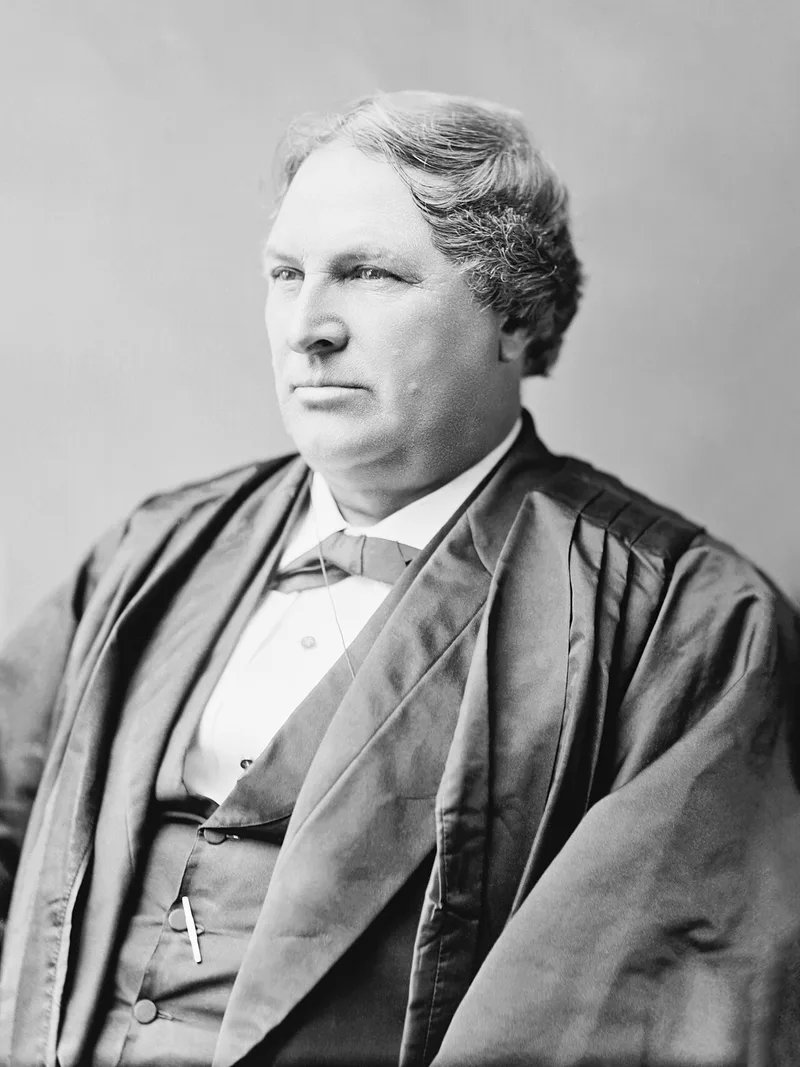
In Re Burrus
Supreme Court of the United States · 1890-05-19 · cited 717×
In Re Burrus involved a habeas corpus petition filed in the U.S. Supreme Court by Thomas E. Burrus, who had been imprisoned for three months by a federal district court in Nebraska for contempt after he and his wife forcibly removed their granddaughter from her father's custody in violation of a court order. The underlying dispute arose when the child's father, an Ohio citizen, sought federal habeas relief to obtain custody from the Nebraska-resident grandparents who had cared for the child since infancy following the mother's death. The Court denied the petition, holding that neither the district court nor the Supreme Court possessed jurisdiction over the child custody matter because no federal statute conferred such authority and federal courts lack common-law parens patriae power to decide domestic relations cases. The opinion emphasized that custody determinations are governed by the law of the forum court rather than the petitioner's home state and that the contempt imprisonment remained valid due to the absence of original federal jurisdiction.
family lawfederal powerprocedure
Des Moines and Fort Dodge Railroad Co. v. Wabash, St. Louis and Pacific R'y Co.
Supreme Court of the United States · 1890-05-19 · cited 7×
The case was an appeal from the dismissal of an intervention by the Des Moines and Fort Dodge Railroad Company in a foreclosure suit by the Central Trust Company of New York against the Des Moines and Northwestern Railway Company (formerly the Adel Company) over a railroad mortgage, with the Wabash company also involved due to its lease. The intervention sought enforcement of a 1879 traffic agreement that granted the appellant rights to portions of earnings, facilities, and hauling fees in exchange for track use between Waukee and Des Moines. The court affirmed the dismissal, holding that the contract did not create a lien on the railroad property binding on the mortgage or subsequent parties. The core reasoning was that the agreement imposed only personal obligations rather than property interests, any claimed damages for unperformed future terms were speculative, and the Adel Company's charter duty to complete its own connecting line was inconsistent with the long-term exclusive arrangement.
business & regulatoryproperty
Norris v. Haggin
Supreme Court of the United States · 1890-05-19 · cited 60×
The case involved Samuel Norris suing his former agents and attorneys, James B. Haggin and Lloyd Tevis, alleging they fraudulently obtained title to over a million dollars in property, including a large ranch, by exploiting his mental and physical incapacity following a head injury. The suit, originally filed in state court and removed to federal circuit court, was dismissed on demurrer. The Supreme Court affirmed the dismissal, holding that the plaintiff's long delay in bringing the action—more than twenty years after the events and after regaining capacity—constituted laches barring relief in equity, especially since the transactions were matters of public record through recorded deeds, mortgages, and court judgments. The court noted that the fraud, if any, was not concealed and could have been discovered earlier through reasonable inquiry.
propertyproceduretorts & liability
Texas & Pacific Railway Co. v. Marshall
Supreme Court of the United States · 1890-05-19 · cited 174×
The case involved a dispute over whether the Texas & Pacific Railway Company had a perpetual contractual obligation to maintain its eastern terminus, Texas office, main machine shops, and car works in the city of Marshall, Texas, in exchange for bonds and land donated by the city. The Supreme Court held that the contract did not impose such an everlasting commitment, interpreting "permanent establishment" as requiring initial setup and operation for a reasonable period rather than forever. The Court further reasoned that even if the contract were perpetual, a court of equity could not enforce it through specific performance because doing so would require ongoing judicial supervision of the company's operations, which is beyond the proper functions of the court. The decree granting relief was reversed, and the bill was ordered dismissed.
business & regulatoryprocedure
Iron Silver Mining Co. v. Campbell
Supreme Court of the United States · 1890-05-05 · cited 47×
This case was an ejectment action in which holders of a lode mining patent (Campbell et al.) sued the holder of an overlapping placer mining patent (Iron Silver Mining Co.) to recover possession of land that had been part of the public domain. The lower court ruled for the lode claimants after finding that their claim was excepted from the placer patent because it had been discovered and located before the placer application. The Supreme Court reversed the judgment and remanded for a new trial. It held that a placer patent excludes only lodes that were known at the time of the placer application, and the trial court's findings and legal conclusions did not adequately establish such prior knowledge or the facts needed to support the exception from the placer grant.
property
In Re Neagle
Supreme Court of the United States · 1890-04-14 · cited 400×
The case concerned David Neagle, a U.S. deputy marshal assigned to protect Supreme Court Justice Stephen Field, who fatally shot David S. Terry during an altercation in California; Neagle was then arrested and held by state authorities on murder charges. The Supreme Court reviewed the circuit court's order discharging Neagle via habeas corpus. The Court held that Neagle was properly released because he was in custody for an act done in pursuance of federal law and authority. The core reasoning was that the President and Attorney General had directed protection for federal judges, that this constituted authority under the laws of the United States within the meaning of the habeas statute, and that state prosecution was therefore preempted.
federal powercriminal law
In Re Lane
Supreme Court of the United States · 1890-03-31 · cited 41×
The case involved a habeas corpus petition filed directly with the Supreme Court by Charles Lane, who had been convicted in federal district court in Kansas under an 1889 federal statute for the carnal and unlawful knowledge of a female under sixteen years of age and sentenced to five years in prison. Lane challenged the validity of the indictment, the court's rulings during trial, and whether the conviction barred further proceedings, seeking release on grounds including surplusage in the charging document and ambiguity about the offense. The Court denied the petition, holding that habeas corpus is not a substitute for a writ of error and may issue only when the trial court lacked jurisdiction or exceeded its authority. The district court possessed jurisdiction over both the defendant and the charged offense, the indictment sufficiently stated the statutory violation, and any alleged trial errors did not affect the court's power to try and sentence Lane.
criminal lawfederal powerprocedure
Banigan v. Bard
Supreme Court of the United States · 1890-03-17 · cited 11×
The case involved Charles Bard, receiver for the insolvent Hayward Rubber Company, suing Joseph Banigan to recover over $26,000 in unpaid debts from sales Banigan made as the company's agent. Banigan sought a set-off for the $17,550 he had paid for preferred stock issued by the company in 1885, arguing that the issuance exceeded the company's authority under Connecticut law and thus failed for lack of consideration. The Circuit Court allowed Banigan a credit for salary but rejected the stock set-off, and the Supreme Court affirmed. The Court held that Banigan, as a dominant figure in the company who helped authorize and promote the stock issuance, voted on the shares, and held them for over two years, was estopped from reclaiming the funds once the corporation entered receivership. This decision protected the interests of creditors, who relied on the paid-in capital from the stock.
business & regulatory
In Re Wight
Supreme Court of the United States · 1890-03-03 · cited 146×
The case involved Charles H. Wight, a postal superintendent convicted in federal district court of embezzling letters containing treasury notes while on duty. After the jury's guilty verdict, the district court transferred the case to the circuit court for post-trial motions, but later vacated the transfer and imposed a two-year sentence; Wight then petitioned for habeas corpus relief, claiming the district court lacked jurisdiction to sentence him. The circuit court denied the writ, and the Supreme Court affirmed that denial. The Court reasoned that the district court's vacatur of the improvident transfer restored its authority to sentence, that the indictment properly charged a federal offense, and that questions about the evidence or whether the letters were decoys were matters for the jury not reviewable on habeas corpus.
criminal lawprocedurefederal power
Eilenbecker v. District Court of Plymouth County
Supreme Court of the United States · 1890-03-03 · cited 203×
The case concerned six individuals fined $500 each and sentenced to three months in jail by an Iowa district court for contempt after violating injunctions that barred them from selling or keeping intoxicating liquors in Plymouth County; the sentences were imposed by the court without a jury based on affidavit evidence. The Iowa Supreme Court affirmed, and the U.S. Supreme Court reviewed the judgment on claims that the proceedings violated federal constitutional protections including jury trial rights under Article III and the Sixth Amendment, grand jury requirements under the Fifth Amendment, confrontation rights, the Eighth Amendment ban on excessive fines or cruel punishments, and the Fourteenth Amendment's equal protection guarantee. The Court affirmed the state judgment, reasoning that the first eight amendments to the U.S. Constitution constrain only the federal government and not the states, and that states may validly employ equity proceedings and contempt powers to abate nuisances such as illegal liquor sales as authorized by state statute. The Court further noted that legislatures may direct courts to use injunctive remedies to prevent prohibited conduct rather than relying solely on criminal prosecutions after the fact.
criminal lawfederal powerbusiness & regulatory
Medley
Supreme Court of the United States · 1890-03-03 · cited 349×
This case concerned James J. Medley, who was convicted of first-degree murder in Colorado for a crime committed in May 1889 and sentenced to death under a statute enacted in April 1889 that took effect after the offense. Medley sought a writ of habeas corpus from the Supreme Court, claiming the new law's requirements of solitary confinement in the state penitentiary, execution by the warden rather than the sheriff, and other procedural differences violated the Constitution's ban on ex post facto laws. The Court held that the 1889 statute was ex post facto because it imposed additional and prejudicial changes to the punishment compared to the law in effect at the time of the crime. It therefore ruled the sentence void and ordered Medley's discharge from custody. The reasoning centered on a direct comparison of the two statutes to identify detrimental alterations in the mode and circumstances of execution.
criminal lawprocedure
Culver v. Uthe
Supreme Court of the United States · 1890-03-03 · cited 12×
The case involved a suit by Gertrude Uthe to recover on promissory notes given by Culver and Gormley as payment for a quarter section of land in Illinois; the buyers defended on the ground that Uthe's title had failed because the land was swamp land granted to the state by the federal Swamp Land Act of 1850. The Illinois courts ruled for Uthe, and the U.S. Supreme Court affirmed. The Court held that the land had been sold to Uthe's father before the 1850 Act when he located a military land warrant on it in July 1850, received a certificate, and later obtained a patent, so the land was excluded from the grant to Illinois; the Court upheld admission of Land Office records and construed the word "sold" in the statute to include this transaction, which gave a vested right before the Act's passage.
propertyfederal power
Savage
Supreme Court of the United States · 1890-03-03 · cited 7×
This case concerned James H. Savage, who was convicted in 1889 by a Colorado court of first-degree murder for a killing committed in June 1889 and sentenced under a state statute that took effect after the offense. Savage petitioned the U.S. Supreme Court for a writ of habeas corpus, arguing that the judgment and commitment order were invalid. The Court held that the imprisonment was without authority of law and violated the U.S. Constitution because the statute was ex post facto as applied to Savage. It therefore ordered his discharge from the warden's custody, with notice to state officials, following the same result as in the related Medley case.
criminal lawprocedure
Smith v. Lyon
Supreme Court of the United States · 1890-02-03 · cited 119×
This case involved a diversity jurisdiction suit in federal circuit court where two plaintiffs, one from Missouri and one from Arkansas, sued a defendant from Texas in the Eastern District of Missouri. The circuit court dismissed the case for lack of jurisdiction, and the Supreme Court affirmed. The Court reasoned that under the Act of March 3, 1887, as amended, when jurisdiction is based solely on diversity of citizenship, the suit must be brought in the district of residence of either the plaintiff or the defendant, and longstanding precedent requires that all plaintiffs and defendants must satisfy this requirement, meaning multiple plaintiffs from different states cannot combine to sue in a district where only one resides.
procedure
Buford v. Houtz
Supreme Court of the United States · 1890-02-03 · cited 112×
The case concerned a dispute in Utah Territory where owners of large tracts of odd-numbered sections of land (granted via the Central Pacific Railroad) sought to enjoin numerous sheep owners from driving and grazing their flocks across those lands to reach interspersed even-numbered sections of unfenced federal public domain. The plaintiffs alleged that the defendants had no right to allow their animals to trespass in this manner, given the arid conditions and the value of the land solely for grazing. Lower courts sustained a demurrer and dismissed the bill for failure to state a cause of action and improper joinder. The Supreme Court affirmed, holding that an implied federal license permits grazing on unoccupied public lands and that the common-law duty to confine livestock does not apply in this region, where historical practice and the character of the land allow animals to roam at large without creating liability for incidental use of private sections.
propertyfederal power
Mason v. Pewabic Mining Co.
Supreme Court of the United States · 1890-01-13 · cited 53×
The case concerned the dissolution of the Pewabic Mining Company and the rights of minority stockholders when a majority sought to transfer all corporate assets to a new corporation at a valuation set solely by the majority, leaving dissenters with the choice to join the new entity or accept that price. The Supreme Court affirmed the lower court's ruling that the assets must be sold publicly to realize their fair value for distribution among shareholders, drawing on partnership dissolution principles that require sale absent agreement otherwise. It reasoned that minority stockholders hold equal authority to insist on this method and cannot be compelled into a new venture or an arbitrary buyout by the majority. The Court also reversed on the issue of post-dissolution director conduct, directing further inquiry by a master to determine if an accounting was needed.
business & regulatorypropertyprocedure
Case v. Kelly
Supreme Court of the United States · 1890-01-06 · cited 44×
The case involved a railroad company seeking to obtain title to certain lands through a lawsuit, asserting that they had been acquired for its benefit. The Supreme Court affirmed the lower court's dismissal of the company's claim, ruling that the corporation had no authority under its Wisconsin charter or state law to receive or hold an indefinite quantity of lands beyond those needed for specific railroad purposes like rights of way, depots, and related facilities. The core reasoning was that the charter's enumerated purposes were exclusive, no general statute permitted broader land ownership for speculative or other uses, and courts would not aid the company in obtaining title it was legally barred from holding, though the decision distinguished this from situations where title had already been conveyed. Ancillary rulings addressed options for compensating improvements on the land.
propertybusiness & regulatory
Patrick v. Graham
Supreme Court of the United States · 1890-01-06 · cited 35×
This case involved a dispute over mineral ore allegedly taken from the plaintiffs' Minnie lode mining claim in Colorado by defendants operating an adjacent claim; the plaintiffs sued for trespass and conversion seeking the value of the ore, while defendants denied sole ownership by the plaintiffs and contested the quantity and value taken. A jury found for the plaintiffs and awarded damages of $20,779, leading to judgment after denial of a new trial motion. On appeal via writ of error, the Supreme Court reviewed challenges to the admission of testimony about a conversation regarding the ore mixing and the exclusion of evidence on ore shipments and a mine model. The Court held that objections to evidence were not properly preserved in the record, the trial court correctly handled the testimony and model, and the jury instructions on damages were sound, resulting in affirmance of the judgment. The core reasoning focused on the requirements for preserving evidentiary objections and the relevance and propriety of the admitted and excluded proof under the circumstances of the mining trespass.
propertyproceduretorts & liability
Clayton v. Utah Territory
Supreme Court of the United States · 1890-01-06 · cited 30×
This case concerned a dispute over the office of auditor of public accounts in Utah Territory, where defendant Clayton claimed the position based on his election by popular vote in 1880 under a territorial statute, while the governor had appointed Arthur Pratt in 1886 after the legislative council declined to act on nominations. The territorial district court ruled against Clayton, finding his election invalid and Pratt entitled to the office, and the Supreme Court of the Territory affirmed. On appeal, the U.S. Supreme Court held that the territorial law authorizing election of the auditor conflicted with the organic act of the Territory, which vested the power to appoint such officers in the governor with the advice and consent of the legislative council. The Court reasoned that only the mode of selection by election was invalid, leaving intact the creation of the office itself, which could be filled through the appointment process required by federal law. The judgment ousting Clayton and confirming Pratt's appointment was therefore affirmed.
federal powerelections
Rio Grande Railroad v. Vinet
Supreme Court of the United States · 1889-12-23 · cited 5×
The case involved the Rio Grande Railroad, which held a judgment against the firm Gomila & Co. and its partners, seeking to execute on a house owned by A.J. Gomila by filing a bill in equity to invalidate a $18,000 mortgage on the property as fictitious and fraudulent. The mortgage secured promissory notes that Gomila executed and which were subsequently transferred to third parties like Gurley and Barker in exchange for loans used to benefit the firm, including paying off a prior lien on the house. The Circuit Court found the mortgage valid and dismissed the bill after determining the transactions were honest and the note holders acted in good faith for value before maturity. On appeal, the Supreme Court affirmed, holding that the evidence showed no fraud, as the notes were used to raise funds for the firm's debts in the ordinary course of business and the holders received them without knowledge of any improper intent.
propertyprocedure