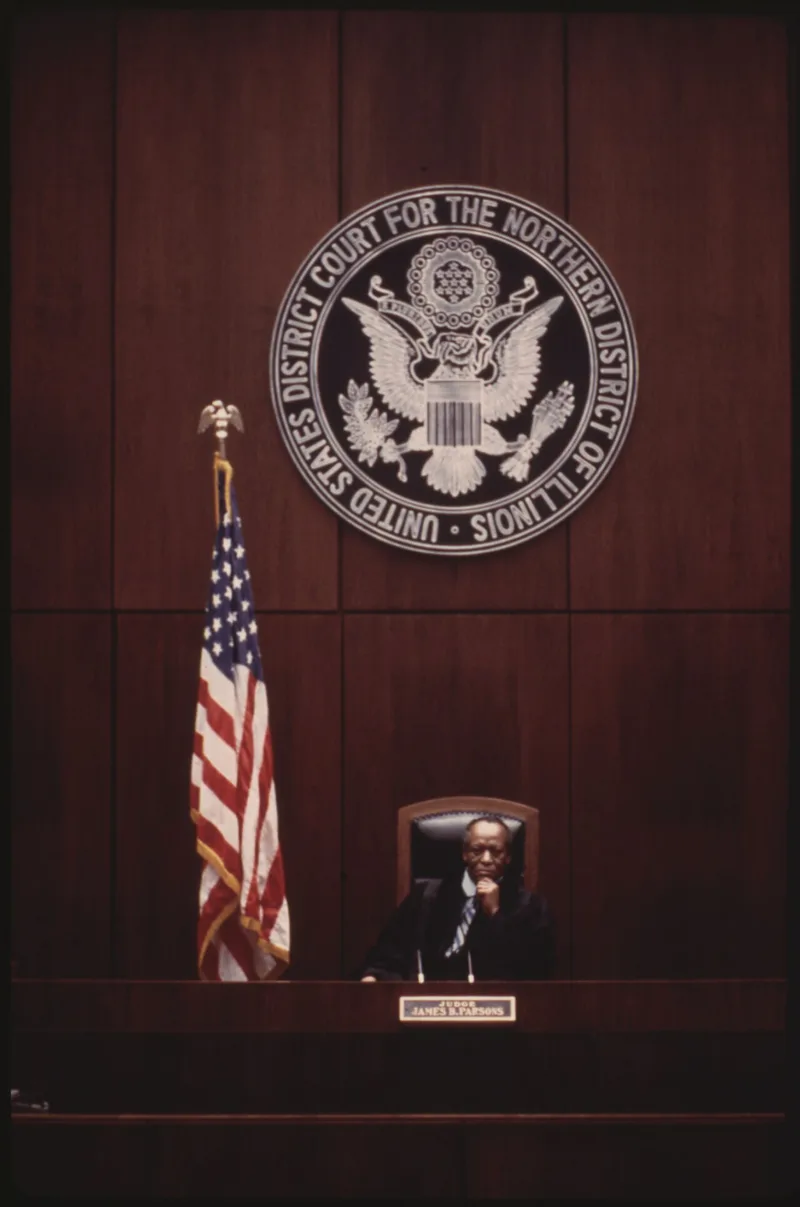
In this case, plaintiff Richard Roe sued doctors, a hospital, and blood suppliers including the American Red Cross in state court for negligence after contracting HIV from contaminated blood transfusions during a 1984 splenectomy. The Red Cross removed the case to federal court under its federal charter, and Roe moved to remand, arguing that not all defendants had consented to removal as generally required. The court denied the remand motion, holding that the Red Cross's independent statutory right to remove under 36 U.S.C. § 2, as confirmed by the Supreme Court in American National Red Cross v. S.G., does not require consent from codefendants. The court further exercised supplemental jurisdiction over the remaining state-law claims against the other defendants, finding no basis to decline it under 28 U.S.C. § 1367.
This case involves a state-law negligence and medical malpractice action originally filed in Illinois state court, in which plaintiff Richard Roe named three doctors as respondents in discovery under 735 ILCS 5/2-402 but never moved to convert them to defendants. After removal to federal court on the basis of the American Red Cross's federal charter, the doctors moved to dismiss, arguing that the six-month statutory window and the applicable statute of limitations had both expired without compliance. The court granted the motion, holding that Illinois precedent requires strict adherence to the statute's procedural requirements, including a timely motion supported by probable cause, and that the plaintiff's inaction deprived the court of jurisdiction over the respondents in discovery.
The case concerned a plaintiff's negligence claims against a hospital, doctors, and blood suppliers after he contracted HIV from contaminated transfusions received during spleen surgery in 1984. The American Red Cross removed the action to federal court under its congressional charter, prompting the plaintiff to move for remand of the entire case to state court on grounds that jurisdiction was lacking over the non-Red Cross defendants. The court determined it possessed original jurisdiction over the Red Cross claim based on the Supreme Court's ruling in American National Red Cross v. S.G. and supplemental jurisdiction over the remaining claims under 28 U.S.C. § 1367(a) because they arose from the same case or controversy. Core reasoning centered on the mandatory nature of supplemental jurisdiction for factually interrelated claims and the 1990 amendments to removal statutes that limited prior authority to remand.
The case involved a personal injury lawsuit filed by Shirley Hudson against the Wabash Inn's operator (Jay-N-Vee) and the building owner (First National Bank of Chicago) after her husband Robert was found unconscious at the bottom of a staircase leading to the restroom, suffering permanent injuries with no witnesses to the incident. The plaintiff alleged that Robert's fall resulted from the defendants' negligence in maintaining an unreasonably slippery tile floor and an inadequately designed or maintained staircase that violated Chicago Building Code requirements. The defendants moved for summary judgment, arguing a lack of evidence linking any alleged defects to the injury. The court granted the motion, holding that under Illinois law the plaintiff bore the burden of affirmatively proving proximate causation and that the absence of any direct evidence or eyewitness testimony would force any verdict in her favor to rest on speculation rather than fact.
The case involved National Advertising Co.'s challenge to Chicago's zoning ordinance and electrical code, which imposed setback, height, and permit requirements on advertising signs near major highways. National's applications for 16 signs were denied, and appeals to the Zoning Board of Appeals were unsuccessful, leading to a lawsuit alleging violations of due process, equal protection, and First Amendment rights under both pre- and post-1990 versions of the regulations. The court granted the City's motion to dismiss, ruling that challenges to the superseded pre-amendment laws were moot because the provisions no longer had legal effect and National had no vested rights to permits. It also held that the claims against the current laws failed to state a viable claim, as National did not demonstrate purposeful discrimination or invidious classification to support an equal protection violation. The decision rested on principles that constitutional challenges require ongoing legal effect or specific factual allegations of discriminatory intent beyond mere denial of permits.
This case involves a patent infringement lawsuit filed by Baxter International Inc. and Baxter Healthcare Corporation against Cobe Laboratories, Inc., in which Baxter alleged infringement of four patents and Cobe countered by challenging the patents' validity and seeking declaratory relief. The specific dispute before the court concerned Cobe's motion to compel inventor Herbert Cullis to answer deposition questions regarding the patents' interpretation, validity, and contribution to the art. The court granted the motion to compel but directed the parties to resume the deposition under specific conditions, requiring Cobe to first establish a foundation for Cullis's knowledge based on his involvement with the patents and allowing the court to later rule on any objections to the testimony. The reasoning drew on precedents showing that inventors often possess relevant insights due to their association with the subject matter, while emphasizing the need for fair discovery practices that avoid oppression and ensure reliable testimony.