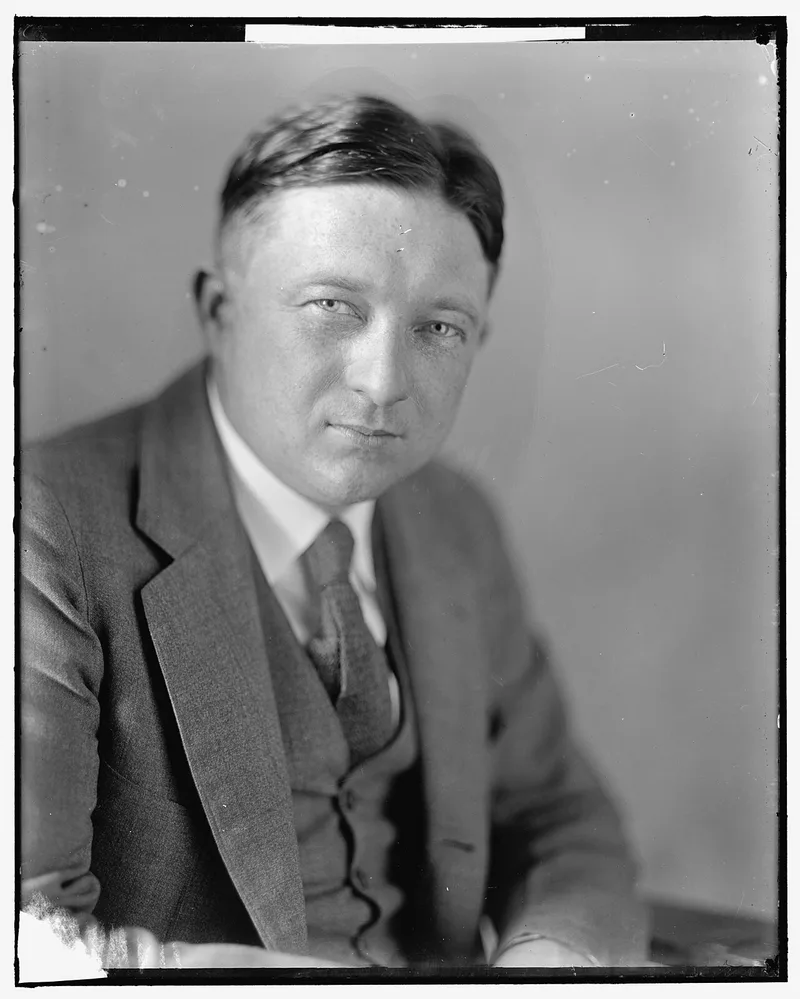
District Court, District of Columbia — appointed by Franklin D. Roosevelt
Decision levers
AI-measured from their own opinions — each lever cites its cases
Living constitutionalismOriginalism
Emphasizes that searches of dwellings are generally unreasonable without warrants and requires clear proof of voluntary consent free from coercion in custody situations. United States v. Wallace ↗
Deference to government powerSkepticism of government power
Invalidates warrantless home searches lacking voluntary consent and voids administrative zoning decisions influenced by ex parte government communications, treating such actions as unreasonable or unfair. United States v. Wallace ↗ Jarrott v. Scrivener ↗
This case involves a motion for a new trial under Rule 33 in a criminal prosecution for robbery and assault with a dangerous weapon, where the defendant argued that the sole government witness had falsely denied a prior larceny conviction. The court found that the evidence of the witness's conviction under a variant of his name qualified as newly discovered, that defense counsel had not fully exercised diligence in uncovering it during trial, and that the evidence was material and impeaching but not merely cumulative. Applying the five-part test from Thompson v. United States, the court determined that the impeachment evidence could raise reasonable doubt in this uncorroborated credibility contest and therefore indicated it was inclined to grant the motion, following the procedure in Smith v. Pollin to allow for a potential remand from the pending appeal.
In United States v. Caviness, a juvenile defendant charged with assault with a dangerous weapon on a federal officer moved for the district judge to convene as a juvenile court, arguing that the juvenile court's prior waiver of jurisdiction was invalid for lack of a required full investigation. The court recounted the procedural history, including the waiver order, preliminary hearing, indictment, and mental competency evaluation finding the defendant fit for trial, then examined precedents such as Kent v. United States and Pee v. United States regarding the standards and limits of reviewing juvenile waivers. The court held that it must first assess the waiver's validity, then independently decide on the merits whether to proceed in district court or as a juvenile court, without authority to remand the case.
In Jarrott v. Scrivener, adjacent property owners challenged an order by the District of Columbia Board of Zoning Adjustment granting an exception to R-1 zoning rules to allow construction of a large Soviet embassy and chancery on the Bonnie Brae estate. The plaintiffs sought to void the order, alleging that Board members had been subjected to improper ex parte pressure through letters and calls from high-ranking federal and District officials, including the Secretary of State and a White House advisor. The court, exercising its general equity powers to review the integrity of the administrative decision, found that these secret contacts denied the plaintiffs a fair and impartial hearing. It therefore held the Board's order null and void and remanded the matter for a new hearing before a reconstituted Board, emphasizing that government views must be presented through public processes rather than covert communications.
This case involved a personal injury lawsuit by mail carrier Emil Busey and his wife against the driver and owner of a salvage truck after Busey was injured when the postal truck he was riding in stopped abruptly during an attempt to pass the salvage truck. The defendants filed third-party claims against the United States under the Federal Tort Claims Act seeking contribution from the postal truck driver. The jury found the salvage truck driver negligent and the postal driver not negligent, and the court denied the defendants' motions for judgment n.o.v. or a new trial while entering judgment for the United States on the third-party claim. The court reasoned that, viewing the evidence favorably to the plaintiffs, reasonable persons could differ on whether Busey violated a traffic regulation by sitting in a non-passenger area of the truck and whether any such violation was a proximate cause of his injuries.
In Daly v. Toomey, the plaintiff sued for injuries sustained when she fell into an uncovered stairwell on property owned by the Toomeys and leased to Sinclair while walking through a public alley after a baseball game, contending that darkness and lack of barriers or warnings created a hazard. The defendants moved for judgment notwithstanding the verdict or a new trial, arguing that as a trespasser or bare licensee the plaintiff could not recover absent willful injury or a hidden danger, and raising additional issues related to their landlord-tenant status. The court denied the motion for judgment n.o.v., holding that evidence supported liability under an exception to the general rule when property adjacent to a public way maintains a dangerous condition that a reasonably prudent pedestrian might mistake for the highway itself. It also rejected other grounds for a directed verdict and, finding the damages excessive but not the product of passion or prejudice, conditioned denial of a new trial on the plaintiff's acceptance of a remittitur reducing the award to $12,000.
This case involved a motion to dismiss a caveat filed against a will by the adopted son of the testatrix's deceased daughter, who had been left out of the will entirely. The court treated the motion as one for summary judgment and addressed whether the caveator had standing based on a potential intestate inheritance right under District of Columbia law. It held that the Maryland adoption would be recognized in D.C., that D.C. law governed inheritance rights for property located there, and that the 1954 D.C. adoption statute—which treated adoptees as natural children for inheritance purposes—applied because the testatrix died in 1958, giving the caveator the necessary interest. The motion to dismiss was therefore denied.