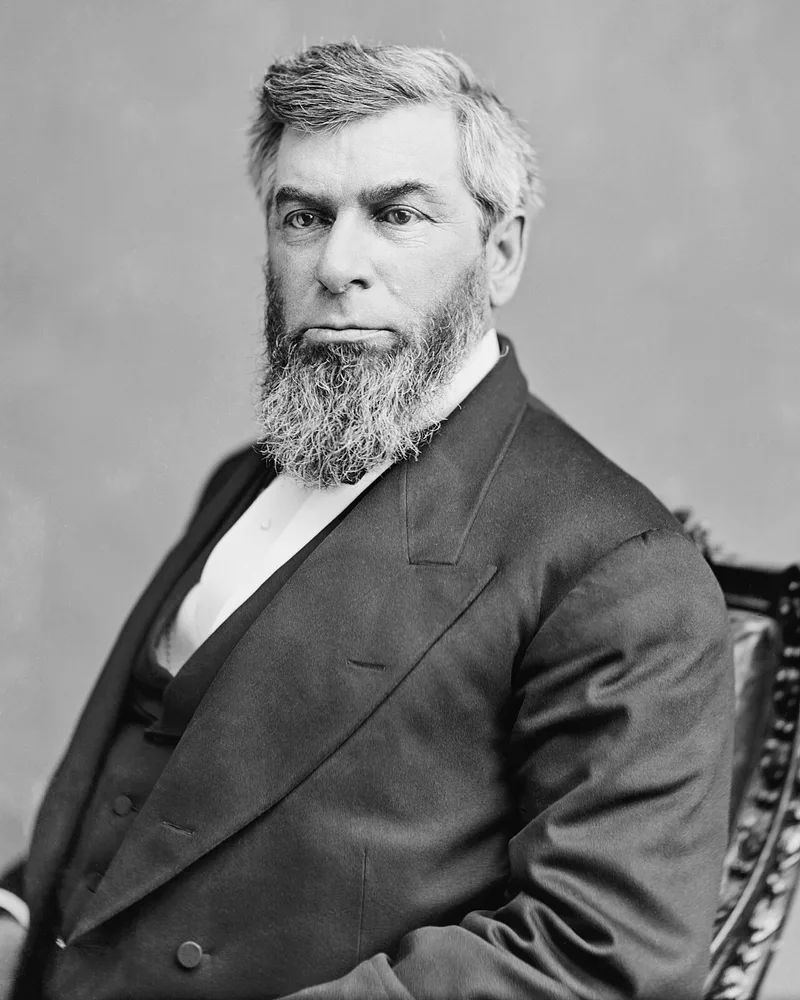
The case concerned two quo warranto actions brought by the State of Kansas in state court to challenge the Kansas Pacific Railway Company's right to exercise corporate powers and franchises within the state, where the company was chartered under federal law. The Supreme Court held that the suits qualified as civil actions arising under the laws of the United States and were therefore removable to federal court under the Act of March 3, 1875. The Court reasoned that Kansas law had converted quo warranto proceedings into ordinary civil actions for enforcing civil rights, that the company's federal charter made the cases arise under federal law, and that neither the state's role as plaintiff nor the historical form of the writ created an exception to the broad removal authority granted by the 1875 statute. The Court reversed the orders remanding the cases to state court and directed the circuit court to proceed with them as properly removed.
The case involved a dispute over ownership of the Silver Gate tunnel mining claim in Colorado, where the plaintiff alleged a valid 1865 location of a 5,000-foot tunnel site and associated lodes, along with five years of possession and tax payments, and sought to recover the property from defendants who had ousted it. The lower court sustained the defendants' demurrer to the complaint, but the Supreme Court reversed that ruling. The Court held that the complaint's description of the tunnel claim by name, location, and boundaries was sufficiently clear to support a judgment, that the allegations of valid location, possession, and tax payments stated a superior claim under Colorado law, and that questions about the claim's compliance with pre-1866 local mining customs or federal statutes could not be resolved on demurrer. The Court further noted that any overlength in the tunnel would not void the entire location, which would remain valid at least to the 3,000 feet permitted by statute.
The case concerned Arkansas railroad companies that received state bonds as aid for construction under 1868 statutes, which imposed taxes on the companies to cover interest and principal, with a sequestration remedy against their income and revenues if they defaulted; after the original companies transferred the railroads, bondholders and the state sought to apply sequestration against the successor operators. The Supreme Court affirmed the circuit court's rulings that the new companies took the roads free of any state incumbrance and that sequestration of their revenues was unavailable. The court's reasoning was that the statutes created only a limited sequestration power over a defaulting company's own earnings and did not impose an express lien or charge on the railroad property that would run with the asset or bind successors, in contrast to more explicit lien provisions in other state laws of the period.
The case involved Howard D. Potts, a navy assistant engineer who was examined by a retiring board and found incapacitated for active service due to a condition that did not originate in the line of duty; the President approved retirement on furlough pay under the relevant Revised Statutes. Potts was later transferred from the furlough list to the retired pay list by presidential nomination and Senate confirmation, after which he claimed entitlement to three-quarters sea pay rather than half, arguing his situation fell under a statutory clause for service-related incapacity. The Court of Claims ruled against him, and the Supreme Court affirmed on appeal, holding that the retiring board's determination remained controlling and that the transfer statute only permitted an increase in pay amount without altering the underlying finding about the cause of incapacity.
The case involved Jabez Burchard, a Navy assistant engineer retired on furlough pay after a board found his incapacity was not service-related. The President and Senate later transferred him to the retired pay list with an effective date back to his original retirement, leading to payments at three-quarters sea pay. The United States appealed after the Court of Claims dismissed its counter-claim seeking recovery of alleged overpayments from 1875 to 1878. The Supreme Court held that the transfer could be antedated under the relevant statute and that Burchard was entitled only to half sea pay, with the excess overpaid by mistake and recoverable by the government. The Court reasoned that disbursing officers lacked authority to pay more than the law allowed and that such mistaken payments could be corrected in an ongoing pay account.
The case Dolbear v. American Bell Telephone Company involved a dispute over the scope of the fifth claim in Alexander Graham Bell's 1876 patent, which described a method and apparatus for transmitting vocal or other sounds telegraphically by causing electrical undulations similar to air vibrations. The court determined that this claim encompasses the transmission of articulate speech, thereby granting Bell and his assignees the exclusive right to use this process until the patent expires. The reasoning centered on the fact that articulate speech is a form of vocal sound produced by the human voice, and Bell's discovery of controlling electrical currents to match sound vibrations constituted a patentable useful art or process under the law, distinct from the specific means of implementation. A petition for rehearing was denied as no justice who joined the original opinion requested it.