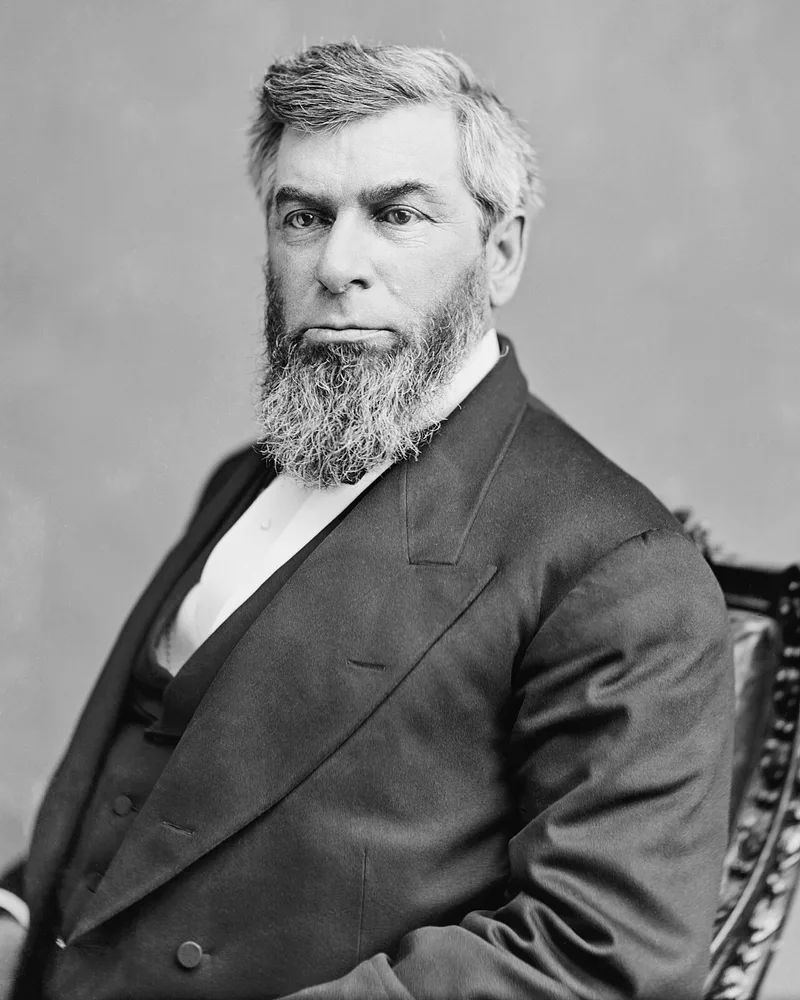
Ames v. Kansas Ex Rel. Johnston
Supreme Court of the United States · 2010-03-07 · cited 17×
The case concerned two quo warranto actions brought by the State of Kansas in state court to challenge the Kansas Pacific Railway Company's right to exercise corporate powers and franchises within the state, where the company was chartered under federal law. The Supreme Court held that the suits qualified as civil actions arising under the laws of the United States and were therefore removable to federal court under the Act of March 3, 1875. The Court reasoned that Kansas law had converted quo warranto proceedings into ordinary civil actions for enforcing civil rights, that the company's federal charter made the cases arise under federal law, and that neither the state's role as plaintiff nor the historical form of the writ created an exception to the broad removal authority granted by the 1875 statute. The Court reversed the orders remanding the cases to state court and directed the circuit court to proceed with them as properly removed.
federal powerprocedurebusiness & regulatory
Glacier Mountain Silver Mining Co. v. Willis
Supreme Court of the United States · 1888-05-14 · cited 19×
The case involved a dispute over ownership of the Silver Gate tunnel mining claim in Colorado, where the plaintiff alleged a valid 1865 location of a 5,000-foot tunnel site and associated lodes, along with five years of possession and tax payments, and sought to recover the property from defendants who had ousted it. The lower court sustained the defendants' demurrer to the complaint, but the Supreme Court reversed that ruling. The Court held that the complaint's description of the tunnel claim by name, location, and boundaries was sufficiently clear to support a judgment, that the allegations of valid location, possession, and tax payments stated a superior claim under Colorado law, and that questions about the claim's compliance with pre-1866 local mining customs or federal statutes could not be resolved on demurrer. The Court further noted that any overlength in the tunnel would not void the entire location, which would remain valid at least to the 3,000 feet permitted by statute.
propertyprocedure
Tompkins v. Little Rock & Fort Smith Railway
Supreme Court of the United States · 1888-03-19 · cited 7×
The case concerned Arkansas railroad companies that received state bonds as aid for construction under 1868 statutes, which imposed taxes on the companies to cover interest and principal, with a sequestration remedy against their income and revenues if they defaulted; after the original companies transferred the railroads, bondholders and the state sought to apply sequestration against the successor operators. The Supreme Court affirmed the circuit court's rulings that the new companies took the roads free of any state incumbrance and that sequestration of their revenues was unavailable. The court's reasoning was that the statutes created only a limited sequestration power over a defaulting company's own earnings and did not impose an express lien or charge on the railroad property that would run with the asset or bind successors, in contrast to more explicit lien provisions in other state laws of the period.
business & regulatorytaxesproperty
Potts v. United States
Supreme Court of the United States · 1888-03-19 · cited 10×
The case involved Howard D. Potts, a navy assistant engineer who was examined by a retiring board and found incapacitated for active service due to a condition that did not originate in the line of duty; the President approved retirement on furlough pay under the relevant Revised Statutes. Potts was later transferred from the furlough list to the retired pay list by presidential nomination and Senate confirmation, after which he claimed entitlement to three-quarters sea pay rather than half, arguing his situation fell under a statutory clause for service-related incapacity. The Court of Claims ruled against him, and the Supreme Court affirmed on appeal, holding that the retiring board's determination remained controlling and that the transfer statute only permitted an increase in pay amount without altering the underlying finding about the cause of incapacity.
federal powerlabor & employment
United States v. Burchard
Supreme Court of the United States · 1888-03-19 · cited 59×
The case involved Jabez Burchard, a Navy assistant engineer retired on furlough pay after a board found his incapacity was not service-related. The President and Senate later transferred him to the retired pay list with an effective date back to his original retirement, leading to payments at three-quarters sea pay. The United States appealed after the Court of Claims dismissed its counter-claim seeking recovery of alleged overpayments from 1875 to 1878. The Supreme Court held that the transfer could be antedated under the relevant statute and that Burchard was entitled only to half sea pay, with the excess overpaid by mistake and recoverable by the government. The Court reasoned that disbursing officers lacked authority to pay more than the law allowed and that such mistaken payments could be corrected in an ongoing pay account.
federal power
Dolbear v. American Bell Telephone Company
Supreme Court of the United States · 1888-03-19 · cited 206×
The case Dolbear v. American Bell Telephone Company involved a dispute over the scope of the fifth claim in Alexander Graham Bell's 1876 patent, which described a method and apparatus for transmitting vocal or other sounds telegraphically by causing electrical undulations similar to air vibrations. The court determined that this claim encompasses the transmission of articulate speech, thereby granting Bell and his assignees the exclusive right to use this process until the patent expires. The reasoning centered on the fact that articulate speech is a form of vocal sound produced by the human voice, and Bell's discovery of controlling electrical currents to match sound vibrations constituted a patentable useful art or process under the law, distinct from the specific means of implementation. A petition for rehearing was denied as no justice who joined the original opinion requested it.
business & regulatoryproperty
Pacific National Bank v. Mixter
Supreme Court of the United States · 1888-02-20 · cited 89×
This case concerned whether creditors could obtain pre-judgment attachments against a national bank in federal circuit court after the bank became insolvent. The Supreme Court held that such attachments are invalid under federal law, and thus the bonds given to dissolve them are unenforceable, requiring sureties to return collateral to the bank's receiver. The reasoning centered on Revised Statutes §5242, which explicitly bars attachments against national banks before final judgment in state courts, and §915, which limits federal courts to state attachment procedures, effectively incorporating the prohibition to ensure equal treatment of creditors as intended by the national banking laws.
business & regulatoryfederal powerprocedure
Hoadley's Administrators v. San Francisco
Supreme Court of the United States · 1888-02-20 · cited 11×
This case concerned a dispute over title to two public squares in San Francisco claimed by Hoadley under city ordinances, specifically whether a state statute and related map reservations for public use impaired any contractual rights or effected a taking without due process. The Court held that Hoadley acquired no title to the squares and affirmed the judgment against him. The reasoning was that Ordinance 822 granted only such title as the city was authorized by Congress and the state legislature to convey, the 1858 state act ratified the map reserving the squares for public purposes, and the subsequent federal conveyance followed the state's action, so any rights were subject to those reservations and no protected contract or property interest existed beyond them.
propertyfederal power
Dow v. Memphis & Little Rock Railroad
Supreme Court of the United States · 1888-02-20 · cited 48×
This case concerned a mortgage on a railroad property that included income, where the trustees sought to enforce surrender of possession from the company rather than foreclosure. The Supreme Court held that the company must account for earnings to the trustees starting from the date the suit was filed in February 1884, and that the disputed funds on hand were earned after the suit began and thus covered by the mortgage. The core reasoning was that filing the suit constituted a demand for possession under the mortgage terms, after which the company wrongfully retained the property and its income, making it liable to account as if it were a receiver; prior precedent confirmed no accounting is required before such a demand. The Court reversed the Circuit Court's decree and remanded for entry of judgment consistent with this holding.
propertybusiness & regulatory
Crawford v. Halsey
Supreme Court of the United States · 1888-02-20 · cited 2×
The case involved a dispute over the validity of assignments of a claim arising from a commercial transaction, in the context of bankruptcy proceedings against partners including Robert C. Crawford. The court affirmed the judgment below, holding that Crawford could not contest the validity of a later assignment as fraudulent because an earlier assignment to Parker on December 3, 1873, to which Crawford was a party, was valid and not prohibited by the bankrupt law. The reasoning was that the prior assignment transferred title to the claim before the bankruptcy, so nothing passed to the bankruptcy assignees, the later April 7, 1874 assignment was irrelevant, and Crawford's rights as purchaser were limited to those of the assignees; the court also noted that the assignees need not have been parties to the arbitration submission.
business & regulatoryprocedure
Phillips v. Mound City Land and Water Assn.
Supreme Court of the United States · 1888-02-13 · cited 10×
This case involved a dispute between parties claiming title to land under Mexican grants later confirmed by U.S. patents, with the central issue being whether an alleged partition by a Mexican tribunal before the 1848 treaty had converted the grantees' interests from tenancy in common to ownership in severalty. The patents, issued under the Act of March 3, 1851, vested legal title but were conclusive only between the United States and the claimants, leaving third-party interests unaffected. The Supreme Court granted a motion to dismiss the appeal from the state court's ruling that the partition evidence was insufficient, reasoning that Article VIII of the treaty protected existing Mexican property rights without creating or defining them and that the question of whether a partition occurred was a factual or state-law matter not involving any federal statute, constitutional provision, or treaty interpretation. The Court noted that any valid pre-treaty partition would be respected, but the state court's decision on that point was final and not subject to federal review.
property
Trask v. Jacksonville, Pensacola & Mobile Railroad
Supreme Court of the United States · 1888-02-06 · cited 5×
This case involved Spencer Trask's attempt to enforce payment on 192 state-issued bonds originally given to the Florida Central Railroad Company by collecting from the railroad's property through a lien, after the bonds were ruled void against the State in a prior case. The court affirmed the lower court's decision against Trask, holding that he could not benefit from the estoppel that protected bona fide holders in the earlier litigation. The reasoning focused on the facts that Trask purchased the bonds at auction with notice of their dishonored status—no interest had ever been paid, they had been subject to litigation, and the sale occurred under an agreement revealing irregularities—and that his predecessor Coddington had participated in the fraudulent scheme to misuse the bonds for personal debts rather than for the railroad's benefit, preventing any valid lien from attaching.
business & regulatoryproperty
Fayolle v. Texas & Pacific Railroad
Supreme Court of the United States · 1888-02-06 · cited 4×
The case involved an appeal from a lower court decree rendered on November 12, 1883, in a dispute with the Texas & Pacific Railroad, which was taken in open court but not docketed in the Supreme Court until January 17, 1888. The Court granted a motion to dismiss the appeal, holding that it had become inoperative because it was not docketed during the return term that ended May 4, 1885. The reasoning relied on precedents such as Grigsby v. Purcell, which require timely docketing, and found the appellants' excuses insufficient to invoke any recognized exceptions. The case also did not fall under Edwards v. United States because the record transcript was not lodged until after the return term, with no timely effort to docket it.
procedure
French v. Hopkins
Supreme Court of the United States · 1888-02-06 · cited 5×
The case involved a challenge to a state court decision confirming a foreclosure sale of mortgaged property that had been sold as a single parcel rather than in divisible parts. The Supreme Court granted a motion to dismiss the appeal, holding that it lacked jurisdiction under federal law. The record showed no federal constitutional or statutory right, title, privilege, or immunity had been specially claimed in the lower courts, and the dispute turned solely on state statutes and the state court's authority to direct the form of the sale. The Court also clarified that its review of state high court decisions under Revised Statutes §709 does not depend on the parties' citizenship but only on the federal questions presented.
procedureproperty
Brown v. McConnell
Supreme Court of the United States · 1888-01-30 · cited 36×
The case involved a motion to dismiss an appeal from a 1885 judgment of the Supreme Court of the Territory of Washington that had dismissed another appeal. Appellants Brown and Holmes sought to appeal that judgment to the U.S. Supreme Court, but questions arose over the timing of docketing the case, the signing of a citation returnable to the 1887 term, and the failure to initially provide security for costs. The Court held that the signing of a proper citation by a judge or justice constitutes an allowance of the appeal sufficient to invoke jurisdiction, though security is required by statute and its omission is a curable irregularity rather than a jurisdictional defect. It therefore ordered the appeal dismissed unless the appellants filed an approved bond by March 19 of the following year. Similar orders were entered in two related cases.
procedurefederal power
King Iron Bridge & Manufacturing Co. v. Otoe County
Supreme Court of the United States · 1888-01-30 · cited 15×
This case involved a suit by King Iron Bridge & Manufacturing Co. to recover payment on two county warrants issued by Otoe County, Nebraska, in 1878 and 1879 for a debt owed to Z. King, which had been assigned to the plaintiff. The county raised a defense that the five-year statute of limitations on written contracts barred the action, and the trial court agreed, entering judgment for the county. The Supreme Court reversed, holding that under Nebraska law as established in Brewer v. Otoe County, the cause of action on such warrants does not accrue upon presentment and refusal of payment but only when funds have been collected or sufficient time has elapsed for collection through the ordinary process of levying taxes. The Court noted that the petition alleged prolonged neglect by the county to provide funds, and it could not be said as a matter of law that the limitations period had run by the time suit was filed in 1885.
procedurebusiness & regulatory
Stewart v. Masterson
Supreme Court of the United States · 1888-01-30 · cited 3×
This case concerned the procedural requirements for perfecting an appeal to the U.S. Supreme Court from a lower court decree rendered in November 1884. The original appeal was allowed but not docketed during the 1885 term, and a citation was later signed that the Court treated as allowing a new appeal returnable in 1886. The Court held that the initial bond had become inoperative due to the docketing failure. It therefore ordered the appeal dismissed unless the appellant filed a new $500 bond with the clerk by March 19, with sureties approved by the allotted Justice.
procedure
Brooks v. Missouri
Supreme Court of the United States · 1888-01-23 · cited 22×
The case involved a defendant convicted of murder in Missouri state court who sought review in the U.S. Supreme Court, claiming violations of federal constitutional rights related to evidence admission, indictment procedures, public trial, jury impartiality, and a late-filed motion for new trial. The Court granted a motion to dismiss for lack of jurisdiction under Revised Statutes § 709. It reasoned that no federal title, right, privilege, or immunity had been specially set up or claimed at the proper time in the trial court, where objections instead referenced state law or general grounds, and that the state supreme court's ruling rested on independent, non-federal procedural grounds concerning the timeliness of the new-trial motion.
criminal lawprocedurefederal power
In Re Sherman
Supreme Court of the United States · 1888-01-23 · cited 5×
The case concerned a petitioner's request for a writ of mandamus to compel the U.S. Circuit Court for the Southern District of New York to vacate its order remanding a removed case to state court and to grant a rehearing. The petitioner argued that the remand decision was flawed because the court had not reviewed the complaint, which was omitted from the submitted papers by mistake. The Supreme Court denied the motion, ruling that any rehearing was a matter within the lower court's discretion and that mandamus could not be used to require it. The opinion noted that both parties had submitted the motion on the existing papers and that the Supreme Court had no authority to intervene in this manner.
procedurefederal power
Widdicombe v. Childers
Supreme Court of the United States · 1888-01-23 · cited 21×
This case involved a dispute over ownership of a quarter-section of land in Missouri, where plaintiff Widdicombe sought to recover possession based on a federal patent issued in 1871 under an 1862 agricultural scrip act. The defendants asserted an equitable defense, claiming title through Edward Jenner Smith, who had purchased the land in 1836 at a federal land office but whose application mistakenly described the wrong quarter-section due to a register's error; the trial court found that the records and circumstances showed Smith's intent and payment for the correct parcel, and that Widdicombe entered with full knowledge of the prior claim and alterations in the records. The Supreme Court of Missouri affirmed a judgment establishing that Widdicombe held the legal title in trust for the defendants and ordering conveyance to them. On review, the U.S. Supreme Court upheld this result, reasoning that Widdicombe was chargeable with notice of Smith's completed purchase and superior equity, and that federal statutes authorized correction of such land-office mistakes even after patent issuance, making the holder of legal title in bad faith subject to the prior equitable rights.
property