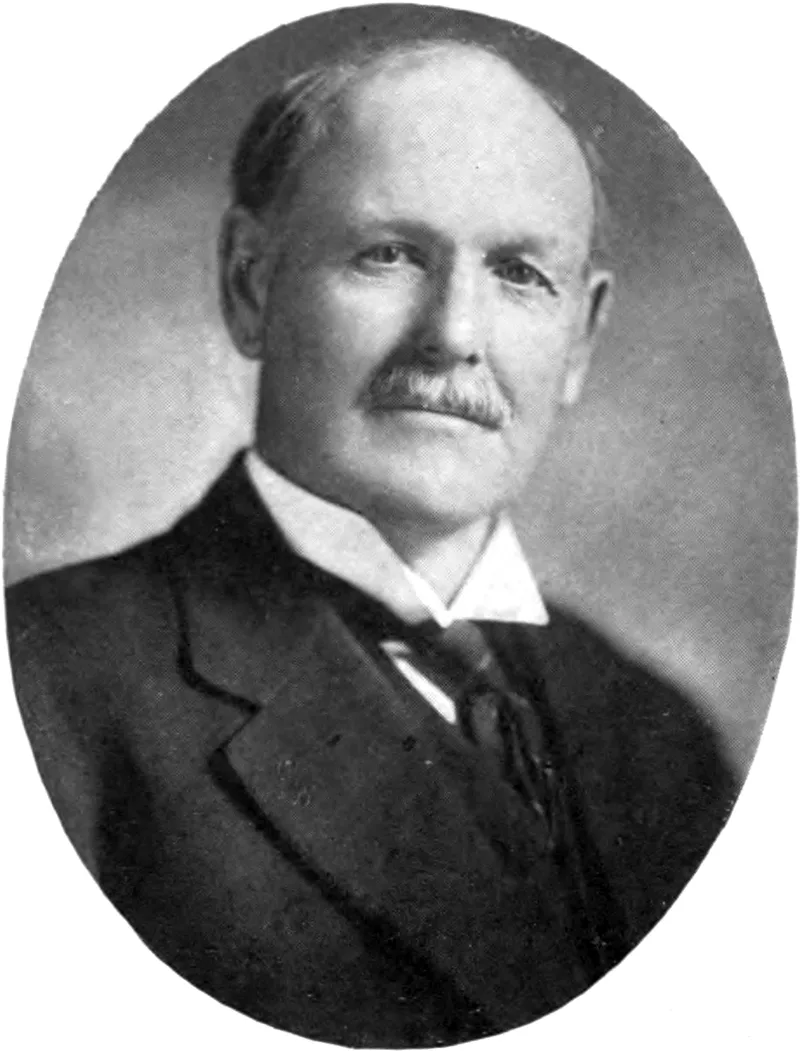
Calkins v. Smalley
Supreme Court of Colorado · 1930-12-22 · cited 6×
The case involved a defendant who sought to vacate a $3,140 default judgment entered against him after the trial court set the matter for trial based on notice served only on his attorney of record, who refused to accept it and indicated an intent to withdraw. The defendant, a traveling salesman frequently absent from Denver, learned of the judgment months later and promptly moved to vacate on grounds of mistake, inadvertence, surprise, and excusable neglect, asserting he had received no personal notice or information about the trial setting. The district court denied the motion and issued a body execution. On review, the court held that the district court abused its discretion by denying the motion, as the defendant had no opportunity to be heard and should have his day in court, and therefore reversed the order with directions to vacate the judgment and proceed accordingly.
procedure
Sherman Mercantile Co. v. Mountain Ice & Coal Co.
Supreme Court of Colorado · 1930-06-23 · cited 1×
This case was a civil action by the Sherman Mercantile Company to recover possession of 327 cases of eggs stored in a warehouse, after unauthorized orders signed by an employee purported to transfer the eggs first to C.E. Richards and then to the Jagger Produce Company without the owner's knowledge, consent, or consideration. The trial court directed a verdict for the Jagger Produce Company at the close of the plaintiff's evidence and entered judgment accordingly. The appellate court reversed the judgment and remanded for a new trial, holding that the evidence was sufficient to present questions of fact and witness credibility to the jury rather than resolving the matter by directed verdict.
propertybusiness & regulatory
Herrera v. the People
Supreme Court of Colorado · 1930-04-28
In Herrera v. the People, Amelio Herrera was convicted of first-degree murder for shooting his wife four times and sentenced to death by the jury. He appealed the judgment, primarily contending that the trial court should have directed a verdict of not guilty on the first-degree murder charge due to insufficient evidence of premeditation. The court affirmed the conviction, reasoning that the jury, as the sole fact-finder in capital cases, could properly reject the defendant's inconsistent and self-contradictory testimony about a struggle or suicide in light of the physical evidence, such as the location and number of wounds, and that no errors occurred in the admission of evidence or jury instructions.
criminal law
Blackmer v. Blackmer
Supreme Court of Colorado · 1930-03-03
This case involves a wife's action for divorce in district court. After two trials, the second resulting in a verdict for the defendant and dismissal of the complaint, with the motion for new trial denied, the wife sought review via writ of error. The court held that it could not entertain the writ because the statute prohibits writs of error in divorce actions unless a decree of divorce has been granted against the party seeking review, and here no such decree was issued. Citing prior cases, the court dismissed the writ for lack of jurisdiction.
family lawprocedure
Popham v. Duncan
Supreme Court of Colorado · 1930-02-24 · cited 12×
This case concerned a widow's petition for a statutory allowance from her intestate husband's estate, which the administrator opposed based on an antenuptial contract the couple signed before their marriage. The contract stipulated a payment of $100 per year of marriage upon separation, required the wife to vacate the home within 24 hours, and released all claims to alimony, support, dower, or widow's rights while barring her from contesting a divorce. The county court denied the petition, but the district court on appeal held the contract void and ruled for the widow. The Supreme Court affirmed, reasoning that the agreement was against public policy because it anticipated and provided for future separation and divorce, thereby undermining the indissoluble nature of marriage under the law.
family law
Peek v. City of Lamar
Supreme Court of Colorado · 1930-02-17 · cited 1×
The plaintiff sued the City of Lamar for personal injuries allegedly caused by the city's negligence in allowing a storm sewer manhole in a public street to remain in a defective and dangerous condition. The trial court sustained a general demurrer to the amended complaint on the ground that it did not allege compliance with the statutory requirement of written notice. The Supreme Court affirmed, ruling that Section 9157, C. L. 1921 requires written notice of the time, place, and cause of injury to be given to the city clerk within ninety days as a condition precedent to maintaining any action, and that the complaint's allegations of oral notice to council members and later written notice to the city attorney did not satisfy the statute. The court held that the statutory mandate is clear and that lack of prejudice to the city or actual knowledge does not excuse timely written notice to the designated official.
proceduretorts & liability
Weiss v. People
Supreme Court of Colorado · 1930-02-03 · cited 8×
In Weiss v. People, the defendant was charged with first-degree murder after shooting and killing his wife amid ongoing divorce proceedings and disputes over alimony; he was convicted by a jury and sentenced to death. On appeal, the Colorado Supreme Court affirmed the conviction and sentence. The court held that the trial evidence was sufficient to support the verdict, that cross-examination of the defendant regarding his infidelity and other matters was proper and not prejudicial, and that the defendant received a fair trial with no reversible errors in the admission or exclusion of evidence or other procedures.
criminal lawprocedure
People Ex Rel. Colorado Bar Ass'n v. Lindsey
Supreme Court of Colorado · 1929-12-09 · cited 16×
This case concerned disciplinary proceedings against Ben B. Lindsey, a licensed Colorado attorney and former juvenile court judge, who was accused of accepting compensation beyond his judicial salary for legal services in custody matters and other proceedings, including out-of-state activities, in violation of a 1923 state statute. The Colorado Supreme Court reviewed the grievance committee's investigation, the Attorney General's information, and the pleadings, then granted judgment disbarring Lindsey and striking his name from the roll of attorneys. The court reasoned that good moral character is an ongoing requirement for bar membership, that Lindsey's conduct demonstrated a lack of such character by breaching his oaths and statutory duties, and that the court retains authority to discipline attorneys for misconduct wherever it occurs so long as their license remains active.
procedurefamily law
Wilkins v. People
Supreme Court of Colorado · 1929-10-28 · cited 1×
The case involved the conviction of the defendant for the unlawful sale of whisky as a second offense under the state's intoxicating liquor laws, resulting in a prison sentence of one and a half to three years. The defendant appealed, arguing that the evidence was insufficient to support the verdict. The court affirmed the conviction, reasoning that the prosecution's witness provided direct testimony sufficient to sustain the finding of guilt if believed, and that the jury's resolution of conflicting testimony regarding credibility was properly upheld by the trial court.
criminal law
Ball v. People
Supreme Court of Colorado · 1929-10-21 · cited 1×
The case involved Wayne Ball, who was tried and convicted of statutory rape of a 17-year-old girl and sentenced to six to nine years in prison. Ball appealed, claiming the verdict lacked evidentiary support and that the trial court made erroneous rulings. The court examined the record and determined that the victim's explicit testimony was corroborated by other incriminating evidence, making the verdict sustainable despite conflicts in the testimony. The court also found no prejudicial errors in the trial proceedings that would justify reversal. The judgment of conviction was therefore affirmed.
criminal law
Johnston v. Colorado State Bureau of Child & Animal Protection
Supreme Court of Colorado · 1929-07-01 · cited 4×
This case involved a will contest in which collateral heirs challenged the probate of Fred H. Forrester's 1921 will (with a 1925 codicil), which left the residue of his approximately $150,000 estate to the Colorado State Bureau of Child and Animal Protection to relieve hungry, thirsty, abused, and neglected animals in perpetuity, with specific requests for drinking fountains and care for his dog Shep. The county court admitted the will to probate, and the caveators appealed, arguing that the bequest did not create a valid charitable trust and thus the residue passed to them as intestate property. The Supreme Court of Colorado affirmed the judgment, holding that the bequest constituted a charitable trust because relieving animal cruelty tends to advance morals and societal well-being. The court reasoned that gifts benefiting animals through such purposes are recognized as charitable under precedents from the U.S. Supreme Court, California, and English authorities, as they promote the moral betterment of mankind rather than violating law or public policy, and precatory language regarding the dog and fountains did not invalidate the overall gift.
property
Williams v. Williams
Supreme Court of Colorado · 1929-04-29 · cited 1×
This case was a statutory proceeding to determine heirship to the estate of Benjamin M. Williams, focusing on whether his marriage to the defendant in error was valid or void due to the decedent's alleged insanity at the time of the ceremony. The county and district courts both found the marriage valid and declared the defendant the widow and sole heir. On appeal, the supreme court affirmed, holding that the evidence amply supported the trial court's finding of the decedent's mental capacity to marry, despite conflicting testimony, and that no reversible error existed in the record. The court noted prior related litigation but did not base its decision on questions of the plaintiff's standing as an heir.
family lawproperty
Porter v. Johnson
Supreme Court of Colorado · 1929-03-29 · cited 2×
This case was an election contest for the mayoral office in the town of Lafayette, where the official count showed Johnson receiving 229 votes, Porter 228 votes, and Brown 178 votes. Porter challenged Johnson's victory, primarily questioning the validity of ballots cast by six school teachers based on residency requirements. The court found that the teachers had established residence in Lafayette with intent to remain, satisfying the requirements for five of them, but determined that one voter had not resided in her precinct for the required 30 days. However, because the record contained no evidence proving which candidate that voter supported, her ballot could not be deducted from Johnson's total. The court affirmed the judgment upholding Johnson's election.
elections
French v. Industrial Commission
Supreme Court of Colorado · 1929-01-28 · cited 3×
The case involved an employee seeking workers' compensation benefits from his employer under the Workmen’s Compensation Act for injuries sustained on the job. The Industrial Commission awarded compensation after multiple hearings, but the employer sought review directly in district court without first petitioning the commission for a rehearing of its final award. The district court dismissed the complaint for lack of jurisdiction, and the Supreme Court affirmed that dismissal. The court reasoned that the statute requires a petition for review to the commission as an indispensable prerequisite to any court action challenging the award, as confirmed by prior case law.
labor & employmentprocedure
Town of Palisade v. Orchard Mesa Irrigation District
Supreme Court of Colorado · 1928-12-24
The case involved an irrigation district seeking to condemn a right of way across land owned by the town of Palisade (used as a public baseball park outside its limits) and an adjoining parcel for a canal and tailrace to support a federally assisted irrigation project. The district court granted immediate possession pending final resolution, appointed a commission to assess damages, and entered judgment in the district's favor after the respondents withdrew their jury demand. On appeal via a joint writ of error, the Colorado Supreme Court affirmed the judgment, holding that the joint assignments of error were improper because they raised issues affecting the parties severally rather than jointly, and that the interlocutory possession order did not prejudice substantial rights in the final adjudication. The court applied procedural rules limiting review of joint assignments and noted a presumption favoring the lower court's judgment.
propertyprocedure
Taylor v. Taylor
Supreme Court of Colorado · 1928-12-24 · cited 1×
This case is an appeal from a divorce decree granted by the trial court to the defendant. The plaintiff in error sought review via writ of error, but the defendant moved to dismiss because no proper notice of intent to seek the writ had been filed with the trial court clerk under the requirements of section 5605, C. L. 1921. The court determined that the notice filed by the plaintiff was premature, having been submitted more than five months before the final decree of June 4, 1928, and prior to its entry, contrary to the statute's mandate that notice be filed within five days after the decree. Prior rulings established that such notice is jurisdictional and must strictly comply with the statutory timing and manner, leading the court to dismiss the writ for lack of jurisdiction.
family lawprocedure
Beeler v. Cities Service Oil Co.
Supreme Court of Colorado · 1928-12-10 · cited 1×
The case involved a creditor seeking to hold the officers and directors of Luboil Refining Company personally liable for a corporate debt under a Colorado statute requiring annual reports. The statute mandated that such reports include details on the corporation's real and personal property and its overall financial condition; the company's filing instead contained only a vague statement about lacking profits above expenses. The trial court ruled in favor of the plaintiff on the basis of the noncompliant report. On appeal, the court affirmed, holding that the officers' submission failed to meet the statute's clear and mandatory disclosure requirements, thereby triggering personal liability for debts incurred in the relevant period.
business & regulatory
Conner v. Sullivan
Supreme Court of Colorado · 1928-11-26 · cited 7×
This case was a personal injury action in which the plaintiff sought damages after being struck by the defendants' bus while his car was stopped on a public highway. The trial court denied the defendants' motions for nonsuit and directed verdict, the jury returned a verdict for the plaintiff, and the defendants appealed on grounds including insufficient evidence of ownership and operation and contributory negligence by the plaintiff. The court clarified the rule on waiver of nonsuit motions, found sufficient evidence that the defendants operated the bus line and employed the driver, and determined that contributory negligence was a factual question for the jury because the plaintiff's car stopped involuntarily due to engine failure. The court affirmed the judgment for the plaintiff.
torts & liability
Blackmer v. Blackmer
Supreme Court of Colorado · 1928-11-12 · cited 2×
In Blackmer v. Blackmer, the case involved a challenge to a trial court's order awarding temporary alimony, attorneys' fees, and court costs in a domestic relations matter. The appellate court considered a motion to dismiss the writ of error under rule 8, which requires a party to first move for a new trial in the trial court before raising errors on review, unless otherwise ordered. The court determined that the underlying issues were factual determinations based on testimony about the plaintiff's needs and the defendant's ability to pay. Because no motion for a new trial appeared in the record, rule 8 barred review of those factual questions. The court therefore granted the motion and dismissed the writ of error.
family lawprocedure
Keeler v. Union Trust Co.
Supreme Court of Colorado · 1928-07-09
Union Trust Company sued the incorporators, officers, and directors of Keeler Brothers and Company, a Delaware corporation, for breach of a contract to deliver $65,000 in Idaho highway district bonds, after the defendants refused delivery and the plaintiff had resold the bonds at a profit it could not realize. The trial court awarded damages of $2,606.70, and the Colorado Supreme Court affirmed. The court held that the contract was formed in Colorado through the exchange of letters and telegrams, with acceptance occurring in Denver, making it a Colorado contract. Because the foreign corporation had not registered or complied with Colorado statutes governing foreign corporations doing business in the state, the officers and agents were personally liable under the statute for contracts made while the corporation was in default. The court rejected the defendants' argument that the transaction involved interstate commerce exempt from the statute, noting their admission of doing business in Colorado and the contract's in-state formation.
business & regulatory