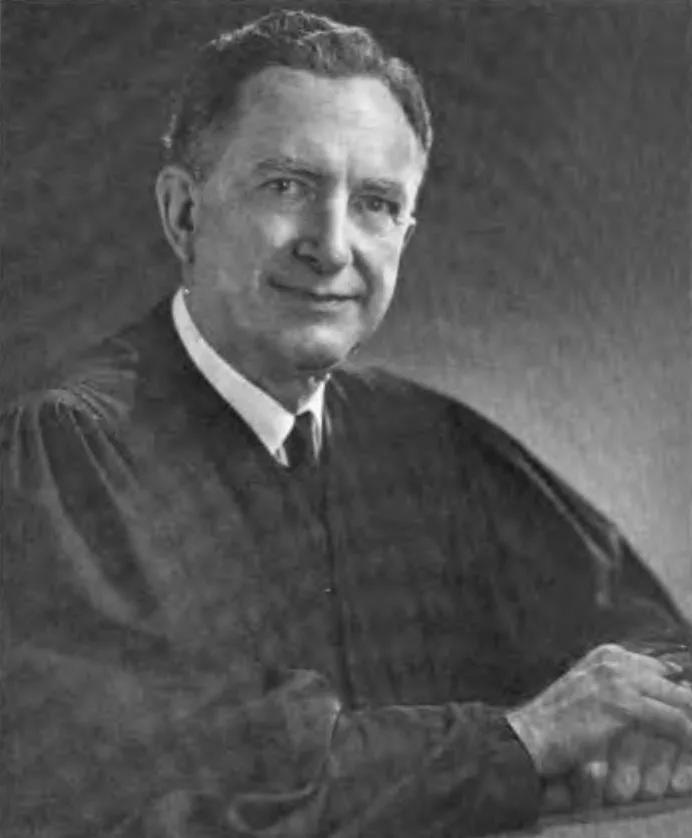
The case involved petitioner Larry Drake Atkinson's motion under 28 U.S.C. §§ 2255 and 1651(a) and Federal Rule of Criminal Procedure 33 to vacate his jury conviction for two counts of heroin possession with intent to distribute and two counts of distribution, on grounds that the government failed to disclose material evidence of perjury and bias by its key witness, Charles Edward Pennington, regarding prior convictions and payments received. The court granted the motion for a new trial, ordering the United States to retry Atkinson if it elects to do so. The core reasoning was that Pennington was the only witness linking Atkinson to the offenses, so the jury's assessment of his credibility was essential to the verdict, and newly discovered evidence sufficiently impugned that credibility that it might have induced reasonable doubt.
The case challenged North Carolina's system for electing the Robeson County Board of Education under the Equal Protection Clause, where seven of eleven members were chosen by all county voters including those in separate city administrative units, while the remaining four were elected only by voters in the county school district. Plaintiffs, representing Indian eligible voters living in the county district, argued that allowing non-residents of the district to vote for a majority of the board unconstitutionally diluted their votes. The court granted summary judgment to defendants, holding the system constitutional because city unit residents had a substantial interest in county board decisions on matters like pupil transportation and shared educational resources. It found the voting arrangement reasonable rather than arbitrary, noting that county district residents' greater stake was reflected in their exclusive vote for four members, and rejected related claims about racial representation or inconsistent local practices.
This case involved several taxpayers and members of Congress suing executive branch officials and military officers to enjoin shipments of war ordnance and other U.S. military support activities from Sunny Point, North Carolina, on the grounds that they violated Public Laws 93-50 and 93-52 by funding combat activities in Southeast Asia after August 15, 1973, and breached the Constitution's appropriations clause. The defendants moved to dismiss, asserting that the claims raised non-justiciable political questions concerning foreign relations and the conduct of war. The court granted the motion, concluding that the issues were political questions under the Baker v. Carr factors because the Constitution commits foreign affairs and military decisions to the executive and legislative branches, judicial resolution would require policy determinations reserved for those branches, and there was an unusual need for adherence to political decisions already made.
This case concerned the International Longshoremen's Association's effort to require the North Carolina State Ports Authority, a state agency operating port facilities, to negotiate in good faith over wages and working conditions for its security guards and dock and warehouse employees, whom the National Mediation Board had certified as covered by the Railway Labor Act. The court ruled for the union, holding that the Ports Authority qualifies as a carrier under the Act, that the Act applies to these employees, and that the union is entitled to the relief sought. It rejected Eleventh Amendment immunity, concluding that the state's operation of facilities in interstate commerce subjected it to federal authority under the Commerce Clause. The court further held that the Railway Labor Act preempts North Carolina General Statute § 95-98, which bars collective bargaining by state employees, because federal law favoring such bargaining controls under the Supremacy Clause.
This case involves a habeas corpus petition under 28 U.S.C. § 2254 filed by Ray Holt Lanier, a North Carolina prisoner, challenging his continued detention on 1964 convictions for breaking and entering and related offenses after he had been released. The court found that Lanier’s 1959 convictions were vacated in 1967 for lack of counsel, leading to a nol pros of those charges with the state’s solicitor present; Lanier was then allowed to leave jail without being held on the concurrent 1964 sentences, after which he lived openly for nearly five years until his rearrest in 1972. The court decided to grant the writ and order his release, reasoning that the state had acquiesced in his release, made no effort to reassert jurisdiction despite opportunities to do so (including a 1968 inquiry where officials told him to go home), and could not justify the delay by attributing fault to the petitioner.
In Bradford v. Weinstein, two North Carolina state prisoners filed a civil rights action under 42 U.S.C. § 1983 challenging the state's prison disciplinary procedures and the parole board's decision-making processes as violations of due process, seeking declaratory and injunctive relief for rights including notice, hearings, counsel, and access to records, and attempting to proceed as a class action on behalf of all inmates. The court dismissed the complaint, holding that the plaintiffs lacked standing to challenge disciplinary procedures because they had not been subjected to them, that the claims did not meet Rule 23 requirements for a class action due to a lack of common questions or typicality, and that parole suitability determinations do not trigger due process protections because they are discretionary administrative decisions rather than adversarial adjudications of rights. The court further reasoned that imposing such procedures would impose an unsustainable administrative burden on the parole system, potentially leading the state to eliminate parole altogether, and expressed doubt about federal judicial intervention in state prison disciplinary matters.