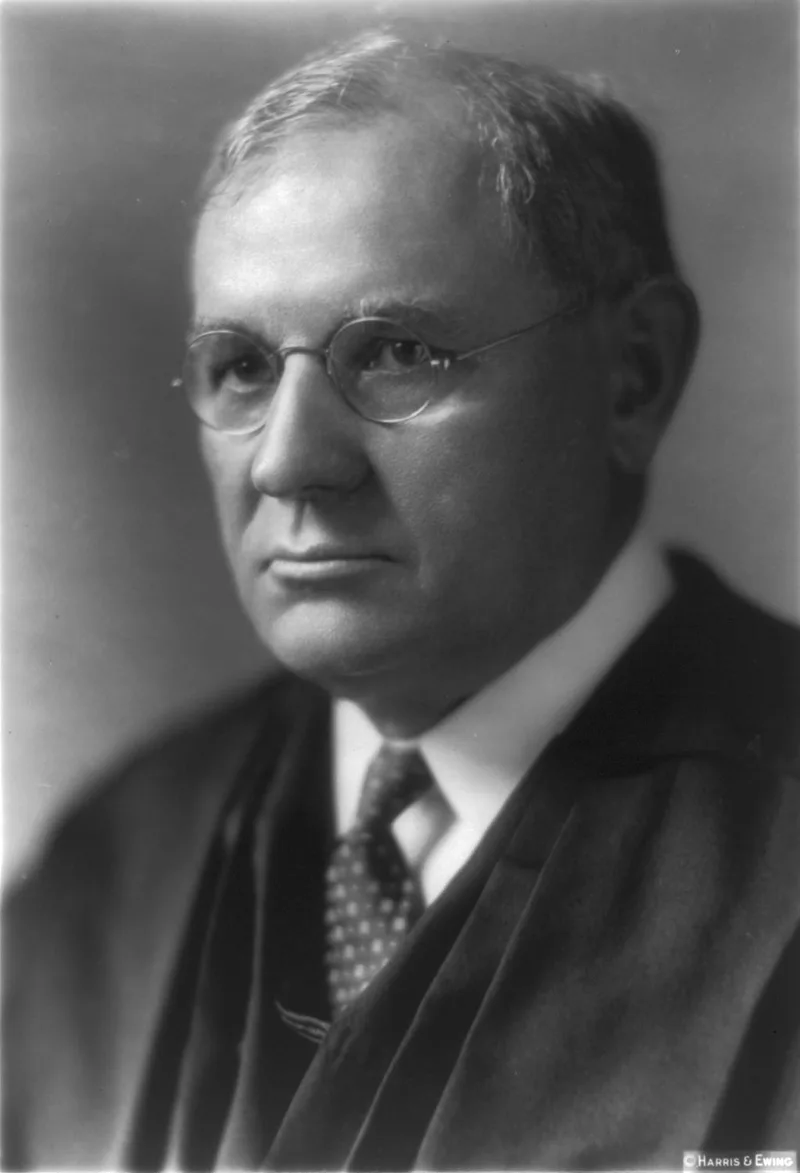
American Toll Bridge Co. v. Railroad Commission of California
Supreme Court of the United States · 1939-06-05 · cited 26×
The case concerned a challenge by the owner of the Carquinez bridge franchise to an order by the California Railroad Commission reducing tolls for automobiles and pedestrians. The company argued that the reduction violated the Contract Clause by impairing its franchise rights to a specified rate of return, that the commission's procedures denied due process, and that the new rates were confiscatory under the Fourteenth Amendment. The Supreme Court affirmed the state court's judgment upholding the order. It held that the governing statutes did not create a contractual entitlement to a fixed return and instead permitted regulatory adjustments to tolls, and that the record did not demonstrate the reduced rates would fail to provide just compensation for use of the property.
business & regulatoryproperty
Baldwin v. Scott County Milling Co.
Supreme Court of the United States · 1939-06-05 · cited 77×
The case concerned whether trustees of the Missouri Pacific Railroad could recover approximately $24,000 in reparation payments made to Scott County Milling Co. under Interstate Commerce Commission orders that found coal shipping rates unreasonable and awarded damages, after the Commission later reopened the proceeding, reversed its findings, and vacated the orders. The Court held that the petitioners were entitled to recover the amount paid with interest. It reasoned that the Interstate Commerce Act requires carriers to comply with Commission reparation orders, making payments pursuant to such orders obligatory rather than voluntary, and that reversal of the underlying orders allows recovery because no enforceable damage claim exists without a valid Commission finding of unreasonableness.
business & regulatoryprocedure
Toledo Pressed Steel Co. v. Standard Parts, Inc.
Supreme Court of the United States · 1939-05-29 · cited 134×
The case involved patent infringement suits by Toledo Pressed Steel Company, owner of a 1929 patent for a burner attachment in outdoor warning torches and flares, against sellers of competing products. Lower federal courts reached conflicting results on validity and infringement. The Supreme Court held the patent invalid for lack of invention, reasoning that it simply combined an old torch body with a known cap featuring side air and flame openings that had already been used in earlier devices to protect flames from wind or rain.
business & regulatory
Honolulu Oil Corp. v. Halliburton
Supreme Court of the United States · 1939-04-17 · cited 25×
This case concerned the validity and alleged infringement of U.S. Patent No. 1,930,987, which described a method and apparatus for testing the productivity of formations in rotary-drilled oil wells by lowering a single empty string of pipe equipped with a packer and valved inlet to obtain an undiluted fluid sample. The district court held both the method and apparatus claims invalid as anticipated by earlier patents, including Franklin (1882), Cox (1920), and Edwards (1924). The Ninth Circuit reversed in part, upholding the method claims as valid and infringed, while an earlier Fifth Circuit decision had already found the method claims invalid for lack of invention. The Supreme Court reviewed the conflicting lower-court rulings and analyzed whether the claimed combination was anticipated by or substantially disclosed in the prior art, emphasizing that packers and single-pipe testers were old in the field.
propertybusiness & regulatory
Lanzetta v. New Jersey
Supreme Court of the United States · 1939-03-27 · cited 1416×
The case concerned a challenge to a 1934 New Jersey statute that made it a crime, punishable by up to 20 years in prison, for any person not engaged in a lawful occupation who was known to be a member of a 'gang' of two or more persons and had at least three prior convictions as a disorderly person or for any crime. Appellants were convicted under the law based on their prior Pennsylvania convictions and membership in an alleged gang. The Supreme Court held the statute unconstitutional on its face under the Due Process Clause of the Fourteenth Amendment. The core reasoning was that the term 'gang' lacked any fixed or common legal meaning, with dictionary and other definitions varying widely, so that the law failed to give fair notice of the conduct it prohibited and left enforcement to arbitrary guesswork.
criminal law
Chesebro v. Los Angeles County Flood Control District
Supreme Court of the United States · 1939-03-27 · cited 45×
The case concerned a challenge by a property owner in the Los Angeles County Flood Control District to a 1937 California statute allowing the district's board to accept transfers of storm drain improvements from eleven smaller drainage districts and to levy annual special assessments on all taxable real estate in the larger district to cover the transferred obligations. The appellant argued that the statute violated the Due Process Clause of the Fourteenth Amendment by imposing assessments without providing an opportunity to be heard on whether his property received any benefits. The Supreme Court affirmed the California Supreme Court's denial of a writ of mandate, holding that the legislature had implicitly found that lands in the flood control district would be specially benefited by the acquisition and that this determination was conclusive absent a showing of no reasonable foundation. The Court reasoned that the statute's specific terms, the district's existing authority, and prior state precedent supported the implied legislative finding of benefits, making an individual hearing unnecessary.
propertyprocedure
H. P. Welch Co. v. New Hampshire
Supreme Court of the United States · 1939-01-30 · cited 101×
The case concerned a New Hampshire law that prohibited drivers of motor vehicles transporting property for hire from operating after more than 12 continuous hours on duty, with an 8-hour rest requirement afterward. The H. P. Welch Co., a carrier mostly engaged in interstate commerce, challenged the law after its registration certificates were suspended for violations, arguing it violated the Equal Protection Clause due to exemptions for certain drivers and was superseded by the federal Motor Carrier Act of 1935 and related Interstate Commerce Commission regulations. The Supreme Court upheld the state law, finding that the classification among drivers had a reasonable basis related to highway safety and that Congress did not clearly intend to preempt state safety regulations before federal rules took effect.
business & regulatoryfederal powercivil rights
Dixie Ohio Express Co. v. State Revenue Commission
Supreme Court of the United States · 1939-01-30 · cited 44×
The case concerned whether Georgia's Maintenance Tax Act, which imposed higher taxes on motor vehicles used by common carriers for hire, violated the U.S. Constitution's commerce clause or equal protection clause when applied to an Ohio company engaged solely in interstate trucking. The Supreme Court held that the tax did not violate either constitutional provision. The Court reasoned that states may impose reasonable, uniform taxes on vehicles using their highways as compensation for that use, even in interstate commerce, and that the higher rates for carriers for hire were justified by their greater road usage compared to private haulers.
taxesfederal powerbusiness & regulatory
Alton Railroad v. Illinois Commerce Commission
Supreme Court of the United States · 1939-01-16 · cited 13×
The case involved the Alton Railroad challenging an order from the Illinois Commerce Commission that required it to continue maintaining and operating a switch track in Chicago serving several industrial shippers, despite the railroad not owning the track or the underlying land. The railroad argued that this compulsion violated the due process clause of the Fourteenth Amendment by forcing it to expend funds on property it did not own. The Supreme Court affirmed the Illinois Supreme Court's decision upholding the order, reasoning that the track had become integrated into the railroad's public system, generated sufficient revenue to cover maintenance costs, and did not constitute a confiscation of property.
business & regulatoryproperty
United States v. Continental National Bank & Trust Co.
Supreme Court of the United States · 1939-01-03 · cited 10×
The case concerned the United States' effort to collect unpaid 1920 corporate income and profits taxes from the estate and beneficiaries of a deceased individual who had received assets as a transferee from a dissolving Illinois corporation. The lower courts dismissed the suit as time-barred under the limitation provisions of the Revenue Acts of 1926 and 1928. The Supreme Court analyzed the applicable periods for assessment against transferees under sections 277, 278, 280, and 311, including the effects of a jeopardy assessment, proceedings before the Board of Tax Appeals, and the one-year extension triggered by prior collection actions. It concluded that the government's suit fell within the statutory time limits and was therefore timely.
taxesfederal power
McDonald v. Thompson
Supreme Court of the United States · 1938-12-05 · cited 150×
The case involved a motor carrier who sued Texas Railroad Commission officials to prevent enforcement of the state's Motor Truck Law, which requires a certificate of convenience and necessity for operating trucks for hire on public highways. The carrier had been denied a state certificate on grounds that his proposed interstate operations would excessively burden the highways, but he continued operating and sought protection under the federal Motor Carrier Act of 1935's proviso allowing continued operations for those in bona fide service on June 1, 1935. The Supreme Court held that the carrier's operations did not qualify as bona fide because he had defied the state's denial and continued without authority, interpreting the term to require lawful rather than merely physical operation. The Court affirmed the lower court's decision to dismiss the suit, concluding that the federal proviso did not shield carriers operating in violation of state law.
business & regulatoryfederal power
M. E. Blatt Co. v. United States
Supreme Court of the United States · 1938-12-05 · cited 105×
The case M. E. Blatt Co. v. United States involved a taxpayer challenging an additional income tax assessment for the year ending January 31, 1932, based on improvements made to its property by a lessee. The Commissioner of Internal Revenue had added to the lessor's income the estimated depreciated value of certain improvements installed by the lessee, treating one-tenth of that value as income in the first year of the lease under the Revenue Act of 1932. The Supreme Court held that the lessor was not required to include any portion of the improvements' value as income in that year. The Court's reasoning was that the lease terms did not indicate the improvements were intended as rent, and there was no realization of gain from the mere accession of value to the property in the taxable year.
taxesproperty
Davidson v. Commissioner
Supreme Court of the United States · 1938-11-07 · cited 32×
The case concerned how to calculate taxable gain on the 1929 sale of 1,000 shares of stock when the taxpayer had acquired two separate lots at different costs and the wrong certificates were delivered to complete the sales. The taxpayer had directed sales from the higher-cost 1929 lot but the bank mistakenly delivered certificates from the lower-cost earlier lot, leading him to report gain using the 1929 cost basis. The Commissioner instead used the earlier lower cost basis to determine a larger gain and issued a deficiency notice, which the Board of Tax Appeals and court of appeals upheld. The Supreme Court affirmed, holding that gain must be computed on the basis of the shares actually delivered and sold rather than the shares the taxpayer intended or ordered to be sold. The Court reasoned that the taxpayer's directions and intentions did not determine the identity of the shares transferred, and the actual certificates delivered controlled the transaction.
taxes
Davis v. Davis
Supreme Court of the United States · 1938-11-07 · cited 299×
The case concerned whether a Virginia circuit court decree granting an absolute divorce on grounds of desertion must be recognized in the District of Columbia, where the husband had earlier obtained a limited divorce decree from the DC court on grounds of cruelty. The Supreme Court held that the Virginia decree was entitled to full faith and credit in the DC courts and reversed the lower court decisions that had denied it effect. The Court reasoned that the wife had not limited her participation to a special appearance challenging jurisdiction but had instead submitted herself to the Virginia court's authority through stipulations, filings, and other actions, allowing that court to determine its own jurisdiction over the parties and subject matter.
family lawprocedurefederal power
Denver Union Stock Yard Co. v. United States
Supreme Court of the United States · 1938-05-31 · cited 91×
The case involved the Denver Union Stock Yard Company challenging an order by the Secretary of Agriculture that set maximum rates for stockyard services, claiming the rates were confiscatory and violated the Fifth Amendment's due process clause by depriving the company of property without just compensation. The Supreme Court affirmed the district court's dismissal of the suit, upholding the order after reviewing the Secretary's findings on the rate base and revenue impacts. The Court reasoned that regulated entities are entitled to a reasonable return only on the value of property used and useful for the services at issue, and that the Secretary properly excluded non-essential properties such as certain stock show facilities while determining a 6.5 percent rate of return to be adequate based on reproduction costs less depreciation.
business & regulatoryfederal powerproperty
General Talking Pictures Corp. v. Western Electric Co.
Supreme Court of the United States · 1938-05-16 · cited 139×
The case concerned three consolidated patent infringement suits brought by Western Electric and related companies against General Talking Pictures over seven patents for vacuum tube amplifiers used in fields including talking motion pictures and radio. The district court and circuit court of appeals upheld six of the patents as valid and infringed while invalidating one; the Supreme Court granted certiorari but confined its review to the questions presented in the petition regarding whether a patent owner may restrict a purchaser's use of a patented device after sale in ordinary commerce via license notices, and whether delayed divisional applications are invalid due to prior public use. The Court held that review of additional issues like estoppel from royalty acceptance or anticipation by prior art was unwarranted due to concurrent factual findings, lack of circuit conflicts, and procedural limits under its rules, and it affirmed the judgments of validity and infringement on the preserved questions.
business & regulatoryproperty
St. Louis, Brownsville & Mexico Ry. v. Brownsville Navigation District
Supreme Court of the United States · 1938-05-16 · cited 14×
The case involved a dispute over whether railroads operating in Texas could be compelled by court order to provide rail cars and switching services for freight moving between the Port of Brownsville and Matamoros, Mexico. The Navigation District and related parties sued in federal district court for a writ of mandamus, claiming violations of the Interstate Commerce Act regarding car service and potential discrimination. The district court dismissed the suit, holding that the issues were administrative and required initial review by the Interstate Commerce Commission. The court of appeals reversed that dismissal. The Supreme Court reversed the court of appeals, reasoning that the Act's provisions on furnishing equipment and prohibiting undue preferences are matters for the Commission to address first before judicial intervention via mandamus.
business & regulatoryprocedurefederal power
Pacific National Co. v. Welch
Supreme Court of the United States · 1938-05-02 · cited 185×
The case concerned a taxpayer that reported profits from 1928 sales of real estate lots on its income tax return using the deferred payment method under the Revenue Act of 1928. After the filing deadline, the taxpayer filed a refund claim asserting that the installment method should have been used instead, but the claim was denied. The district court ruled that the taxpayer's initial choice constituted a binding election, and the circuit court of appeals affirmed on the same ground. The Supreme Court affirmed the judgment, holding that the statutes and regulations do not permit a taxpayer to switch methods after the return filing period has expired because doing so would require recomputation of tax liabilities for multiple years and extend the statutory time limits for returns and refunds.
taxes
Crown Cork & Seal Co. v. Ferdinand Gutmann Co.
Supreme Court of the United States · 1938-05-02 · cited 57×
This case concerns two patents related to methods for securing center spots to cork cushions in crown bottle caps to prevent liquid contact with beverages. The district court ruled both patents valid and infringed by the respondent, but the court of appeals reversed, finding the reissue patent not infringed and the divisional patent invalid due to laches in filing the application. The Supreme Court granted certiorari to address whether a delay exceeding two years in presenting claims in a divisional application requires an excuse even without intervening adverse rights, and whether prior claims in the parent patent that were believed to cover the subject matter but later interpreted otherwise can serve as such an excuse. The Court limited its review to these procedural questions regarding patent application timing and divisional claims.
business & regulatoryprocedure
United States v. Kaplan
Supreme Court of the United States · 1938-05-02 · cited 32×
In United States v. Kaplan, the taxpayer and his wife reported the full $194,000 profit from a 1929 stock sale on their joint income tax return and paid the resulting tax, but later filed a claim for refund asserting the right to report the sale on the installment basis because the deferred payments were worth less than face value. The Court of Claims entered judgment for the taxpayer. The Supreme Court reversed, explaining that the question presented was identical to the one decided in Pacific National Co. v. Welch, which the Court had affirmed the same day.
taxes