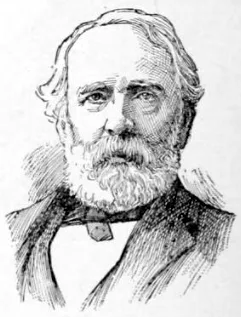
This case concerns whether the residuary clause in Francis W. Goddard's 1881 will operated as an exercise of powers of appointment reserved in two 1888 trust deeds conveying most of his property. The complainants sought instruction on whether the will appointed the trust estates to Goddard's wife absolutely, as she claimed, or whether the default provisions in the deeds applied. The court held that the will did not execute the powers of appointment. The reasoning was that the will's language referred only to the testator's own property and was drafted before the powers existed, the deeds' later and detailed default limitations to keep property in the Goddard line indicated a contrary intent, and no statute imputed an intention to execute the powers via a prior will.
The case involved a bill for instructions on construing the will of Albert J. Jones, specifically whether a $25,000 bequest for an Art Institute in Providence was valid and how the residuary clause should be distributed among the testator's relatives. The court held that the bequest was a valid charitable trust, not void for indefiniteness or violation of the rule against perpetuities, and that grandchildren of the testator's predeceased children could not share in the residue. The reasoning was that the will's references to 'art' and 'fine arts' clearly indicated promotion of the fine arts rather than a broader or uncertain purpose, the charitable condition was not subject to the perpetuities rule in the same way as private trusts and could vest in a reasonable time, and the anti-lapse statute did not apply because the relevant parents had never held a devise or bequest under the will. The court therefore upheld the legacy in full and limited the residue to the surviving first-generation children.
The case involved a dispute over two mortgages on land owned by Eliza Miller in fee simple. In 1870 her husband Thomas Miller executed a mortgage deed to Franklin Savings Bank to secure a $7,000 loan, which Eliza signed only to release her dower rights, rendering it void as to her estate. A month later the Millers executed a second mortgage to Wheeler that recited the prior mortgage to the savings bank; the bank argued this recital ratified the first mortgage and created an equitable lien superior to Wheeler's. The court sustained the demurrer filed by Miller's heirs and a subsequent purchaser, holding that the first mortgage remained invalid against Eliza Miller's interest both at law and in equity and that the recital in the second mortgage did not bind her or those claiming under her. The opinion found none of the authorities cited by the bank supported its claim that the recital alone could establish priority.
This case concerned a procedural challenge in an assumpsit lawsuit, where the defendants filed a plea in abatement stating they had been served as garnishees in a separate action against the plaintiff, and the plaintiff moved to dismiss the plea for lacking an affidavit verifying its facts. The court denied the motion to dismiss, holding that an affidavit is not indispensable to the validity of such a plea, particularly when its truth is not disputed, based on historical precedents allowing judicial discretion in accepting unverified pleas. The court reasoned that the affidavit served mainly to inform the court and prevent delays, but was not required for the plea's legal sufficiency, and suggested that challenges to the plea's adequacy should instead be made via demurrer.
This case concerned a procedural challenge in an assumpsit lawsuit, where the defendants filed a plea in abatement stating they had been served as garnishees in a separate action against the plaintiff, and the plaintiff moved to dismiss the plea for lacking an affidavit verifying its facts. The court denied the motion to dismiss, holding that an affidavit is not indispensable to the validity of such a plea, particularly when its truth is not disputed, based on historical precedents allowing judicial discretion in accepting unverified pleas. The court reasoned that the affidavit served mainly to inform the court and prevent delays, but was not required for the plea's legal sufficiency, and suggested that challenges to the plea's adequacy should instead be made via demurrer.
This case involved a complaint against the defendant for operating a hackney carriage without a valid license in violation of a Providence city ordinance after his license was revoked by the mayor without notice or hearing. The trial court upheld the revocation and found the defendant guilty, leading to exceptions before the appellate court. The court held that the city charter broadly authorized the city council to regulate hackney carriages and grant licenses subject to revocation, and that this power could be delegated to the mayor for exercise at his discretion. It further reasoned that the license was a revocable privilege rather than a vested right, and that the ordinance allowing revocation without notice was not so unreasonable or oppressive as to be invalid, given its administrative purpose and the low fee involved.