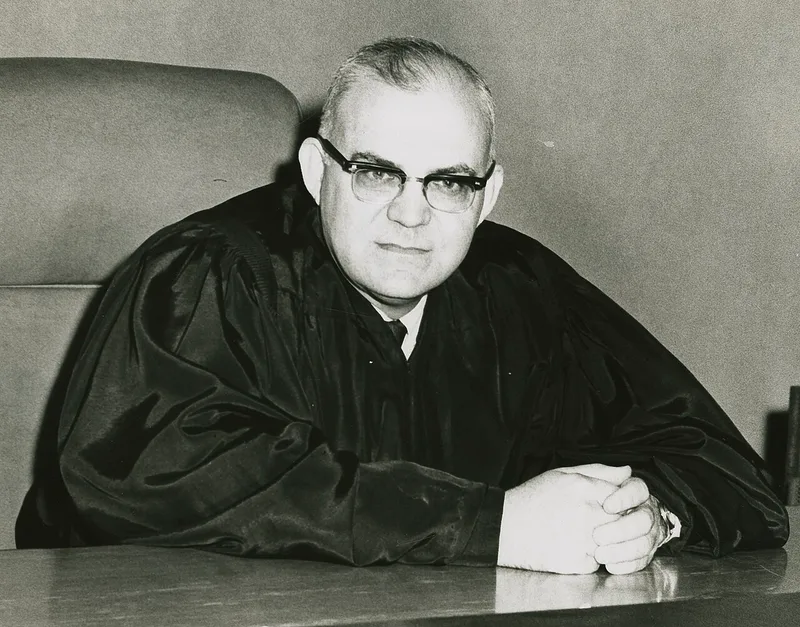
Margaret Schofield, a provisional teacher hired under a one-year contract, sued Richland County School District after her contract was not renewed based on concerns about classroom discipline, instruction quality, and cooperation that arose outside the formal evaluation process; she sought damages and reinstatement, claiming the district was required to provide remedial assistance under state law before refusing renewal. The trial court dismissed the complaint, and the South Carolina Supreme Court affirmed. The court held that S.C. Code Ann. § 59-26-40 requires remedial advice and assistance only for deficiencies detected during the three mandatory classroom observations, and that even an adequate evaluation makes a provisional teacher merely eligible for an annual contract rather than entitled to renewal. The decision rested on the statute's plain language, which does not impose remediation duties or renewal obligations for performance issues noted independently of the evaluation process.
Hilton Head Plantation Utilities sought approval from the South Carolina Public Service Commission for higher rates and charges for its water and sewer services. The Commission denied the request after a hearing, finding that substantial payments to affiliated entities raised unresolved questions about whether the transactions were at arm's length and whether the claimed operating and maintenance expenses were reasonable and legitimate. The circuit court upheld the denial, concluding that substantial evidence supported the Commission's decision. On appeal, the court affirmed, holding that the burden rests on the utility to prove the reasonableness of expenses, particularly those involving affiliates, and that the Commission had acted within its discretion in refusing the increase based on the lack of supporting data. The court remanded the matter to allow the utility an opportunity to provide justification for the expenses.
The case concerned National Advertising Company's application for permits to repair four billboards damaged by Hurricane Hugo in Mount Pleasant, which the Department of Planning and Engineering denied under zoning code provisions limiting repairs to nonconforming signs. The Board of Adjustment upheld the denial based on repair cost thresholds and a six-month commencement requirement for nonconforming structures, but the circuit court reversed in part, finding insufficient evidence that one sign's repair costs exceeded 50 percent of replacement value and ruling that the six-month rule did not apply to signs. On appeal, the court affirmed the circuit judge, concluding that no evidence supported the cost finding for the Channel 2 sign and that the specific sign regulations in section 155.97 controlled over the general nonconforming structures provision in section 155.72(E).
The case involved Brady Development Co. suing the Town of Hilton Head Island for negligence in administering its Development Standards Ordinance after a developer went bankrupt without completing water and sewer infrastructure, leaving Brady unable to obtain utilities for a house it had built on an approved lot. The trial court ruled as a matter of law that the Town owed Brady a special duty under the ordinance and denied the Town's directed verdict motions, resulting in a jury verdict of $215,000 for Brady. On appeal, the South Carolina Supreme Court reversed, holding that the ordinance's purpose was to protect the public from overdevelopment rather than to create an enforceable duty to individual lot purchasers. The court also found that Brady assumed the risk by buying the lot despite explicit warnings in the required HUD report about the incomplete utilities.
In State v. Owens, the defendant, who had previously been convicted of kidnapping Ernest Vereen, was retried and convicted of Vereen's murder after an earlier death sentence was vacated on post-conviction relief, and he received a life sentence. Owens appealed, arguing that the murder prosecution violated double jeopardy because it relied on the prior kidnapping conviction, that the jury charge on coercion was inadequate, and that statements to a fellow inmate acting as a jailhouse lawyer were protected by attorney-client privilege. The court affirmed the conviction, holding that double jeopardy did not bar the murder prosecution since kidnapping is not an essential element of murder under South Carolina law and the Blockburger and Grady tests were not violated, the coercion instruction accurately stated the law, and the attorney-client privilege does not extend to jailhouse lawyers. The court noted that evidence of the kidnapping was presented but the prosecution focused on the conduct constituting murder, and an exception for newly manifest facts like the victim's death applied.
In Todd v. Smith, an artist sued the City of Myrtle Beach, its former manager, and the convention center director under 42 U.S.C. § 1983, alleging that requiring removal of his painting from a public exhibit at the convention center violated his First and Fourteenth Amendment rights. The trial court granted summary judgment to all defendants, and the South Carolina Supreme Court affirmed. The majority held that the city officials' actions did not implement or execute an official municipal policy as required for municipal liability under Monell v. Department of Social Services, and the individual defendants were entitled to qualified immunity. A dissent argued that the city's actions reflected a de facto policy infringing on the artist's free speech rights and would have reversed summary judgment as to the city only.