Judicial data via CourtListener (Free Law Project). Social links via Wikidata.
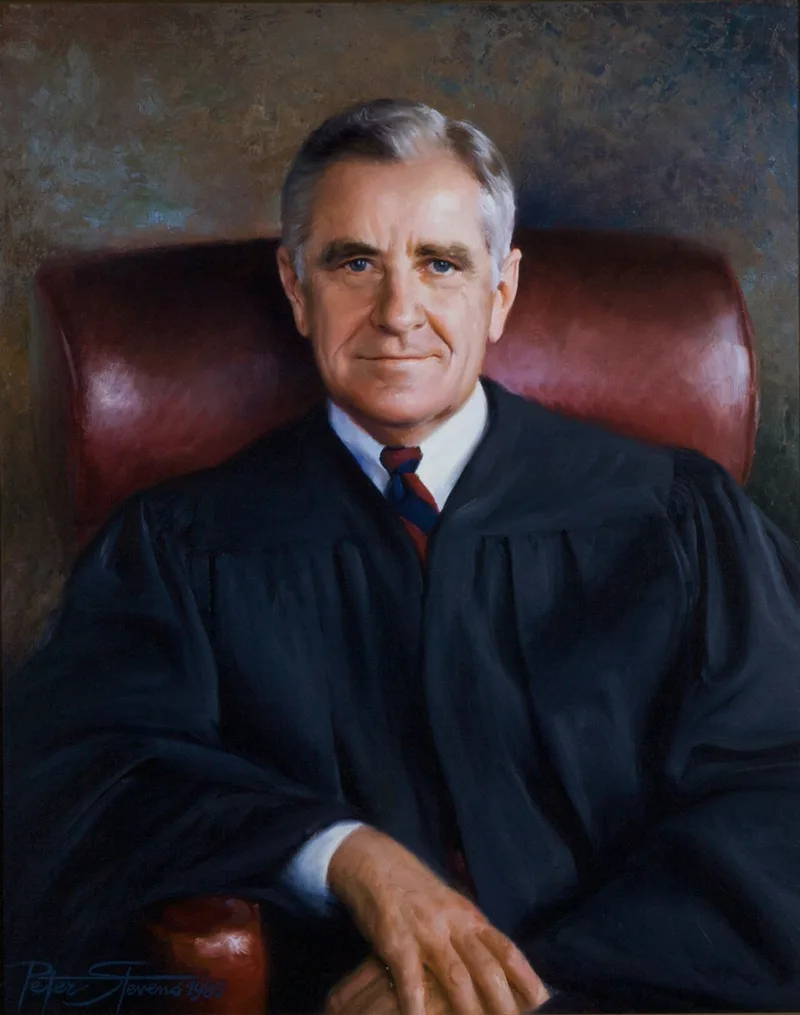
Com. v. Bell
Supreme Court of Virginia · 2011-09-16 · cited 2×
In this case, the Commonwealth appealed a circuit court decision granting conditional release to Derek Bell, who had been civilly committed as a sexually violent predator following a 2009 jury finding. The circuit court determined that Bell remained a sexually violent predator under Virginia Code § 37.2-900 but satisfied the criteria for conditional release under § 37.2-912. The Supreme Court of Virginia reversed, holding that the judgment was without evidence to support it. The court reasoned that Bell's poor treatment attendance, repeated behavioral incidents involving aggression and defiance, and failure to improve demonstrated he required continued secure inpatient treatment.
criminal law
Saunders v. Com.
Supreme Court of Virginia · 2011-03-04 · cited 2×
This case involved whether a defendant under age 18, previously convicted and sentenced as an adult on an unrelated charge, could be sentenced by a jury rather than a judge on new charges of aggravated malicious wounding, use of a firearm in a felony, and gang-related violence that were transferred from juvenile court. The circuit court allowed jury sentencing, the jury convicted the defendant and imposed a 53-year term, and the Court of Appeals affirmed. The Supreme Court of Virginia held that Code § 16.1-271 treats any juvenile tried and convicted as an adult as an adult for subsequent offenses, rendering Code § 16.1-272 (which requires court sentencing for juveniles) inapplicable, so jury sentencing was proper. The court declined to consider an unpreserved argument about jury instructions on youth as mitigation.
criminal lawprocedure
Nelson v. Com.
Supreme Court of Virginia · 2011-01-13 · cited 46×
The case involved David L. Nelson, who was charged with driving while intoxicated, fourth offense within ten years, after police found him asleep or unconscious in the driver's seat of a parked vehicle with a blood alcohol level of .40. The key issue was whether Nelson was "operating" the vehicle under Code § 18.2-266 when the engine was off, the gearshift in park, but the ignition key was in the "on or accessory" position, activating the radio via the battery. A jury convicted Nelson, the circuit court imposed the sentence, and the Court of Appeals affirmed. The Supreme Court of Virginia affirmed, holding that turning the key to the accessory position engaged the machinery of the vehicle in a manner that could, alone or in sequence, activate its motive power, satisfying the statutory definition of operating as distinguished from prior precedent like Stevenson v. City of Falls Church. The court reviewed the evidence in the light most favorable to the Commonwealth and found it sufficient to support the conviction.
criminal law
Carroll v. Com.
Supreme Court of Virginia · 2010-11-04 · cited 62×
The case involved James Carroll, who entered an Alford plea to a charge of raping his stepdaughter and received a suspended sentence with supervised probation that included mandated sex offender treatment. When Carroll refused to admit guilt during treatment, his probation officer deemed him noncompliant, leading the circuit court to find a probation violation; the Court of Appeals affirmed, and the Supreme Court of Virginia also affirmed. The court reasoned that an Alford plea carries the same legal consequences as a guilty plea, so probation conditions requiring successful participation in treatment applied fully, and Carroll's refusal was a willful failure to comply rather than an inability due to unforeseen circumstances. The court further held that the trial judge did not abuse discretion in requiring Carroll to complete the same treatment program or in declining alternative unsupervised options.
criminal law
Blanton v. Com.
Supreme Court of Virginia · 2010-09-16 · cited 9×
In this case, Donna Blanton was convicted by a jury in the Circuit Court of the City of Virginia Beach of first-degree murder and use of a firearm in the commission of a felony for the shooting death of her husband, a Virginia State Trooper. After an earlier reversal by the Court of Appeals on grounds related to peremptory strikes, the retrial proceeded following a change of venue. On appeal, Blanton argued that the prosecutor made improper and prejudicial statements during rebuttal closing argument by referencing her presence in jail shortly after the murder, which she claimed required a mistrial or curative instruction. The Supreme Court of Virginia held that the circuit court did not err in denying the motion for a mistrial, as the comment was innocuous under the circumstances, the jury had been properly instructed that attorney statements are not evidence, and the prosecutor corrected the remark. The court therefore affirmed the judgment of the Court of Appeals upholding the convictions.
criminal lawprocedure
Smith v. Com.
Supreme Court of Virginia · 2010-06-10 · cited 16×
This case involved the fifth annual review hearing for Dwight Keith Smith, who was civilly committed in 2004 as a sexually violent predator under Virginia's Sexually Violent Predator Act. The circuit court ruled that Smith remained a sexually violent predator in need of secure inpatient hospitalization and ordered his continued commitment. On appeal, the Supreme Court of Virginia affirmed, finding that the treatment records were properly admitted as business records and that the evidence, including Smith's offense history, narcissistic and antisocial traits, alcohol dependence, and incomplete engagement with treatment, was sufficient to support the determination. The court reasoned that these are civil commitment proceedings, not criminal prosecutions, so the full rules of criminal evidence do not apply.
criminal lawcivil rightsprocedure