Judicial data via CourtListener (Free Law Project). Social links via Wikidata.
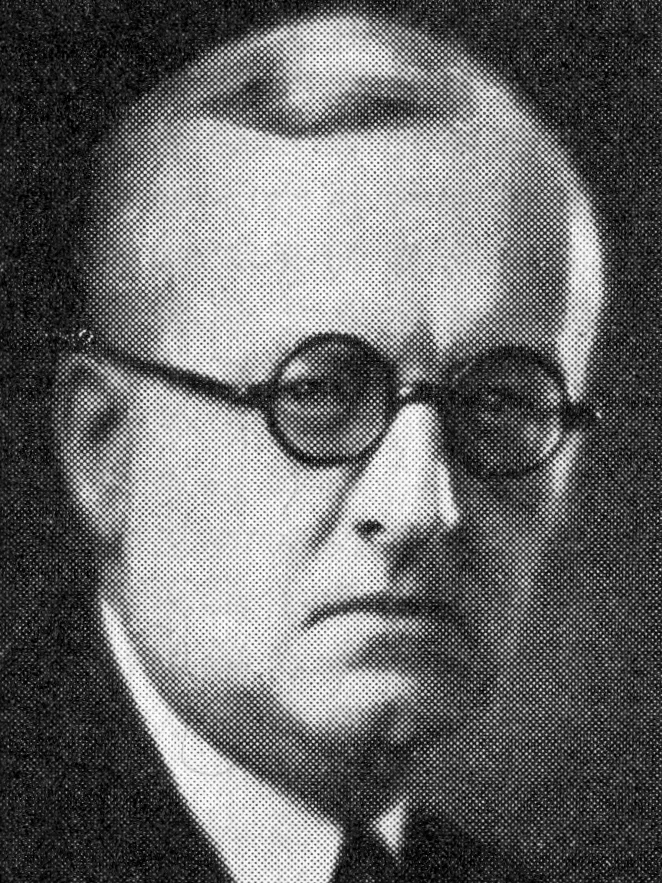
Zemel v. Industrial Commission
Wisconsin Supreme Court · 1949-05-06
This case involved a claim for workers' compensation benefits after employee William Reinsel was killed in a truck accident while working for a wholesale egg business. Irving Sanvold had sold the business to Ben Zemel under a conditional sales contract, after which Zemel operated it without obtaining his own compensation insurance or formally assigning Sanvold's existing policy. The Industrial Commission ruled that Sanvold's insurer provided no coverage because there was no assignment, leaving Zemel solely liable. The court affirmed, reasoning that the sale transferred ownership and employer status to Zemel, the decedent had been hired only by Zemel, and neither public policy nor estoppel extended the prior policy to cover Zemel's separate liability.
labor & employment
Stevens v. Berger
Wisconsin Supreme Court · 1949-05-04 · cited 5×
This case involved a dispute over a residential lease executed in 1947, where defendants had remodeled premises under a federal permit pursuant to the Veterans’ Emergency Housing Act of 1946 that required a thirty-day rental preference for World War II veterans. Plaintiff paid rent and incurred expenses preparing the space but was later informed he could not occupy because of the veteran preference; defendants had removed the required regulatory placard before plaintiff viewed the property. The trial court held the lease illegal and unenforceable from the outset and granted summary judgment against plaintiff’s damages claim. The appellate court reversed, reasoning that plaintiff could still recover if justifiably ignorant of the regulations due to defendants’ silence and removal of the placard, as he would not be in pari delicto with them. The case was remanded for further proceedings to resolve factual issues on the parties’ knowledge.
propertyfederal powerprocedurebusiness & regulatory
Patefield v. Fidelity & Casualty Co.
Wisconsin Supreme Court · 1949-05-04 · cited 2×
The case involved a landlord who purchased an apartment building and sought to evict a tenant who held over after receiving notice to vacate, leading to multiple unlawful detainer actions that ultimately resulted in a judgment for possession. The landlord then sued the tenant and the surety on the appeal bond for treble damages under a statute providing for such recovery in unlawful detainer cases, except those based on nonpayment of rent. The court affirmed the award of actual damages against both the tenant and surety, plus additional amounts against the tenant to reach treble damages, holding that the prior detainer judgment established the holding over as deliberate and unlawful. The tenant's claim that the holdover was excusable due to inability to find other housing was rejected, as was any need for remand on damages where testimony was uncontroverted.
propertyprocedure
McCoy v. May
Wisconsin Supreme Court · 1949-05-03 · cited 5×
The case McCoy v. May involved a dispute over a written option agreement for the purchase of corporate stock. In 1946, the parties formed a Wisconsin corporation to acquire assets of the Engineering Manufacturing Company, with the Mays providing the down payment and receiving all stock as security for the balance; the McCoys received an option, expiring October 17, 1947, to buy up to 50% of the shares. Plaintiff Peter McCoy advanced funds to the business and claimed he exercised the option on September 10, 1947, by requesting and paying for 120 shares plus additional shares to reach half ownership, while defendant Elwood May contended the option lapsed without timely exercise or demand. The trial court found for the McCoys, and the Wisconsin Supreme Court affirmed, holding there was credible evidence of timely exercise, that any parol evidence did not prejudice the outcome, and that Mrs. May was not an indispensable party whose absence defeated jurisdiction. The court ordered May to transfer sufficient shares for half ownership.
business & regulatoryprocedure
Gallagher v. Chicago & North Western Railway Co.
Wisconsin Supreme Court · 1949-05-02 · cited 1×
This case concerns a 1946 grade-crossing collision in Madison, Wisconsin, between a passenger train and an automobile in which plaintiff Mary Lou Gallagher was a passenger. The railway company appealed a judgment against it, arguing lack of causal negligence on its part, improper lookout by the train crew, and contributory negligence by the plaintiff. The court affirmed the judgment, holding that the evidence supported a finding of improper lookout by the fireman, that the plaintiff's negligence was a question of fact for the jury, and that any errors regarding train speed or instructions were immaterial or not applicable.
torts & liability
State v. Evjue
Wisconsin Supreme Court · 1949-03-11 · cited 16×
The case State v. Evjue addressed whether Wisconsin's statute (sec. 358.12(8)) permitting the state to appeal adverse legal rulings in criminal cases, including after an acquittal, violates the state constitution's double jeopardy clause (sec. 8, art. I). The underlying prosecution involved charges against a newspaper publisher for violating a law (sec. 348.412) by identifying a rape victim in print, where the trial court acquitted the defendant on stipulated facts. The Wisconsin Supreme Court upheld the constitutionality of the appeal statute based on precedent like State v. Witte, reasoning that jeopardy is a single continuing process and a retrial after reversal of error is not a second jeopardy. However, the court concluded it had no power to review or reverse the acquittal on the merits, whether the trial court's decision stemmed from legal or factual error, and dismissed the writ.
criminal lawprocedure



