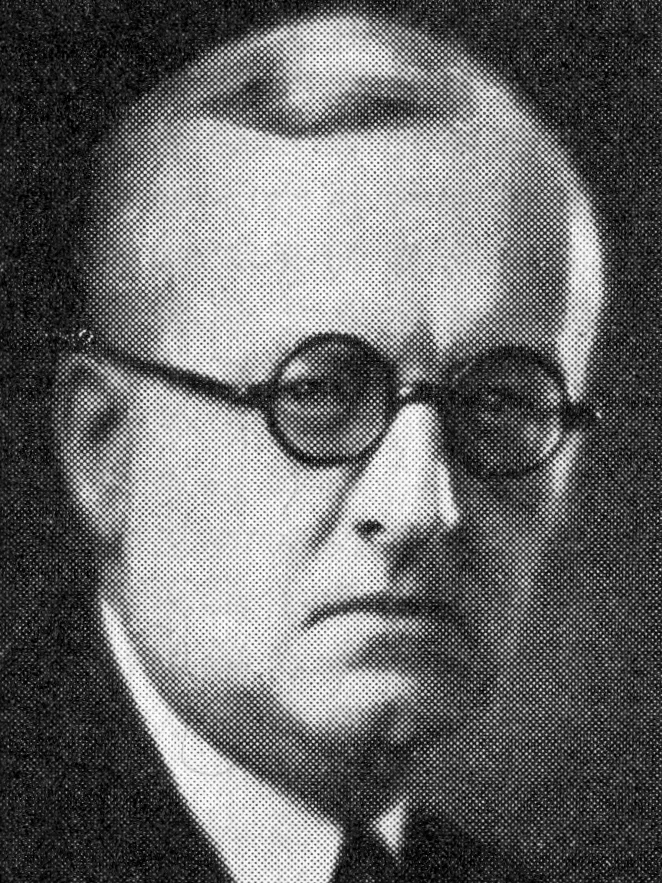
Zemel v. Industrial Commission
Wisconsin Supreme Court · 1949-05-06
This case involved a claim for workers' compensation benefits after employee William Reinsel was killed in a truck accident while working for a wholesale egg business. Irving Sanvold had sold the business to Ben Zemel under a conditional sales contract, after which Zemel operated it without obtaining his own compensation insurance or formally assigning Sanvold's existing policy. The Industrial Commission ruled that Sanvold's insurer provided no coverage because there was no assignment, leaving Zemel solely liable. The court affirmed, reasoning that the sale transferred ownership and employer status to Zemel, the decedent had been hired only by Zemel, and neither public policy nor estoppel extended the prior policy to cover Zemel's separate liability.
labor & employment
Stevens v. Berger
Wisconsin Supreme Court · 1949-05-04 · cited 5×
This case involved a dispute over a residential lease executed in 1947, where defendants had remodeled premises under a federal permit pursuant to the Veterans’ Emergency Housing Act of 1946 that required a thirty-day rental preference for World War II veterans. Plaintiff paid rent and incurred expenses preparing the space but was later informed he could not occupy because of the veteran preference; defendants had removed the required regulatory placard before plaintiff viewed the property. The trial court held the lease illegal and unenforceable from the outset and granted summary judgment against plaintiff’s damages claim. The appellate court reversed, reasoning that plaintiff could still recover if justifiably ignorant of the regulations due to defendants’ silence and removal of the placard, as he would not be in pari delicto with them. The case was remanded for further proceedings to resolve factual issues on the parties’ knowledge.
propertyfederal powerprocedurebusiness & regulatory
Patefield v. Fidelity & Casualty Co.
Wisconsin Supreme Court · 1949-05-04 · cited 2×
The case involved a landlord who purchased an apartment building and sought to evict a tenant who held over after receiving notice to vacate, leading to multiple unlawful detainer actions that ultimately resulted in a judgment for possession. The landlord then sued the tenant and the surety on the appeal bond for treble damages under a statute providing for such recovery in unlawful detainer cases, except those based on nonpayment of rent. The court affirmed the award of actual damages against both the tenant and surety, plus additional amounts against the tenant to reach treble damages, holding that the prior detainer judgment established the holding over as deliberate and unlawful. The tenant's claim that the holdover was excusable due to inability to find other housing was rejected, as was any need for remand on damages where testimony was uncontroverted.
propertyprocedure
McCoy v. May
Wisconsin Supreme Court · 1949-05-03 · cited 5×
The case McCoy v. May involved a dispute over a written option agreement for the purchase of corporate stock. In 1946, the parties formed a Wisconsin corporation to acquire assets of the Engineering Manufacturing Company, with the Mays providing the down payment and receiving all stock as security for the balance; the McCoys received an option, expiring October 17, 1947, to buy up to 50% of the shares. Plaintiff Peter McCoy advanced funds to the business and claimed he exercised the option on September 10, 1947, by requesting and paying for 120 shares plus additional shares to reach half ownership, while defendant Elwood May contended the option lapsed without timely exercise or demand. The trial court found for the McCoys, and the Wisconsin Supreme Court affirmed, holding there was credible evidence of timely exercise, that any parol evidence did not prejudice the outcome, and that Mrs. May was not an indispensable party whose absence defeated jurisdiction. The court ordered May to transfer sufficient shares for half ownership.
business & regulatoryprocedure
Gallagher v. Chicago & North Western Railway Co.
Wisconsin Supreme Court · 1949-05-02 · cited 1×
This case concerns a 1946 grade-crossing collision in Madison, Wisconsin, between a passenger train and an automobile in which plaintiff Mary Lou Gallagher was a passenger. The railway company appealed a judgment against it, arguing lack of causal negligence on its part, improper lookout by the train crew, and contributory negligence by the plaintiff. The court affirmed the judgment, holding that the evidence supported a finding of improper lookout by the fireman, that the plaintiff's negligence was a question of fact for the jury, and that any errors regarding train speed or instructions were immaterial or not applicable.
torts & liability
State v. Evjue
Wisconsin Supreme Court · 1949-03-11 · cited 16×
The case State v. Evjue addressed whether Wisconsin's statute (sec. 358.12(8)) permitting the state to appeal adverse legal rulings in criminal cases, including after an acquittal, violates the state constitution's double jeopardy clause (sec. 8, art. I). The underlying prosecution involved charges against a newspaper publisher for violating a law (sec. 348.412) by identifying a rape victim in print, where the trial court acquitted the defendant on stipulated facts. The Wisconsin Supreme Court upheld the constitutionality of the appeal statute based on precedent like State v. Witte, reasoning that jeopardy is a single continuing process and a retrial after reversal of error is not a second jeopardy. However, the court concluded it had no power to review or reverse the acquittal on the merits, whether the trial court's decision stemmed from legal or factual error, and dismissed the writ.
criminal lawprocedure
Treptow v. Rufledt
Wisconsin Supreme Court · 1949-03-10
This case involved a lawsuit by the estate of a hunter killed by a shot from Emil Rufledt, an adult son with a history of mental illness who lived and worked on his father's farm. The plaintiffs argued that the father was negligent in allowing the son to possess and use firearms, creating a duty to prevent harm to others. The court affirmed the judgment for the defendants, finding no evidence of negligence on the father's part. It reasoned that the son was an experienced, skilled hunter with no history of accidents or violent tendencies, and the record lacked details showing his mental condition made injury foreseeable.
torts & liability
Chicago & Milwaukee Electric Railway Co. v. Public Service Commission
Wisconsin Supreme Court · 1949-03-09 · cited 2×
The case involved a challenge by the Chicago & Milwaukee Electric Railway Company to an order of the Wisconsin Public Service Commission permitting the Transport Company to abandon parts of its streetcar operations and substitute bus service on a route overlapping with the Railway Company's existing streetcar line on Sixth Street in Milwaukee. The Railway Company, operating under an indeterminate permit, argued that the order impaired its franchise rights, diminished the value of its property without compensation, exceeded statutory authority, and was arbitrary. The court affirmed the order, holding that the commission had authority under relevant statutes to impose conditions on abandonment, that substantial evidence supported findings of public convenience and necessity for the bus route, and that the substitution did not constitute an improper piecemeal impairment of the Railway Company's rights.
business & regulatory
Allis-Chalmers Manufacturing Co. v. Wisconsin Employment Relations Board
Wisconsin Supreme Court · 1949-03-09
The case involved a manufacturing company that, after failing to reach a wage agreement with a union during collective bargaining, stipulated to submit the dispute to the National War Labor Board for a directive order. The Board issued an order requiring the company to implement certain wage rates, but the company refused to comply. The Wisconsin Employment Relations Board found this refusal to be an unfair labor practice under a state statute prohibiting employers from rejecting the final determination of a tribunal whose jurisdiction they had accepted. The court affirmed, holding that the company's stipulation constituted acceptance of the Board's jurisdiction, requiring it to treat the directive as conclusive regardless of the Board's advisory nature or lack of independent enforcement power. The decision rested on the statute's alternative provision covering tribunals whose jurisdiction the employer voluntarily accepted.
labor & employmentbusiness & regulatory
Davies v. Meisenheimer
Wisconsin Supreme Court · 1949-03-07 · cited 8×
The case involved a shareholder derivative action by Laura B. Davies against Edward J. Meisenheimer, president and director of a closely held family printing corporation, seeking repayment of personal advances and loans made by the company to him over many years. The trial court found in favor of the defendant, and the Wisconsin Supreme Court affirmed. The court held that the loans were valid because they were made with the full consent and acquiescence of all then-existing stockholders, caused no damage to the corporation, and were ratified by the board and shareholders. It further reasoned that whether to demand immediate repayment was a question of corporate policy and management discretion, which courts will not override absent corruption, improvidence amounting to abuse, or arbitrary conduct by the directors.
business & regulatory
Stenicka v. Thomas
Wisconsin Supreme Court · 1949-02-15 · cited 5×
The case concerned the validity of an October 1946 will executed by an 82-year-old decedent who had moved into the home of Olive and Iren Thomas days earlier and left his entire estate to them, contrary to a prior will favoring his sister. The Wisconsin Supreme Court reversed the county court's admission of the will to probate and directed denial of probate. The court held that the evidence established the Thomases' opportunity and disposition to exercise undue influence, a result indicating its exercise, and the testator's susceptibility given his age, illness, and recent circumstances, rendering the trial court's contrary findings against the great weight of the evidence.
family lawproperty
State v. McEwen
Wisconsin Supreme Court · 1949-01-21
This case concerned the validity of Class B liquor licenses issued by the town of Cassian after territory containing eleven of its thirteen existing taverns was detached to create the new town of Nokomis. The court affirmed the conviction, ruling that the town board could issue only two licenses for the following year. The core reasoning was that the plain language of sec. 176.05(21)(e) applies whenever any portion of a town is detached and limits the remaining town to the difference between its pre-1939 quota and the licenses located in the detached area, consistent with the statute's overall purpose of preserving preexisting licenses only in specified situations while enforcing the population-based quota.
criminal lawbusiness & regulatory
Bristol v. Eckhardt
Wisconsin Supreme Court · 1949-01-20 · cited 1×
The case involved a claim for malicious prosecution brought by plaintiff Bristol against defendants Eckhardt and a bank after Bristol was arrested in Oregon on a Wisconsin criminal complaint alleging violation of a statute prohibiting removal of mortgaged property without the mortgagee's consent. Bristol had financed a truck purchase with the bank and allegedly moved it out of state while in default; the complaint was later withdrawn following negotiations involving plaintiff's attorney, the deputy district attorney, and defendants' counsel to allow refinancing and settlement of the underlying debt, after which Bristol was released from jail. The trial court denied defendants' motion for summary judgment, but the appellate court reversed, holding that summary judgment dismissing the complaint was required because the prosecution's termination was not favorable to the plaintiff. The core reasoning was that a dismissal procured through compromise, settlement, or the accused's own efforts to avoid extradition costs does not satisfy the favorable-termination element needed for a malicious prosecution action, as it implies an admission of probable cause rather than a merits-based resolution.
criminal lawtorts & liability
State Ex Rel. Johnson v. Buchanan
Wisconsin Supreme Court · 1949-01-19 · cited 2×
The case concerned whether a police officer qualified for a pension under a statute requiring twenty-two years of service as a member of the department. The officer had been hired in 1925 and remained a member for more than twenty-two years but was suspended without pay for 213 days due to misconduct. The court held that the officer did not qualify because the statute requires actual service rather than mere membership, and suspensions for misconduct do not count toward the service requirement. The court reasoned that the statute's language distinguishes between membership and service and that pensions are intended to reward faithful service.
labor & employment
In Re Vacating Plat of Chiwaukee
Wisconsin Supreme Court · 1949-01-19 · cited 6×
This case concerns a petition to vacate portions of a recorded subdivision plat, specifically a 100-foot roadway strip that functions as a private easement for lot owners' ingress and egress rather than a public dedication. The court possesses discretionary power to vacate non-public portions of a plat, reversible only for clear abuse of discretion. The partial dissent agrees that northern sections occupied by buildings may be vacated but concludes that the south 27.6 feet should not be, because that strip remains necessary for access to other platted lots and the original plat created a servitude benefiting purchasers who relied on it. Reducing the private entrance to 20.13 feet therefore exceeded the trial court's discretion.
property
Miles v. General Casualty Co.
Wisconsin Supreme Court · 1949-01-19 · cited 9×
The case concerned a wrongful death action stemming from a highway collision involving a parked truck, a wrecker, and another vehicle. The dissenting opinion addresses whether the truck driver's failure to set out flares, as required by statute and safety order, constituted a legal cause of the accident. The dissent concludes it did not, because the regulatory purpose was to protect against vehicles running into the parked truck, an event that did not happen, and the accident instead resulted from the other driver's negligence and the wrecker's presence. It further holds that the truck owner bore no responsibility for the wrecker's operation or the overall causation under established precedent.
torts & liability
Peters v. Personnel Board
Wisconsin Supreme Court · 1949-01-18 · cited 1×
This case involved a state employee, Peters, in the Motor Vehicle Department who was reclassified from junior clerk to the newly created position of driver's license examiner with higher pay, but the position was later abolished by the Bureau of Personnel and he was reallocated to senior clerk, prompting disputes over pay, classification changes, and whether he had voluntarily quit by refusing the new duties. The court affirmed the Personnel Board's decision that Peters was entitled to the higher pay only until the position's abolition and that he had no further status in the department after refusing senior clerk work. The core reasoning was that reclassification of positions by the Bureau of Personnel is distinct from statutory demotion or promotion of employees, so the abolition of the higher position required Peters to accept the lower classification if eligible or terminate his employment, without needing just cause under sec. 16.24(1), and his refusal of assigned duties constituted voluntary quitting.
labor & employment
Journal Co. v. Bundy
Wisconsin Supreme Court · 1949-01-18 · cited 7×
The case concerned the enforceability of a restrictive covenant limiting personal appearances by a broadcast artist and his band. The covenant appeared in a contract for booking services that the plaintiff provided to the defendant, who was already employed by the plaintiff at the time. The court held that the restriction was unreasonable and unenforceable. It reasoned that such a covenant must be incidental to a valid underlying contract, such as one for employment or the sale of a business, and must be necessary to protect the rights created by that contract; here, the booking agreement supplied no such basis for the restraint.
business & regulatorylabor & employment
Armstrong v. Industrial Commission
Wisconsin Supreme Court · 1948-11-19 · cited 13×
This case involved a workers' compensation claim by the widow of Elijah Grattan Armstrong, a traveling salesman for an adhesives company, after his body was recovered from the Detroit River on the Canadian side. Armstrong had completed business calls in Detroit on November 14, 1945, and indicated plans to visit relatives in Windsor that evening; the Industrial Commission denied benefits, finding that his death did not arise out of or occur in the course of his employment because he had deviated from any business-related path. The trial court set aside the commission's findings and remanded the matter, but the appellate court reversed, holding that substantial evidence supported the commission's determination that Armstrong had no business reason to approach the riverbank and that any path to his room, another customer, or Windsor would have taken him away from the water. The court rejected arguments based on river currents, the pathologist's estimate of time in the water, and the lack of sightings in Canada as insufficient to overcome the evidence of deviation.
labor & employmentprocedure
Christenson v. Wikan
Wisconsin Supreme Court · 1948-11-18 · cited 5×
The case involved a dispute between neighboring property owners in Eau Claire over the use of a shared driveway running between their lots. Both parties and their predecessors had used the driveway jointly since at least 1916 without objection or formal claims until the conflict arose in 1947. The court affirmed the lower court's ruling that the defendants acquired a prescriptive easement to use the driveway, based on more than twenty years of unexplained use that is presumed to be under a claim of right and adverse. The decision followed precedents such as Shepard v. Gilbert, which apply this presumption to improved urban property rather than wild or uninclosed land, and rejected arguments that the use was permissive or that a 1941 statute altered the outcome. The court also upheld the trial court's determination of the driveway's location and ten-foot width centered between the curbs.
property