Judicial data via CourtListener (Free Law Project). Social links via Wikidata.
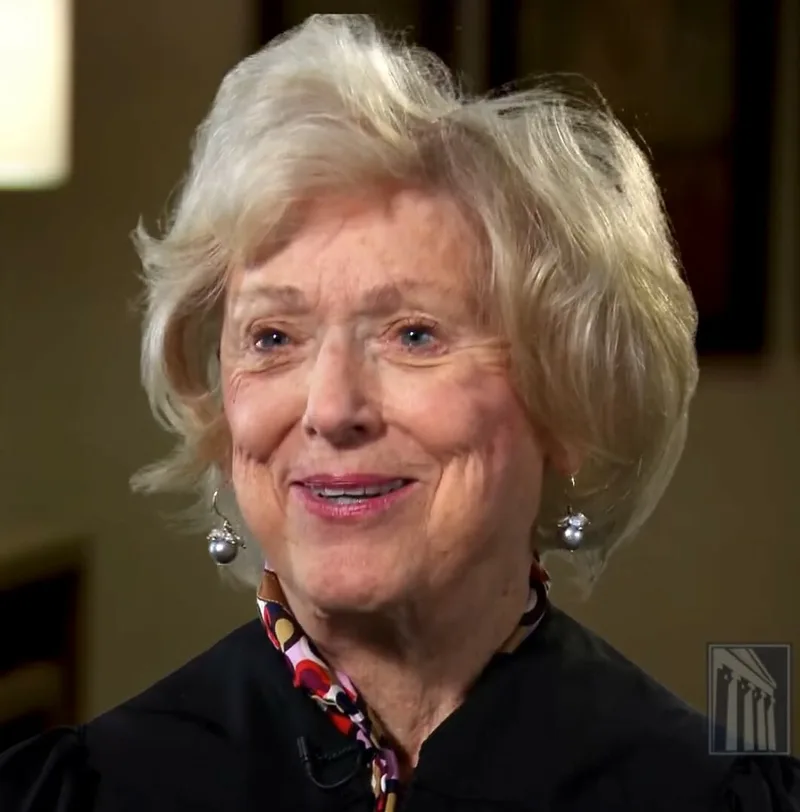
Groom v. Safeway, Inc.
District Court, W.D. Washington · 1997-07-18 · cited 6×
In Groom v. Safeway, Inc., plaintiff Patricia Groom sued Safeway and an off-duty Seattle police officer for violations of 42 U.S.C. § 1983 and state law claims after the officer, hired by Safeway, detained and searched her based on a mistaken shoplifting suspicion, resulting in an unreasonable detention. The jury awarded compensatory damages of $7,500 total and punitive damages of $752,500, primarily against Safeway. The court denied Safeway's motion to dismiss the claims, reaffirming that Safeway acted under color of state law due to its employment relationship with the officer and that its lack of training proximately caused the deprivation. However, the court granted in part the motion on damages, finding the punitive award against Safeway excessive under due process standards and reducing it substantially while upholding the liability findings.
civil rightsproceduretorts & liability
United States v. Skinner
District Court, W.D. Washington · 1997-05-16 · cited 9×
The case involved two appellants charged with DUI under Washington state law (RCW 46.61.502) as assimilated into federal law on Bremerton Naval Base, who moved to dismiss on grounds that the statute's two-hour BAC rule was unconstitutional. The district court affirmed the magistrate judge's denial of the motion to dismiss. The court reasoned that the rule is a valid exercise of state police power because it substantially relates to public highway safety, does not create a mandatory presumption of guilt, and is not unconstitutionally vague under the Fifth and Fourteenth Amendments.
criminal lawfederal power
Jjr, Inc. v. United States
District Court, W.D. Washington · 1997-01-03 · cited 6×
The case involved JJR, Inc., which operated a Tacoma nightclub featuring nude and semi-nude dancers and sought a refund of employment taxes, penalties, and interest assessed by the IRS for late 1991 through 1992; the United States counterclaimed for the unpaid balance. JJR had treated the performers as independent contractors under written lease-style contracts rather than employees, and the parties disputed whether wages were paid or an employment relationship existed. Building on its prior decision in Marlar, Inc. v. United States, the court granted JJR’s motion for summary judgment, holding that the company qualified for safe-harbor relief under § 530 of the Revenue Act of 1978. That provision protects taxpayers who have consistently treated workers as non-employees, filed required returns, and followed a long-standing practice in the relevant industry. The court therefore relieved JJR of liability for the assessed employment taxes without resolving the underlying employee-versus-contractor classification.
taxeslabor & employmentbusiness & regulatory
Armstrong v. United States Parole Commission
District Court, W.D. Washington · 1996-12-03 · cited 5×
The case concerned Charles Allen Armstrong's petition for a writ of habeas corpus against the United States Parole Commission (USPC), challenging its authority to re-release him under conditions of special parole after revoking his special parole term. The court granted the petition in part, ordering release from the special parole conditions, but denied it insofar as Armstrong sought complete release from USPC jurisdiction. The facts involved multiple revocations of Armstrong's parole and special parole stemming from his 1979 sentence for heroin distribution. The court's reasoning centered on the statute's plain language, which provides that revocation converts the special parole term into a new term of imprisonment without authorizing re-imposition of special parole upon partial re-release, consistent with interpretations of similar supervised release provisions by multiple other circuits.
criminal lawfederal power
B.S.B. Diversified Co. v. American Motorists Insurance
District Court, W.D. Washington · 1996-10-17 · cited 21×
This case concerns a dispute over whether plaintiff BSB Diversified Company is entitled to proceeds under insurance policies issued in the 1970s and 1980s to predecessor companies for environmental cleanup liabilities at the contaminated Hytek site in Kent, Washington. BSB assumed those liabilities through a 1987 redemption agreement and asset transfer from Criton Technologies, after an EPA report in 1981 had already identified groundwater contamination requiring state and federal remediation. Applying Washington law in this diversity action, the court granted BSB's motion for partial summary judgment, ruling that the 1987 transfer assigned the rights to pre-loss insurance proceeds as a chose in action and that no-assignment clauses did not bar post-occurrence transfers. Alternatively, the court held that coverage follows liability by operation of law under Ninth Circuit precedent. The decision turned on undisputed facts of the corporate transfers and the timing of the contamination events.
environmentbusiness & regulatoryproperty
Marlar, Inc. v. United States
District Court, W.D. Washington · 1996-08-02 · cited 4×
The case involved Marlar, Inc., owner of an adult entertainment club featuring nude and semi-nude dancing, which the IRS assessed for unpaid FICA, withholding, and FUTA employment taxes on the dancers for 1990 and 1991. Marlar paid a portion of the assessed taxes and sued for a refund, arguing either that the dancers were lessees rather than employees or that it qualified for safe-harbor relief under Section 530 of the Revenue Act of 1978. The government counterclaimed for the full amount plus penalties and interest. The court granted Marlar summary judgment under Section 530, finding that the company's treatment of the dancers as non-employees rested on a longstanding recognized practice of a significant segment of the industry and that Marlar had filed all required returns consistent with that treatment.
taxeslabor & employmentbusiness & regulatory
Stairmaster Sports/Medical Products, Inc. v. Pacific Fitness Corp.
District Court, W.D. Washington · 1996-02-03 · cited 19×
This case involved a declaratory judgment action filed by StairMaster, an Oklahoma corporation headquartered in Washington, seeking to invalidate U.S. Patent No. 5,254,067 owned by California-based Pacific Fitness Corporation for a recumbent leg exercise machine. Pacific had sent letters to StairMaster in Washington threatening litigation for alleged infringement, prompting StairMaster to sue first in Washington federal court; Pacific then filed its own infringement suit in California and moved to dismiss the Washington action. The court granted the motion and dismissed for lack of personal jurisdiction, finding that Pacific lacked sufficient minimum contacts with Washington for either general jurisdiction (no substantial continuous activities) or specific jurisdiction (the cease-and-desist letters alone did not arise from or relate to in-forum activities in a way that satisfied due process). The decision rested on application of the Washington long-arm statute and federal due process standards requiring purposeful availment and fairness, without reaching venue or other issues.
procedurebusiness & regulatory
Emanuel v. United States
District Court, W.D. Washington · 1995-11-09
This case involves a wrongful death action brought by the widow of a seaman who died from cryptococcal meningitis after allegedly receiving inadequate medical care aboard the USNS TRIUMPH, a public vessel operated by the United States. The plaintiff sued under the Suits in Admiralty Act, Public Vessels Act (PVA), and Federal Tort Claims Act (FTCA), claiming negligence in diagnosis, treatment, and failure to evacuate the seaman promptly. The court dismissed U.S. Marine Management, Inc. as a defendant and dismissed all FTCA claims, ruling that the PVA provides the exclusive remedy for maritime torts involving public vessels and that its agents are not separately liable. It denied the defendants' motion to dismiss on statute of limitations grounds but granted in part the plaintiff's motion to strike an affirmative defense, holding the United States responsible for any negligence by its agents or selected medical practitioners.
federal powerproceduretorts & liability
McCoy v. Major League Baseball
District Court, W.D. Washington · 1995-11-02 · cited 4×
This case arose from the 1994-1995 Major League Baseball strike after the expiration of the collective bargaining agreement, with fans and nearby businesses suing the owners, leagues, and commissioner for alleged antitrust violations seeking damages and injunctive relief. The court granted the defendants' motion to dismiss and denied the plaintiffs' motion for summary judgment on the defenses. The core reasoning was that Supreme Court precedents in Federal Baseball, Toolson, and Flood established baseball's antitrust exemption from federal laws, which applied here, and that both the fans and businesses lacked antitrust standing because their injuries were indirect ripple effects rather than direct harms intended by the antitrust laws. The court also dismissed any federal common law claim as barred by the same exemption.
business & regulatorylabor & employment
Aughe v. Shalala
District Court, W.D. Washington · 1995-02-21 · cited 7×
The case involved a challenge to the termination of AFDC benefits for Dallas Loghry, an 18-year-old full-time student with a learning disability in the Everett School District, after Washington state's program ended payments because he could not complete high school before turning 19 under 42 U.S.C. § 606(a). His mother, Valarie Aughe, sued federal and state officials, claiming the age requirement violated the Rehabilitation Act, the Americans with Disabilities Act, and constitutional equal protection guarantees. The court granted summary judgment to the defendants, finding no genuine issues of material fact and holding that the requirement was essential to the program and rationally related to the government's interest in conserving funds while limiting AFDC to children and families. The court also denied the motions to certify a class and to amend the complaint as futile, since the underlying claims could not succeed.
civil rightsfamily lawfederal power
Onyon v. Truck Insurance Exchange
District Court, W.D. Washington · 1994-08-09 · cited 14×
The case involved property owners who filed an insurance claim after a retaining wall collapsed and damaged their commercial building and parking lot; the insurer initially denied coverage based on an expert's conclusion that weather caused the collapse, which was an excluded peril under the policy. After the owners disclosed in a second statement that an employee had seen equipment strike the wall weeks earlier, the insurer conducted a new investigation attributing the failure to seismic activity (also excluded) and asserted that the owners' initial omission of the incident constituted a material misrepresentation that voided the policy. The owners sued for breach of contract, bad faith, and related claims. The court granted the insurer's motion for summary judgment, holding that under Washington law a material misstatement by the insured voids coverage regardless of intent or later correction, and that the omission here met that standard.
business & regulatorypropertyprocedure
Malbon v. United States
District Court, W.D. Washington · 1994-01-21 · cited 3×
This case involved taxpayers Sydney and Helene Malbon seeking a refund of taxes paid on a lump-sum credit received by Mr. Malbon under the Civil Service Retirement System alternative annuity option in 1987. The court adopted the magistrate judge's recommendation and granted summary judgment to the United States, denying the refund claim. The core reasoning was that the lump-sum payment constitutes taxable income in the year received under relevant tax code provisions, requiring recovery of contributions over multiple years rather than as a single non-taxable return of capital, and the deemed deposit was includable as it benefited the annuity calculation.
taxes
Ceiling & Interior Systems Supply, Inc. v. USG Interiors, Inc.
District Court, W.D. Washington · 1993-06-11 · cited 2×
In this case, distributor Ceiling and Interior Systems Supply, Inc. sued manufacturer USG Interiors, Inc. under diversity and federal antitrust jurisdiction, alleging breach of contract, tortious interference with economic relationships, attempted monopolization, and violations involving exclusive dealing and tying arrangements after USGI terminated distributorships in Seattle and Portland when the plaintiff began carrying competing products. The court granted the defendant's motion for summary judgment and dismissed all antitrust claims under the Sherman Act and corresponding Washington statutes, finding insufficient evidence of market power, anticompetitive effects, or other required elements. It retained portions of the breach of contract claim concerning the termination itself and the tortious interference claim, while dismissing older contract allegations as barred by the three-year statute of limitations.
business & regulatoryproceduretorts & liability
Lighthawk v. Robertson
District Court, W.D. Washington · 1993-02-08 · cited 1×
In Lighthawk v. Robertson, an environmental organization called LightHawk sued the Chief of the U.S. Forest Service after the agency threatened legal action over a political newspaper advertisement criticizing the agency's land management practices. The ad depicted Smokey Bear holding a chainsaw behind his back with the slogan 'Say it ain’t so, Smokey,' which the Forest Service claimed violated 16 U.S.C. § 580p-4(a) and 36 C.F.R. § 271.3 by using the Smokey Bear character without authorization for a non-forest-fire-prevention message. LightHawk sought a declaratory judgment that the statute and regulation could not be applied to its ad. Both parties moved for summary judgment on undisputed facts. The court granted summary judgment to LightHawk, holding that the regulatory scheme, which conditions non-commercial use of Smokey Bear on the content of the message, unconstitutionally burdens First Amendment rights as applied because it is directly aimed at suppressing expression unrelated to forest fire prevention.
free speechenvironmentfederal power
Ridenour v. Holland America Line Westours, Inc.
District Court, W.D. Washington · 1992-11-05 · cited 14×
In Ridenour v. Holland America Line Westours, Inc., a seaman sued under the Jones Act and general maritime law for injuries on a vessel and included a claim for punitive damages based on the defendants' alleged callous and bad-faith failure to pay maintenance and cure. The defendants moved under Rule 12(b)(6) to dismiss the punitive damages portion, contending that the Supreme Court's Miles v. Apex Marine Corp. decision barred non-pecuniary remedies in maritime cases. The court denied the motion, reasoning that Miles addressed only wrongful death actions where Congress had already limited remedies, whereas maintenance and cure is an area without such congressional restrictions, and Ninth Circuit indications plus longstanding seamen-protection policies support allowing punitive damages for egregious withholding.
labor & employmentproceduretorts & liability
Boland v. King County Medical Blue Shield
District Court, W.D. Washington · 1992-07-09 · cited 4×
This ERISA case concerned plaintiff Lyn Boland's challenge to the denial of coverage for high-dose chemotherapy with autologous bone marrow transplant (HDC with ABMT) to treat her breast cancer under her husband's employer-sponsored medical plan administered by Boeing and King County Medical Blue Shield. The plan excluded experimental or investigational treatments, with one definition relying on classification by the national Blue Cross and Blue Shield Association. The court granted summary judgment to the defendants, holding that the plan language unambiguously permitted reliance on the third-party classification as experimental without further inquiry by the court. The decision turned on contract interpretation as a question of law based on the plain terms of the collective bargaining agreement and plan documents, rather than on any factual dispute about medical acceptance of the procedure.
healthcarelabor & employmentfederal power
Northwest Airlines, Inc. v. the Ticket Exchange, Inc.
District Court, W.D. Washington · 1992-06-05 · cited 11×
This case involved Northwest Airlines suing The Ticket Exchange for brokering and selling its frequent flyer "Fly-Write" tickets, which the airline's rules prohibit from being sold or transferred for compensation. The court granted Northwest's motion for partial summary judgment, finding the defendant violated Washington's Consumer Protection Act through deceptive practices such as signing tickets and advising buyers to claim the tickets were gifts, and also liable under unjust enrichment for profiting from these activities; it issued an injunction against further brokering. The court denied summary judgment on other claims like fraud and RICO, as well as the defendant's motion to dismiss, citing issues of fact regarding damages and affirmative defenses, while noting that actual damages need not be precisely quantified for the CPA claim.
business & regulatorytorts & liability
Jeffries v. Blodgett
District Court, W.D. Washington · 1991-09-05 · cited 13×
This case involved a federal habeas corpus petition filed by Patrick James Jeffries, a Washington death row inmate convicted of aggravated first-degree murder, challenging aspects of his trial, sentencing, and post-conviction proceedings. The district court granted the petitioner's motions for additional discovery, expansion of the record, and an evidentiary hearing on select issues, while addressing whether certain claims were procedurally barred from federal review. The court ultimately granted the respondent's motion for summary judgment and denied the habeas petition in full, dissolving the prior stay of execution. Core reasoning centered on the Washington Supreme Court's application of state procedural rules under RAP 16.4(d) regarding successive personal restraint petitions, finding that new claims raised constituted an abuse of the writ because they were available but not pursued earlier, and that the rule was clearly established and adequate to bar federal review absent cause and prejudice.
criminal lawprocedure
United States v. One 1985 Mercedes-Benz, 300 SD VIN WDBCB20C6FA177831
District Court, W.D. Washington · 1990-07-18
This case concerns a civil forfeiture action by the United States against a 1985 Mercedes-Benz owned by claimant Sadrudin Kabani, which was seized after Kabani attempted to drive it across the U.S. border with over $1 million in unreported currency in the trunk. Kabani had pled guilty to making false statements under 18 U.S.C. § 1001 as part of a plea bargain and moved for summary judgment to dismiss the forfeiture and recover the vehicle. The court denied the motion, holding that the vehicle was subject to forfeiture under 22 U.S.C. § 401 because it was used to export currency in violation of the reporting requirements of 31 U.S.C. § 5316, which qualifies as exporting “articles in violation of the law.” The decision rested on the broad application of section 401 to various classes of goods beyond arms or munitions, even where the underlying statute is silent on vehicle forfeiture.
criminal lawproperty
In Re Westwood Lumber, Inc.
District Court, W.D. Washington · 1990-05-01 · cited 2×
This case concerned whether a bank's ex parte motion for voluntary dismissal without prejudice of its state court claim against debtor Westwood Lumber, Inc. violated the automatic stay under 11 U.S.C. § 362(a) because the bank had not first obtained relief from the bankruptcy court. The district court reversed the bankruptcy court's declaratory ruling that no such leave was required, concluding instead that the motion could not proceed without bankruptcy court approval. The core reasoning was that the stay's purpose is to preserve the status quo and protect estate property, making any step toward dismissal a continuation of judicial proceedings that falls within the stay's scope, consistent with the Fifth Circuit's approach in Pope v. Manville Forest Products Corp.
procedurebusiness & regulatory