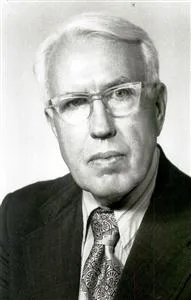
Party: Democratic →LL.B., George Washington UniversityA.B., University of Colorado BoulderBA, University of Colorado BoulderJD, George Washington University
Decision levers
AI-measured from their own opinions — each lever cites its cases
This case involves ongoing efforts to desegregate the Denver public schools following a 1969 lawsuit and a 1973 Supreme Court remand. The court determined that de jure segregation found in the Park Hill area was not isolated but indicative of system-wide segregation, requiring elimination of invidious discrimination and deprivation of equal educational opportunity throughout the district. This conclusion rested on demographic data showing concentrated minority and Anglo student populations in different parts of the district, the history of school board actions repudiating integration plans, and evidence presented at hearings on proposed desegregation plans involving staff reassignment, student pairing, and transportation. The opinion evaluated plans submitted by the school district and other parties to achieve integration meeting minimum percentage guidelines for Anglo and minority students in each school.
This case involves a school desegregation lawsuit against Denver's School District No. 1, focusing on whether intentional segregation in the Park Hill area created a presumption of system-wide de jure segregation. On remand from the Supreme Court, the district court assessed if Park Hill was an isolated section and whether the board's actions established a dual school system. The court decided that the Denver school system constitutes a dual system subject to an affirmative duty to desegregate. The core reasoning was that the board did not prove Park Hill should be treated separately, and evidence of segregative intent in Park Hill permeated the district without rebuttal from external factors alone, per the Supreme Court's framework shifting the burden of proof.
The case involved shareholders of Potash Company of America suing over its merger with Ideal Cement (predecessor to Ideal Basic Industries), alleging violations of Section 10(b) and Rule 10b-5 of the Securities Exchange Act, Section 14(a) and Rule 14a-9, and state-law breach of fiduciary duty for failing to disclose or pursue alleged merger proposals from Susquehanna in 1967. The court granted defendants' motion for a directed verdict at the close of evidence. It reasoned that the evidence, even viewed most favorably to plaintiffs, showed no obligation to disclose the Susquehanna communications because they were not solid outstanding offers and did not clearly outweigh the Ideal merger; directors acted independently without bad faith; Ideal had no disclosure duty; and plaintiffs failed to prove causation or any measurable damages from the merger chosen.
The case involved the United States seeking to enjoin First National Bancorporation's acquisition of First National Bank of Greeley under Section 7 of the Clayton Act on the ground that it would substantially lessen competition in commercial banking. The Federal Reserve Board had approved the transaction in a 4-3 vote, finding no such anticompetitive effect, while the government argued it would increase concentration trends in Greeley, Weld County, and potentially statewide. The court reviewed the structure and market positions of Bancorporation's Denver-area banks and the Greeley target, analyzed the relevant product market of commercial banking services, and considered evidence on actual and potential competition, including correspondent banking and de novo expansion.
This case arose from the 1967 merger of Potash Company of America into Ideal Basic Industries, in which Potash shareholders alleged that directors violated Sections 10(b) and 14(a) of the Securities Exchange Act of 1934, along with state fiduciary duties, by failing to disclose a superior stock-exchange offer from Susquehanna Corporation before recommending and obtaining approval of the Ideal merger. Plaintiffs, representing about 132 named shareholders who held over 40,000 shares, moved to certify the suit as a class action under Federal Rule of Civil Procedure 23 on behalf of all approximately 5,600 former Potash stockholders. The court concluded that the prerequisites for class certification were satisfied, including numerosity, commonality, and typicality, and that a class action would be superior given the large number of small claims. However, citing uncertainty about the merits and the risk of disproportionate expense, the court directed a bifurcated trial on threshold issues such as the existence of a genuine offer, its revocation, and scienter before any class notice would be issued.
The case concerned the United States' request for an injunction barring defendants from mining or exploring limestone claims on national forest lands in Colorado pending administrative proceedings to determine the claims' validity under federal mining laws. Defendants had located the claims in 1966 and begun core drilling and road work, but were halted after a 1968 withdrawal request by the Forest Service temporarily segregated the lands from further mining entry for recreational purposes. The court exercised jurisdiction under 28 U.S.C. § 1345, examined the effect of the withdrawal notation on the ability to prove discovery and marketability, and addressed the interplay between the ongoing BLM contest and the proposed withdrawal while declining to issue an advance ruling on the merits of the administrative matters.