
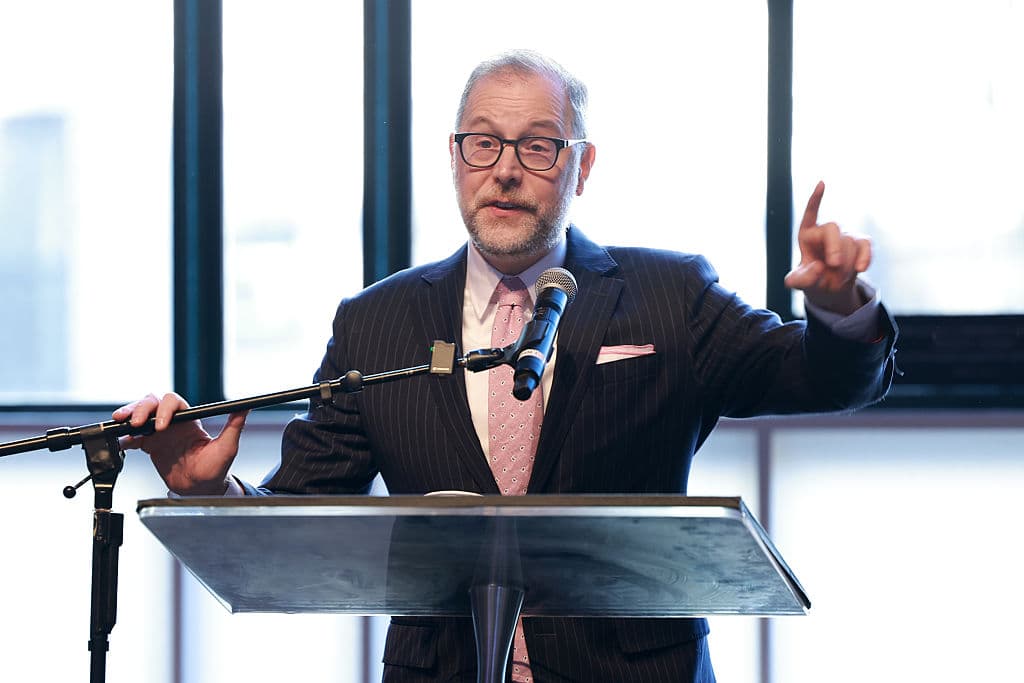
New York City’s top financial watchdog is urging Mayor Zohran Mamdani to brace for what he believes could be a massive economic shakeup caused by artificial intelligence.
According to the New York Post, city Comptroller Mark Levine warned Wednesday that AI could dramatically reshape the city’s economy and potentially slash billions from tax revenue if the technology leads to widespread job losses in office-based industries.
Levine said there is effectively a “50-50” chance artificial intelligence could push New York City into a recession, arguing the city remains financially unprepared for the risks tied to the rapidly growing technology sector.
“We are entering into the most dramatic technological revolution of our lifetime, and this will change New York City in ways that are difficult to even imagine,” Levine told reporters.

The comptroller said New York faces unique exposure because of its dependence on industries built around white-collar employment and finance.
“New York City, uniquely — more than any other place in America and maybe the world — is exposed to the potential promises and perils of this technology, because our economy is deeply intertwined with the financing of AI,” he said.
He added that the city is especially vulnerable “because we are the nation’s capital of white collar work, with a million people who go into offices every day during jobs that are very exposed to AI.”
Levine’s office released a report outlining several possible economic outcomes as artificial intelligence becomes more integrated into the workforce.
Under one scenario, described as the most likely with a 35% probability, AI would strengthen the city’s economy by creating more private-sector jobs and boosting tax revenue by roughly $7 billion by 2030.
Another more optimistic possibility compared the AI boom to the internet surge of the late 1990s.
That outcome, which the report estimated had a 15% chance of happening, would increase wages, add nearly 30,000 private-sector jobs and generate about $8 billion in additional revenue between 2027 and 2030.
But Levine also highlighted darker possibilities.
One model projected that if the AI investment boom collapses, New York City could lose 135,000 private-sector jobs and $8.8 billion in tax revenue.
Another scenario estimated AI could replace workers faster than companies can create new roles, leading to 94,000 lost jobs and $5.5 billion in reduced tax revenue.
The most severe projection envisioned AI causing deep economic disruption across the city, resulting in 259,000 lost jobs and a $14.4 billion hit to tax collections.
Levine argued that the uncertainty alone should push City Hall to increase reserves dramatically.
The comptroller said the city currently has about $7.2 billion saved across multiple reserve accounts, but he believes officials should build that figure up to roughly $13.5 billion to prepare for a possible downturn.
To get there, Levine urged continued budget cuts involving programs such as housing vouchers, the Department of Education and other city spending areas.
Mayor Mamdani recently unveiled a revised city budget proposal that lowered projected spending from more than $127 billion to $124.7 billion while preserving reserve funds and avoiding tax increases.

Still, Levine said the city needs a long-term formula to maintain reserve levels equal to 16% of annual tax revenue.
“We do not currently today have the resources in city government… so we are doubling down on our push to finally, once and for all, have fully-funded reserves given the uncertainty,” Levine said.
“That is the amount of revenue we would expect to be down in a global recession.”