



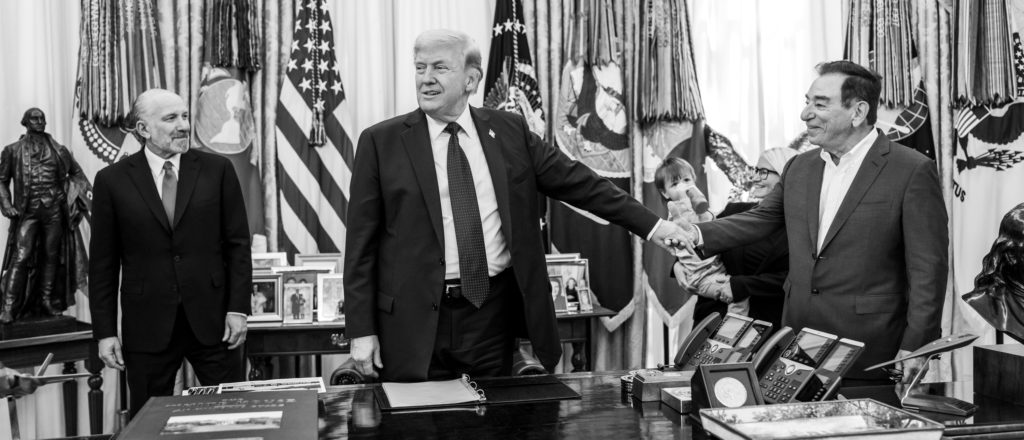

President Donald Trump’s tariffs on steel have done something no Washington consensus would have predicted five years ago: they put American economic security back on the agenda and kept it there. That matters.
The conversation around trade has fundamentally shifted, and American workers and manufacturers are better positioned because of it.
But winning a strategic argument doesn’t mean every policy detail is perfectly calibrated from day one. There’s one corner of the food supply chain where a small fix would make the broader strategy work a lot harder, and ignoring it hands a quiet victory to exactly the foreign competitors the tariffs were designed to push back.
Here’s the problem.
Tinplate steel is what food cans are made from. American producers can’t come close to meeting domestic demand; they cover less than a third of it. So American can makers have no choice but to import tinplate, and at current tariff levels, that raises their costs significantly.
The tariff is sending the right signal. But domestic tinplate capacity has actually declined since 2018 as producers shift to more profitable materials.
The gap isn’t closing. It’s growing.
The supply chain is not complicated, but it matters to follow it all the way through.
Tinplate becomes cans. Cans get filled by food processors. Finished goods move through distributors to store shelves.
When the cost of the first input goes up, that increase doesn’t stop. It travels. Meanwhile, a foreign producer can make and fill cans overseas, avoid the same input costs entirely, and land finished product in American grocery stores at a lower price.
That’s not a theoretical concern. Filled food can imports have been climbing steadily, and they’re still climbing.
Grocery retail runs on thin margins. Retailers don’t make ideological choices. They make pricing decisions.
When imported canned goods are cheaper, they gain shelf space. Not all at once, but steadily, one sourcing decision at a time. Go to your local grocery store and flip over a can of peaches. The back label tells you exactly how this plays out on American shelves.
Farmers feel this too, in ways that don’t always make headlines. Food processors are their customers. When processor costs go up, they get more price-sensitive, and that pressure moves backward through the supply chain.
A tariff on tinplate that was meant to strengthen American industry ends up squeezing American agriculture if the gap in domestic capacity isn’t addressed.
None of this undermines the case for the broader tariff strategy. It actually reinforces it. China and other global producers are actively expanding their footprint in both tinplate and finished canned goods. The window created by the domestic capacity gap is one they’re already looking to climb through.
Closing it isn’t a retreat. It’s finishing the job.
Here’s the fix.
A targeted reduction or elimination of tinplate tariffs would do exactly that. It would support American can makers without putting food processors in a cost squeeze, protect the farmer-to-shelf supply chain the administration has worked to strengthen, and shut the door on foreign competitors looking to undercut American producers on their own turf.
There’s another lever available. Apply the 50% steel tariff to imported filled canned goods — the finished product coming in from China, Greece, and elsewhere. Right now those imports avoid the cost burden American producers carry. That’s the gap foreign competitors are exploiting. Closing it doesn’t require a new policy direction. It’s just applying the existing one consistently.
Polls show that 77% of voters favor having the Trump administration adjust tariffs to protect U.S. food and manufacturers, while increasing domestic production of tin mill steel to make more cans in America.
Congress has a role to play here too. Right now, most Americans have no idea where their canned food actually comes from. With imports rising, that’s not a trivial question. The bipartisan American CANS Act — with six Republican and six Democratic cosponsors — would change that by requiring country-of-origin labeling on canned food.
The label on a can of corn or peaches doesn’t even give them that choice. Passing the American CANS Act is the kind of commonsense step that turns a trade policy win into something families can actually act on at the grocery store.
President Trump built the framework. The fixes are straightforward: adjust tinplate tariffs and apply the same rules to imported finished canned goods that American producers already play by. That’s not a new direction. That’s finishing the job.
James Carter served as Deputy Undersecretary for International Affairs at the U.S. Department of Labor (2006-07) and as Director of the America First Policy Institute’s Center for American Prosperity (2021-23).
The views and opinions expressed in this commentary are those of the author and do not reflect the official position of the Daily Caller News Foundation.
All content created by the Daily Caller News Foundation, an independent and nonpartisan newswire service, is available without charge to any legitimate news publisher that can provide a large audience. All republished articles must include our logo, our reporter’s byline and their DCNF affiliation. For any questions about our guidelines or partnering with us, please contact [email protected].