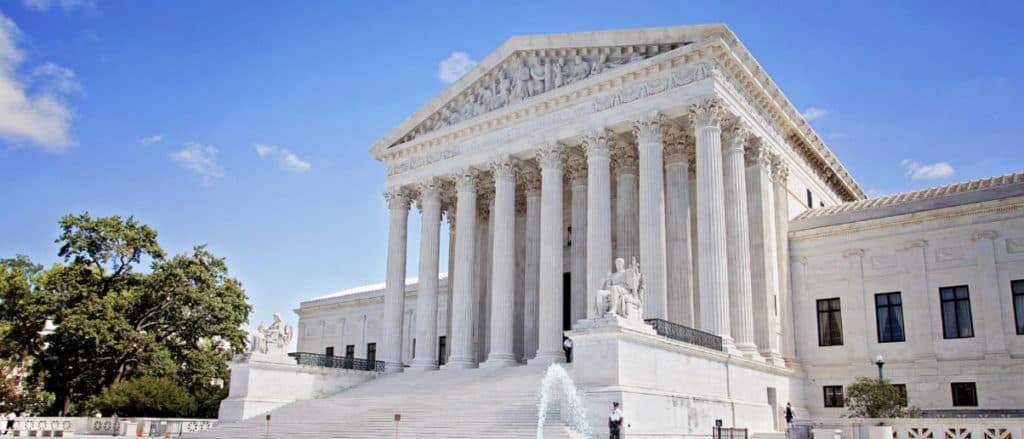

The Trump administration told the Supreme Court on Tuesday that it has reached a settlement with former campaign adviser Carter Page.
Federal investigators relied on inaccurate and incomplete information to obtain a Foreign Intelligence Surveillance Act (FISA) court warrant to illegally wiretap Page during the investigation into allegations that Russia influenced the 2016 presidential election. In a filing dated April 21, 2026, the Justice Department told the justices that it resolved Page’s claims against the United States stemming from alleged FISA violations.
The agreement does not extend to claims Page brought against individual federal officials involved in the surveillance applications. This move ends the case against the United States after years in federal court and repeated scrutiny over how the FBI obtained warrants to monitor Page. The Justice Department’s inspector general later found those warrants contained serious errors and omissions, including inaccurate assertions and failures to disclose key information.
Page became the subject of an FBI counterintelligence investigation into possible coordination between campaign associates and Russia. Between October 2016 and June 2017, the Bureau sought and received four FISA warrants targeting Page, claiming probable cause that he acted as an agent of a foreign power.
A 2019 inspector general report rejected the justification for the warrants. It concluded that the warrants lacked adequate factual support and identified numerous inaccuracies and omissions across the applications, many of which were carried into renewal requests. The report also cited failures to disclose Page’s prior contacts with another U.S. government agency, as well as the political origins of certain information used to justify surveillance.
Page filed suit in 2020 against the United States, the FBI, the Justice Department, and several former officials, alleging violations of FISA, the PATRIOT Act, and other federal laws. A district court dismissed his claims in 2022, and a federal appeals court later affirmed that decision, ruling in part that his claims were filed too late under statutory deadlines.
The case reached the Supreme Court after Page sought review of those rulings. But the filing argues that the newly reached settlement eliminates any live dispute between Page and the United States, at least with respect to his statutory claims for damages.
“The settlement of a case on appeal renders the appeal moot,” the filing argued, urging the Court to deny the petition for Supreme Court review insofar as it concerns the claims against the United States. With no remaining controversy between the parties on that front, the administration contends, the justices lack jurisdiction to proceed.
(Featured Image Media Credit: Sunira Moses/Creative Commons/Flickr)
All content created by the Daily Caller News Foundation, an independent and nonpartisan newswire service, is available without charge to any legitimate news publisher that can provide a large audience. All republished articles must include our logo, our reporter’s byline and their DCNF affiliation. For any questions about our guidelines or partnering with US, please contact [email protected].