Boston City Council
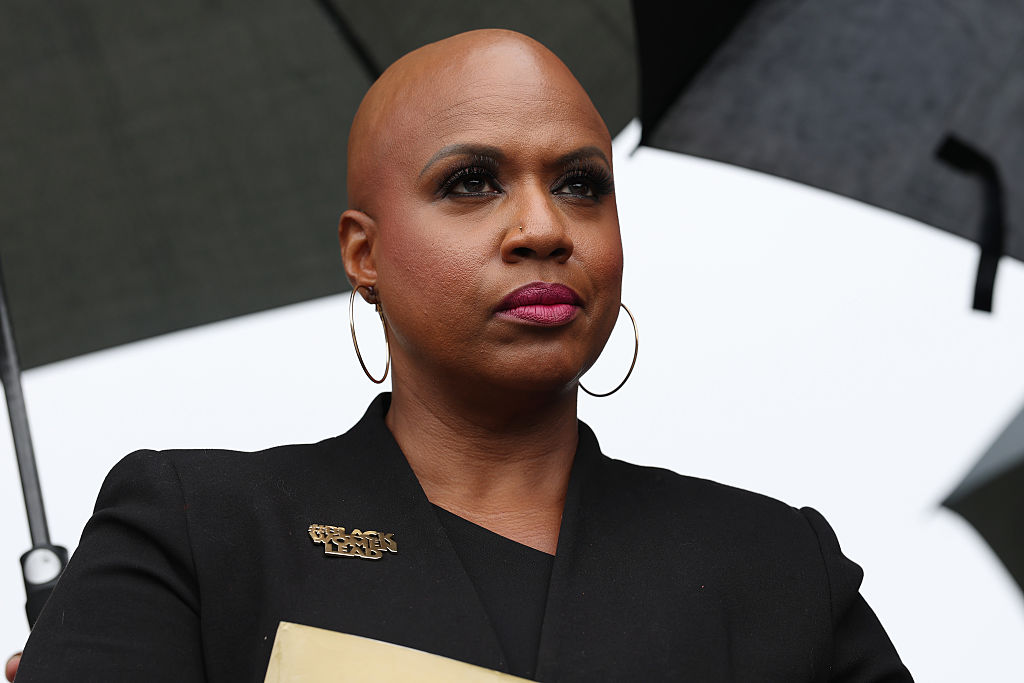
Pressley was first elected to the Boston City Council in November 2009. Upon being sworn in on January 4, 2010, she was the first woman of color to serve in the 100-year history of the Boston City Council.
Pressley placed a strong focus on women's and children's issues. Pressley founded the Committee on Healthy Women, Families, and Communities, which addresses issues such as domestic violence, child abuse, and human trafficking. She worked collaboratively with community members to develop a comprehensive sex education and health curriculum which was implemented in Boston Public Schools.
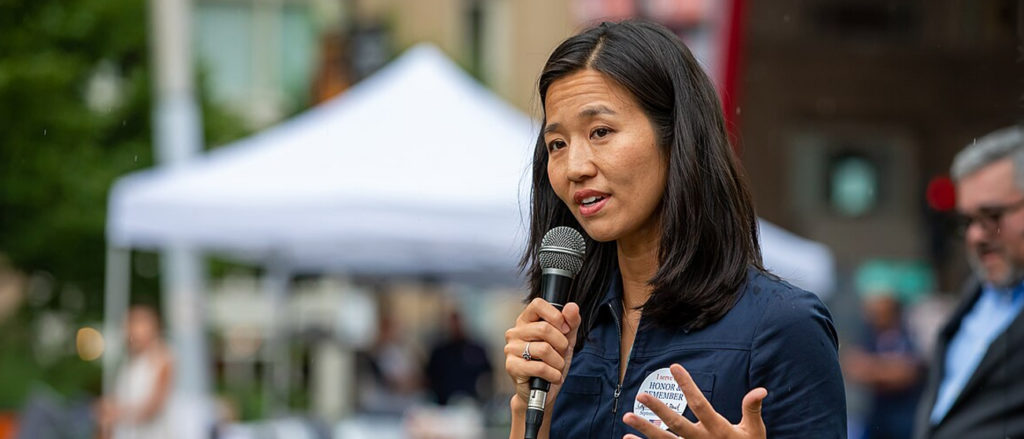
In June 2014, the Boston City Council unanimously passed an ordinance Pressley coauthored with Councilor Michelle Wu, which prohibits its city government "from contracting with any health insurer that denies coverage or 'discriminates in the amount of premium, policy fees, or rates charged...because of gender identity or expression". This ordinance guaranteed healthcare (including gender reassignment surgery, hormone therapy, and mental health services) to transgender city employees and their dependents. Pressley declared, "We can't be a world-class city if anyone is made to feel like a second-class citizen."
Pressley worked on the issue of liquor licenses in the city. The ultimate product of Pressley's push was the passage of state legislation in 2014 granting Boston the authority to distribute 75 additional liquor licenses over three years, with the aim of distributing them to less advantaged neighborhoods to increase economic activity in those neighborhoods. However, The Boston Globe's Meghan Irons observed that an unintentional impact of this was that, "it created uneven competition. It left out certain neighborhoods. It allowed businesses that were already established to get the licenses." Nevertheless, in 2018, The New York Times called Pressley's work on the matter a "major accomplishment". To remedy the shortfalls, Pressley worked with Mayor Walsh to further expand the number of new available liquor licenses. In 2017, Pressley and Mayor Walsh unveiled a proposal to increase the number of liquor licenses in the city by 152 over three years, with the majority of licenses being granted to underserved communities.
In 2017, the Council passed the Equity in City of Boston Contracts Ordinance, which was sponsored by Pressley and Councilor Michelle Wu. It required that the city create a supplier diversity program to conduct outreach to female and minority-owned businesses in regards to the city's contracting process. It also required the city to actively solicit bids from at least one female-owned business and one minority-owned business for contracts under $50,000. It also created a quarterly reporting requirement for the city.
According to Erin O'Brien, a political science professor at University of Massachusetts Boston, Pressley did not have the reputation for being controversial or an outsider during her time on the City Council. O'Brien, in 2018, observed that the city's "old guard" viewed Pressley as a "showboat" but that, "in many communities of color, she is viewed as incredibly exciting and voicing issues the council has ignored."
In the Boston City Council election of November 2011, Pressley finished first among at-large candidates with 37,000 votes. She led in 13 of the city's 22 wards and finished second in three others. Pressley won Boston's communities of color and many progressive neighborhoods. In all, she placed first in more than half of Boston's 22 wards. Pressley placed first ticket again in November 2013 and November 2015, and placed second in November 2017 behind only Michelle Wu.
While on the Boston City Council, Pressley was one of the first notable Massachusetts politicians to endorse Elizabeth Warren's successful campaign in Massachusetts' 2012 U.S. Senate election. Pressley would later endorse Warren's 2020 presidential campaign.