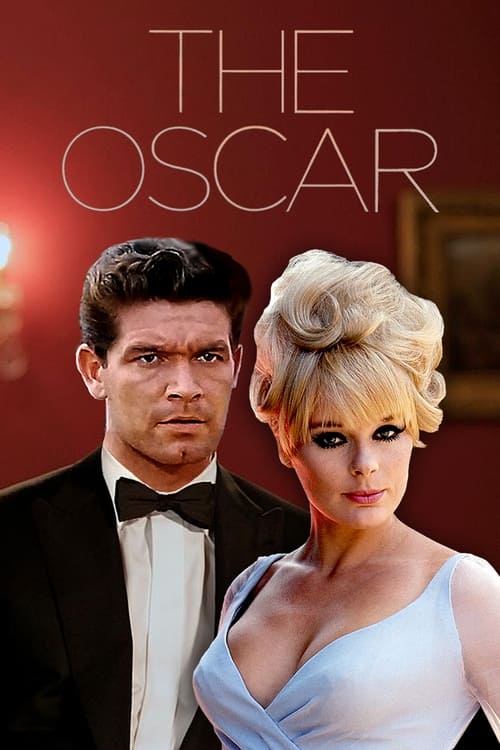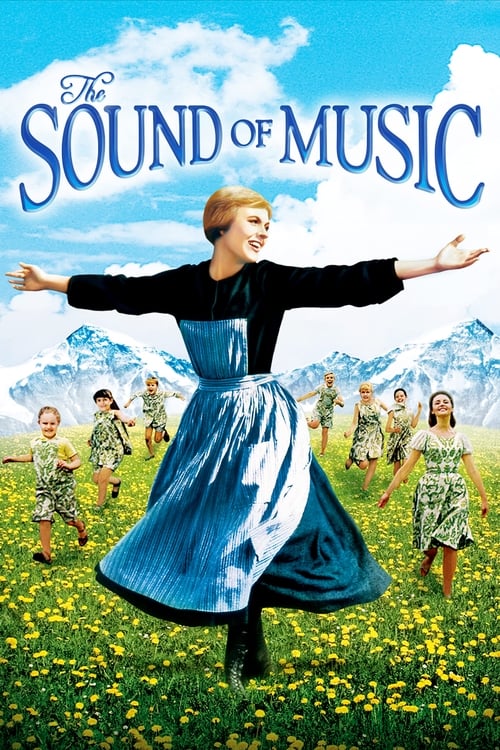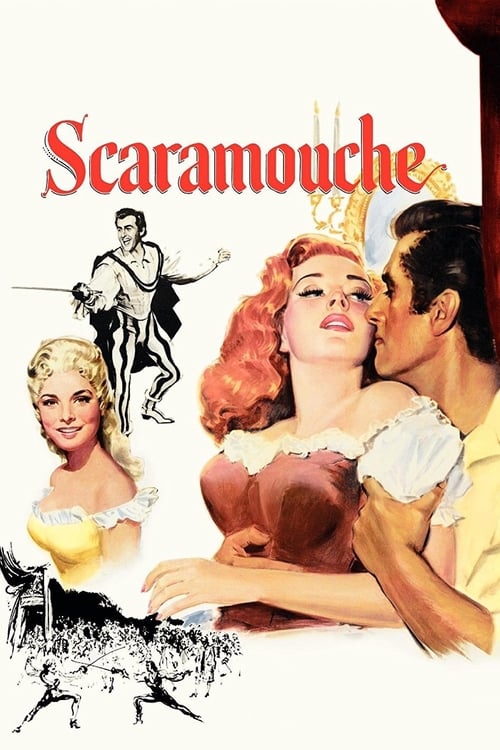




Eleanor Jean Parker (June 26, 1922 – December 9, 2013) was an American actress. She was nominated for three Academy Awards for her roles in the films Caged (1950), Detective Story (1951), and Interrupted Melody (1955), the first of which won her the Volpi Cup for Best Actress. She was also known for her roles in the films Of Human Bondage (1946), Scaramouche (1952), The Naked Jungle (1954), The Man with the Golden Arm (1955), A Hole in the Head (1959), The Sound of Music (1965), and The Oscar (1966).
Contents
Early life
Eleanor Jean Parker was born on June 26, 1922, in Cedarville, Ohio, the daughter of Lola (née Isett) and Lester Day Parker. She moved with her family to East Cleveland, Ohio, where she attended public schools and graduated from Shaw High School. "Ever since I can remember, all I wanted to do is act", she said. "But I didn't just dream about it. I worked at it."
She appeared in a number of school plays. After graduation, she went to Martha's Vineyard to work on her acting. She got a job as a waitress and was offered a screen test by 20th Century Fox, but turned it down. Wanting to focus on films, she moved to California and started appearing at the Pasadena Playhouse.
Career
Warner Bros
She was in the audience one night at Pasadena Playhouse when spotted by a Warners Bros talent scout, Irving Kumin. He offered her a test, and she accepted. The studio signed her to a long-term contract in June 1941.
She was cast that year in the film They Died with Their Boots On, but her scenes were deleted. Her actual film debut was as Nurse Ryan in the short film Soldiers in White in 1942.
She was given some decent roles in the B films Busses Roar (1942) and The Mysterious Doctor (1943), and she had a small role in Mission to Moscow (1943). This performance impressed Warners, so when Joan Leslie was held up on Rhapsody in Blue, Parker replaced her in Between Two Worlds (1944), playing the wife of Paul Henreid's character.
She stayed in supporting roles for Crime by Night (1944) and The Last Ride (1944), then was given the starring role with Dennis Morgan in The Very Thought of You (1944), replacing Ida Lupino. She was given a cameo in Hollywood Canteen (1944). Warners gave her the choice role of Mildred Rogers in a new version of Somerset Maugham's Of Human Bondage (1946). Although director Edmund Goulding called Parker one of the five greatest actresses in America, previews were not favorable, and the film sat on the shelf for two years before being released to an underwhelming reception. However, in 1953, Parker called it her favorite role.
Parker later said the "big break" of her career was when she was cast with John Garfield in Pride of the Marines (1945). "It was a great part, and who wouldn't look good with John Garfield", she later said. "He was absolutely wonderful." However, two films that followed with Errol Flynn, the romantic comedy Never Say Goodbye (1946) and the drama Escape Me Never (1947), were box-office disappointments.
Parker was suspended twice by Warners for refusing parts in films – in Stallion Road (where she was replaced by Alexis Smith) and Love and Learn.
She made the comedy Voice of the Turtle (1947, aired today under the title One for the Book) with Ronald Reagan and was in an adaptation of The Woman in White (1948). She refused to appear in Somewhere in the City (1948) so Warners suspended her again; Virginia Mayo played the role.
Paramount
Parker's career outside of Warners started badly with Valentino (1951), where she played a fictionalized wife of Rudolph Valentino, and then she tried the comedy A Millionaire for Christy (1951) (originally called The Golden Goose).
In 1951, Parker signed a contract with Paramount for one film per year, with an option for outside films. This arrangement began brilliantly with Detective Story (1951) for director William Wyler, playing Mary McLeod, the woman who doesn't understand the position of her unstable detective husband (played by Kirk Douglas); Parker was nominated for the leading actress Oscar in 1951 for her performance, which, to date, remains the shortest performance to be nominated in the category.
MGM
Parker followed Detective Story with her portrayal of an actress in love with a swashbuckling nobleman (played by Stewart Granger) in Scaramouche (1952), a role originally intended for Ava Gardner. Parker later claimed that Granger was the only person she didn't get along with during her entire career. However, they had good chemistry, and the film was a massive hit. MGM rushed her into Above and Beyond (1952), a biopic of Lt. Col. Paul W. Tibbets, Jr. (Robert Taylor), the pilot of the aircraft that dropped the atomic bomb on Hiroshima. It was a solid hit. While Parker was making Escape from Fort Bravo (1953), she signed a five-year contract with MGM.
She was named as star of My Most Intimate Friend and of One More Time, from a script by Ruth Gordon and Garson Kanin, but neither film was made. Back at Paramount, Parker starred with Charlton Heston as a 1901 mail-order bride in The Naked Jungle (1954), directed by Byron Haskin and produced by George Pal.
Parker returned to MGM where she was reunited with Robert Taylor in Valley of the Kings (1954) and the Western Many Rivers to Cross (1955).
"I maintain that if you work, believe in yourself, and do what is right for you without stepping all over others, the way somehow opens up", she said in 1953. "By that, I don't mean just sitting back. At Warners, they still have a mile-long list of my suspensions for refusing certain parts. Anyway, I never did a Western. Not once. It's paid off too."
In a 1954 interview, she said her favorite films were Caged and Detective Story and her least favorite were Chain Lightning, Escape Me Never, Valentino, and The Woman in White. She had commitments to make two films per year at MGM and one per year at Paramount. "Personally, I prefer to be under contract", she said.
MGM gave her one of her better roles as opera singer Marjorie Lawrence in Interrupted Melody (1955). It was a big hit and earned Parker a third Oscar nomination; she later said it was her favorite film.
Also in 1955, Parker appeared in the film adaptation of the National Book Award-winner The Man with the Golden Arm (1955), directed by Otto Preminger and released through United Artists. She played Zosh, a woman in a wheelchair and the wife of heroin-addicted would-be jazz drummer Frankie Machine (Frank Sinatra). It was a major commercial and critical success.
Later films, and transition into television and theatre
Parker supported Frank Sinatra in the popular comedy A Hole in the Head (1959). She returned to MGM for Home from the Hill (1960), co-starring with Robert Mitchum, then took over Lana Turner's role of Constance Rossi in Return to Peyton Place, a 1961 sequel to the hit 1957 film. It was made by 20th Century Fox which produced Madison Avenue (1961) with Parker.
In 1960, she made her TV debut. "I look for the quality story and for parts that I think will be good or fun. People told me I was crazy to do Hole in the Head and Home from the Hill, but both those pictures appealed to me. I did enough of the bad ones (films), while I was under contract – because I was being told to do them. That's the problem with being under contract. You do the pictures, or be suspended. Now, I don't want to work unless I have faith in the part. This has nothing to do with wanting to be famous, or anything like that. It's just that I love acting."
In the early 1960s, she worked increasingly in television, with the occasional film role such as Panic Button (1964).
Parker's best-known screen role was playing Baroness Elsa von Schraeder in the 1965 Oscar-winning musical The Sound of Music.
In 1966, she played an alcoholic widow in the crime drama Warning Shot, a talent scout who discovers a Hollywood star in The Oscar, and a rich alcoholic in An American Dream. From the late 1960s, she focused on television roles.
In 1963, Parker appeared in the medical drama The Eleventh Hour in the episode "Why Am I Grown So Cold?", for which she was nominated for an Emmy Award as Outstanding Single Performance by an Actress in a Leading Role. In 1964, she appeared in the episode "A Land More Cruel" on Breaking Point. In 1968, she portrayed a spy in How to Steal the World, a film originally shown as the two-part concluding episodes of The Man from U.N.C.L.E..
Parker starred with Michael Sarrazin and Gayle Hunnicutt in her final theatrical film of the 1960s, the tense thriller Eye of The Cat (1969), which was written by Joseph Stefano.
Personal life
Parker was married four times:
Fred Losee – married in April 1943, divorced in December 1944.
Bert E. Friedlob – married in 1946, divorced in 1953; the marriage produced three children.
Paul Clemens, American portrait painter – married in 1954, divorced in 1965; the marriage produced one child, actor Paul Clemens.
Raymond N. Hirsch – married in 1966, widowed on September 14, 2001, when Hirsch died of esophageal cancer.
She was the grandmother of actor Chasen Parker.
Parker was raised a Protestant, and later converted to Messianic Judaism, a form of Christianity which takes on some Jewish characteristics, telling the New York Daily News columnist Kay Gardella in August 1969: "I think we're all Jews at heart...I wanted to convert for a long time." She embraced and was a supporter of Messianic Jewish philosopher, teacher, and commentator Roy Masters, owner of the Foundation of Human Understanding in Grants Pass, Oregon. In 1978, she wrote the foreword to Masters's book How Your Mind Can Keep You Well.,
Death
Eleanor Parker died on December 9, 2013, at a medical facility in Palm Springs, California, from complications of pneumonia. She was 91.
Filmography
Theatre credits
Applause (1972)
The Night of the Iguana (1976) – Ahmanson Theatre
Pal Joey (1976) – replaced during previews