Historical accuracy
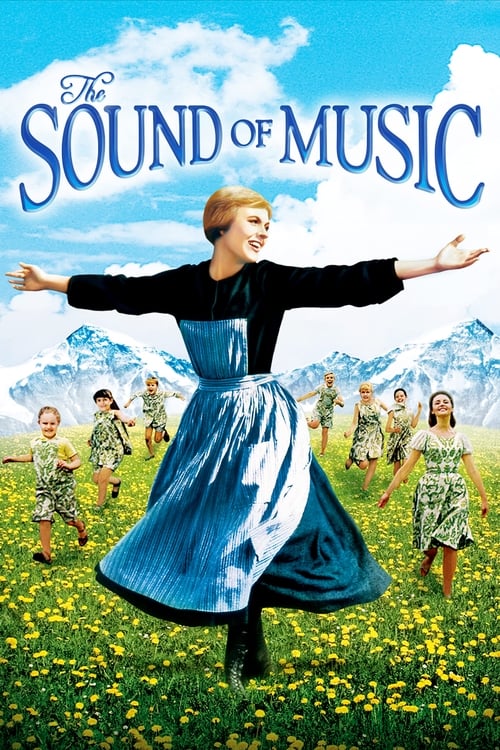
The Sound of Music film adaptation, like the stage musical, presents a fictionalized story inspired by the history of the von Trapp family. The musical was based on the West German film The Trapp Family (1956) rather than Maria von Trapp's 1949 memoirs, as director Vincent J. Donehue had seen the film and decided that it would make a good vehicle for Mary Martin. The musical followed The Trapp Family film's plot so closely that the New York Times review of the West German film noticed that it "strongly suggests 'The Sound of Music,' often scene by scene". The West German screenwriters made several significant changes to the family's story that were kept in the musical. Maria had been hired to teach just one child, but the 1956 film made her governess to all seven children.
The 1965 film adaptation was influenced by other musicals of its era, such as Mary Poppins, the Rodgers and Hammerstein television production of Cinderella, and the stage production of Lerner and Loewe's Camelot (coincidentally all starring Julie Andrews). Screenwriter Ernest Lehman was inspired by the opening of West Side Story and saw the musical as "a fairy tale that's almost real". The film incorporated many "fairy tale" tropes which included the idyllic imagery in the hills of Salzburg, the European villas, and the cross-class Cinderella-like romance between Maria and Captain Von Trapp. As Maria walks down the aisle to be married, the pageantry is explicitly both Guinevere and Cinderella.
In keeping with this tone, the filmmakers used artistic license to convey the essence and meaning of their story. Georg Ludwig von Trapp was indeed an anti-Nazi opposed to the Anschluss, and he lived with his family in a villa in a district of Salzburg called Aigen. The film, however, greatly exaggerated their standard of living. The actual family villa located at Traunstraße 34, Aigen 5026 was large and comfortable, but not nearly as grand as the mansion depicted in the film. The house was also not their ancestral home, as depicted in the film. The family had previously lived in homes in Zell am See and Klosterneuburg after being forced to abandon their actual ancestral home in Pula following World War I. Georg moved the family to the Salzburg villa shortly after the death of his wife Agathe Whitehead in 1922.
Georg is referred to as "Captain" in the film, but he held a noble title of "Ritter" (hereditary knight) which had higher social status than a naval officer. Austrian nobility was legally abolished in 1919 and the title von was proscribed; however, both continued to be widely used unofficially as a matter of social courtesy. Georg was offered a position in the German Kriegsmarine; Nazi Germany was looking to expand its fleet of U-boats, and Korvettenkapitän (Lieutenant Commander) von Trapp was the most successful Austro-Hungarian submarine commander of World War I, having sunk 11 Allied merchant ships totaling 47,653 GRT and two Allied warships displacing a total of 12,641 tons. With his family in desperate financial straits, he seriously considered the offer before deciding that he could not serve a Nazi regime.
Georg is depicted in the film as a humorless, emotionally distant father. In reality, third child Maria Franziska von Trapp (called "Louisa" in the film) described her father as a doting parent who made handmade gifts for the children in his woodshop and who would often lead family musicales on his violin. She has a different recollection of her stepmother Maria Augusta Kutschera, whom she described as moody and prone to outbursts of rage. In a 2003 interview, Maria remembered that she "had a terrible temper" and "from one moment to the next, you didn't know what hit her. We were not used to this. But we took it like a thunderstorm that would pass, because the next minute she could be very nice."
Maria Kutschera had indeed been a novice at Nonnberg Abbey in Salzburg and had been hired by the von Trapp family. However, she was hired only to be a tutor to young Maria Franziska, who had contracted scarlet fever and needed her lessons at home; she was not hired to be a governess to all of the children. Maria and Georg married for practical reasons rather than love and affection for each other. Georg needed a mother for his children, and Maria needed the security of a husband and family once she decided to leave the abbey. "I really and truly was not in love", Maria wrote in her memoir, "I liked him but didn't love him. However, I loved the children, so in a way I really married the children. I learned to love him more than I have ever loved before or after." They were married in 1927, not in 1938 as depicted in the film. They had been married for over a decade by the time of the Anschluss and had two of their three children together by that time. Maria and Georg enjoyed a happy marriage.
The von Trapp family lost most of its wealth during the worldwide depression of the early 1930s, when the Austrian national bank folded. In order to survive, the family dismissed the servants and began taking in boarders. They also started singing onstage to earn money, a fact that caused the proud Georg much embarrassment. In the film, the von Trapp family hikes over the Alps from Austria to Switzerland to escape the Nazis, which would not have been possible; Salzburg is over two hundred miles from Switzerland. The von Trapp villa, however, was only a few kilometers from the Austria–Germany border, and the final scene shows the family hiking on the Obersalzberg near the German town of Berchtesgaden, within sight of Adolf Hitler's Kehlsteinhaus Eagle's Nest retreat. In reality, the family simply walked to the local train station and boarded a train to Italy, from which they travelled to Switzerland, France, and London. The Trapps were entitled to Italian citizenship since Georg had been born in Zadar, Dalmatia, Austria-Hungary, which had been annexed by Italy after World War I. From London they emigrated to the United States on their Italian passports.
Like in the musical, Max Detweiler acted as the family's scheming music director in the film. He is based on the Reverend Fr. Franz Wasner, a secular clergyman who was their musical director for over 20 years while also serving as the family chaplain and accompanied them when they left Austria. The character of Friedrich, the second oldest child in the film version, was based on Rupert, the oldest of the real von Trapp children. Liesl, the oldest child in the film, was based on Agathe von Trapp, the second oldest in the real family. The names and ages of the children were changed, in part because the third child was also named Maria, so the producers changed her name to Louisa because they thought that it would be confusing to have two characters called Maria in the film. The von Trapp family had no control over how they were depicted in the film and stage musical, having given up the rights to their story to a German producer in the 1950s who then sold them to American producers. Robert Wise met with Maria von Trapp and made it clear, according to a memo to Richard Zanuck, that he was not making a "documentary or realistic movie" about her family, and that he would make the film with "complete dramatic freedom" in order to produce a "fine and moving film", one that they could all be proud of.






.jpg?width=400)





.JPG?width=400)