Snapchat is an American multimedia social media and instant messaging app and service developed by Snap Inc., originally Snapchat Inc. One of the principal features of the app are that pictures and messages, known as "Snaps", are typically only accessible for a brief period of time before their recipients can no longer access them. The app has evolved from originally focusing on person-to-person photo sharing to now showcasing users' "Stories" of 24 hours of chronological content, along with "Discover", letting brands show ad-supported short-form content. It also allows users to store photos in a password-protected area called "My Eyes Only". It has also reportedly incorporated limited use of end-to-end encryption, with intention to expand its use in the future.
Snapchat was created by Evan Spiegel, Bobby Murphy, and Reggie Brown, former students at Stanford University. It is known for representing a mobile-first direction for social media, and places significant emphasis on users interacting with virtual stickers and augmented reality objects. In 2023, Snapchat had over 300 million monthly active users. On average more than four billion Snaps were sent each day in 2020. Snapchat is popular among the younger generations, with most users being between ages 18 and 24. Snapchat is subject to privacy concerns with social networking services.
Contents
History
Prototype
According to documents and deposition statements, Reggie Brown brought the idea for a disappearing-pictures application to Evan Spiegel because Spiegel had prior business experience. Brown and Spiegel then pulled in Bobby Murphy, who had experience coding. The three worked closely together for several months and launched Snapchat as "Picaboo" on the iOS operating system on July 8, 2011. Reggie Brown was ousted from the company months after it was launched.
The app was relaunched as Snapchat in September 2011, and the team focused on usability and technical aspects, rather than branding efforts. One exception was the decision to keep a mascot designed by Brown, "Ghostface Chillah", named after Ghostface Killah of the hip-hop group Wu-Tang Clan.
On May 8, 2012, Reggie Brown sent an email to Evan Spiegel during their senior year at Stanford, in which he offered to re-negotiate his equitable share regarding ownership of the company. Lawyers for Snapchat claimed that Reggie Brown had made no contributions of value to the company, and was therefore entitled to nothing. In September 2014, Brown settled with Spiegel and Murphy for $157.5 million and was credited as one of the original authors of Snapchat.
In their first blog post, dated May 9, 2012, CEO Evan Spiegel described the company's mission: "Snapchat isn't about capturing the traditional Kodak moment. It's about communicating with the full range of human emotion—not just what appears to be pretty or perfect." He presented Snapchat as the solution to stresses caused by the longevity of personal information on social media, evidenced by "emergency detagging of Facebook photos before job interviews and photoshopping blemishes out of candid shots before they hit the Internet".
Growth
As of May 2012, 25 Snapchat images were being sent per second and, as of October 2012, users had shared over one billion photos on the Snapchat iOS app, with 20 million photos being shared per day. That same month, Spiegel cited problems with user base scalability as the reason that Snapchat was experiencing some difficulties delivering its images, known as "snaps", in real time. Snapchat was released as an Android app on October 29, 2012.
In June 2013, Snapchat version 5.0, dubbed "Banquo", was released for iOS. The updated version introduced several speed and design enhancements, including swipe navigation, double-tap to reply, an improved friend finder, and in-app profiles. The name was a reference to a character from Shakespeare's Macbeth. At the same time, Snapchat introduced Snapkidz for users under 13 years of age. Snapkidz was part of the original Snapchat application and was activated when the user provided a date of birth to verify his/her age. Snapkidz allowed children to take snaps and draw on them, but they could not send snaps to other users and could save snaps only locally on the device being used.
According to Snapchat's published statistics, as of May 2015, the app's users were viewing 2 billion videos per day, reaching 6 billion by November. By 2016, Snapchat had hit 10 billion daily video views.
In May 2016, Snapchat raised $1.81 billion in equity offering, suggesting strong investor interest in the company. By May 31, 2016, the app had almost 10 million daily active users in the United Kingdom.
Investel Capital Corp., a Canadian company, sued Snapchat for infringement on its geofiltering patent in 2016. They were seeking "monetary compensation and an order that would prohibit California-based Snapchat from infringing on its patent in the future".
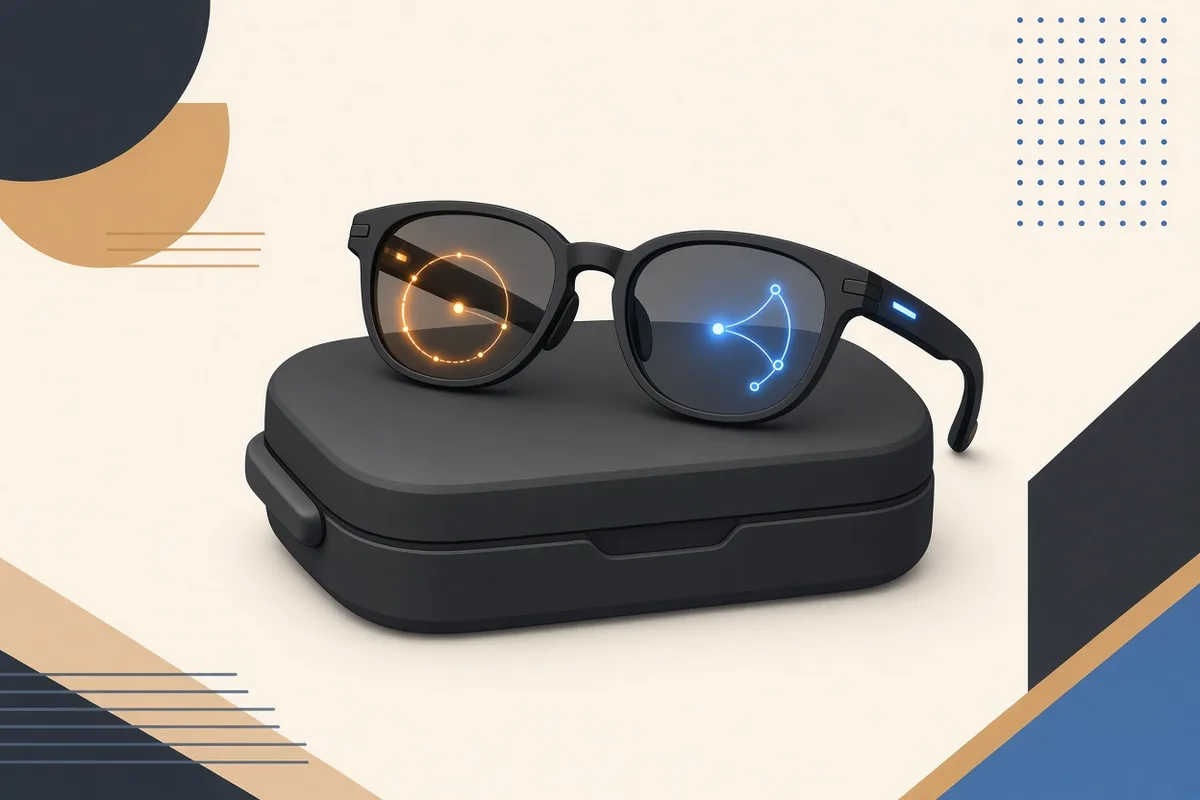
In September 2016, Snapchat Inc. was renamed Snap Inc. to coincide with the introduction of the company's first hardware product, Spectacles—smartglasses with a built-in camera that can record 10 seconds of video at a time. On February 20, 2017, Spectacles became available for purchase online.
In February 2017, Snapchat had 160 million daily active users, growing to 166 million in May.
Features
Core functionality
Snapchat is primarily used for creating multimedia messages referred to as "snaps"; snaps can consist of a photo or a short video, and can be edited to include filters and effects, text captions, and drawings. Snaps can be directed privately to selected contacts, or to a semi-public "Story" or a public "Story" called "Our Story". The ability to send video snaps was added as a feature option in December 2012. By holding down on the photo button while inside the app, a video of up to ten seconds in length can be captured. Spiegel explained that this process allowed the video data to be compressed into the size of a photo. A later update allowed the ability to record up to 60 seconds, but are still segmented into 10 second intervals. After a single viewing, the video disappears by default. On May 1, 2014, the ability to communicate via video chat was added. Direct messaging features were also included in the update, allowing users to send ephemeral text messages to friends and family while saving any needed information by clicking on it. According to CIO, Snapchat uses real-time marketing concepts and temporality to make the app appealing to users. According to Marketing Pro, Snapchat attracts interest and potential customers by combining the AIDA (marketing) model with modern digital technology.
Private message photo snaps can be viewed for a user-specified length of time (1 to 10 seconds as determined by the sender) before they become inaccessible. Users were previously required to hold down on the screen in order to view a snap; this behavior was removed in July 2015 The requirement to hold on the screen was intended to frustrate the ability to take screenshots of snaps; the Snapchat app does not prevent screenshots from being taken but can notify the sender if it detects that it has been saved. However, these notifications can be bypassed through either unauthorized modifications to the app or by obtaining the image through external means. One snap per day can be replayed for free. In September 2015, Snapchat introduced the option to purchase additional replays through in-app purchases. The ability to purchase extra replays was removed in April 2016.
Friends can be added via usernames and phone contacts, using customizable "Snapcodes", or through the "Add Nearby" function, which scans for users near their location who are also in the Add Nearby menu. Spiegel explained that Snapchat is intended to counteract the trend of users being compelled to manage an idealized online identity of themselves, which he says has "taken all of the fun out of communicating."
Stories and Discover
In October 2013, Snapchat introduced the "My Story" feature, which allows users to compile snaps into chronological storylines, accessible to all of their friends. By June 2014, photo and video snaps presented to friends in the Stories functionality had surpassed person-to-person private snaps as the most frequently used function of the service, with over one billion viewed per day—double the daily views tallied in April 2014.
In June 2014, the story feature was expanded to incorporate "Our Stories", which was then changed to "Live Stories" about a year later. The feature allows users on-location at specific events (such as music festivals or sporting events) to contribute snaps to a curated story advertised to all users, showcasing a single event from multiple perspectives and viewpoints. These curated snaps provided by the app's contributors and selected for the "Live" section could also be more localized, but Snapchat eventually scaled back the more personal imaging streams in order to emphasize public events.
An "Official Stories" designation was added in November 2015 to denote the public stories of notable figures and celebrities, similar to Twitter's "Verified account" program.
In January 2015, Snapchat introduced "Discover" an area containing channels of ad-supported short-form content from major publishers, including BuzzFeed, CNN, ESPN, Mashable, People, Vice and Snapchat itself among others. To address data usage concerns related to these functions, a "Travel Mode" option was added in August 2015. When activated, the feature prevents the automatic downloading of snaps until they are explicitly requested by the user.
In October 2016, the app was updated to replace its auto-advance functionality, which automatically moved users from one story to the next, with a "Story Playlist" feature, letting users select thumbnails of users in the list to play only selected stories.
In January 2017, Snapchat revamped its design, adding search functionality and a new global live "Our Story" feature, to which any user can contribute.
In May 2017, Snapchat introduced "Custom Stories", letting users collaboratively make stories combining their captures.
Encryption
In January 2018, Snapchat introduced the use of end-to-end encryption in the application but only for snaps (pictures and video), according to a Snapchat security engineer presenting at the January 2019 Real World Crypto Conference. As of the January 2019 conference Snapchat had plans to introduce end-to-end encryption for text messages and group chats in the future.
Business and multimedia
Demographics
Snapchat is popular among the younger generations, with most users being between 18 and 24 in 2023. On the app store, the age classification is 12+. In 2014, researchers from the University of Washington and Seattle Pacific University designed a user survey to help understand how and why the application was being used. The researchers originally hypothesized that due to the ephemeral nature of Snapchat messages, its use would be predominantly for privacy-sensitive content including the much talked about potential use for sexual content and sexting. However, it appears that Snapchat is used for a variety of creative purposes that are not necessarily privacy-related at all.
In the study, only 1.6% of respondents reported using Snapchat primarily for sexting, although 14.2% admitted to having sent sexual content via Snapchat at some point. These findings suggest that users do not seem to utilize Snapchat for sensitive content. Rather, the primary use for Snapchat was found to be for comedic content such as "stupid faces" with 59.8% of respondents reporting this use most commonly. The researchers also determined how Snapchat users do not use the application and what types of content they are not willing to send. They found that the majority of users are not willing to send content classified as sexting (74.8% of respondents), photos of documents (85.0% of respondents), messages containing legally questionable content (86.6% of respondents), or content considered mean or insulting (93.7% of respondents).
The study results also suggested that Snapchat's success is not due to its security properties, but because the users found the application to be fun. The researchers found that users seem to be well-aware (79.4% of respondents) that recovering snaps is possible and a majority of users (52.8% of respondents) report that this does not affect their behavior and use of Snapchat. Many users (52.8% of respondents) were found to use an arbitrary timeout length on snaps regardless of the content type or recipient. The remaining respondents were found to adjust their snaps' timeout depending on the content or the recipient. Reasons for adjusting the time length of snaps included the level of trust and relationship with the recipient, the time needed to comprehend the snap, and avoiding screenshots.
Communication
In the 2010s, Snapchat was seen as a messenger focused more on in-the-moment way sharing and less on the accumulation of permanent material.
Building on this distinction by launching as a mobile-first company, Snapchat, in the midst of the app revolution and the growing presence of cellular communication, did not have to make the transition to mobile in the way other competing social media networks had to do. Evan Spiegel himself described Snapchat as primarily a camera company. Spiegel also dismissed past comparisons to other social media networks such as Facebook and Twitter when he was asked if the 2016 presidential race was going to be remembered as the Snapchat election, although major candidates did occasionally use the app to reach voters. Nevertheless, the mobile app offered distinct publication, media, and news content within its Discover channel. Snapchat attempted to distinguish brand content and user-based messaging and sharing.
Monetization
Snapchat's developing features embody a deliberate strategy of monetization.
Snapchat announced its then-upcoming advertising efforts on October 17, 2014, when it acknowledged its need for a revenue stream. The company stated that it wanted to evaluate "if we can deliver an experience that's fun and informative, the way ads used to be, before they got creepy and targeted." Snapchat's first paid advertisement, in the form of a 20-second movie trailer for the horror film Ouija, was shown to users on October 19, 2014.
In January 2015, Snapchat began making a shift from focusing on growth to monetization. The company launched its "Discover" feature, which allowed for paid advertising by presenting short-form content from publishers. Its initial launch partners included CNN, Comedy Central, ESPN and Food Network, among others. In June 2015, Snapchat announced that it would allow advertisers to purchase sponsored geofilters for snaps; an early customer of the offering was McDonald's, who paid for a branded geofilter covering its restaurant locations in the United States. Snapchat made a push to earn ad revenue from its "Live Stories" feature in 2015, after initially launching the feature in 2014. Ad placements can be sold within a live story, or a story can be pitched by a sponsor. Live stories are estimated to reach an average of 20 million viewers in a 24-hour span.
Campaigns
In September 2015, the service entered into a partnership with the National Football League to present live stories from selected games (including a Sunday game, and marquee games such as Monday Night Football and Thursday Night Football), with both parties contributing content and handling ad sales. The 2015 Internet Trends Report by Mary Meeker highlighted the significant growth of vertical video viewing. Vertical video ads like Snapchat's are watched in their entirety nine times more than landscape video ads.
In April 2016, NBC Olympics announced that it had reached a deal with Snapchat to allow stories from the 2016 Summer Olympics to be featured on Snapchat in the United States. The content would include a behind-the-scenes Discover channel curated by BuzzFeed (a company which NBCUniversal has funded), and stories featuring a combination of footage from NBC, athletes, and attendees. NBC sold advertising and entered into revenue sharing agreements. This marked the first time NBC allowed Olympics footage to be featured on third-party property.
In May 2016, as part of a campaign to promote X-Men: Apocalypse, 20th Century Fox paid for the entire array of lenses to be replaced by those based on characters from the X-Men series and films for a single day. In July 2016, it was reported that Snapchat had submitted a patent application for the process of using an object recognition system to deliver sponsored filters based on objects seen in a camera view. Later that year, in September 2016, Snapchat released its first hardware product, called the Spectacles. Evan Spiegel, CEO of Snap Inc., called it "a toy" but saw it as an upside to freeing his app from smartphone cameras.
In April 2017, Digiday reported that Snapchat would launch a self-service manager for advertising on the platform. The feature launched the following month, alongside news of a Snapchat Mobile Dashboard for tracking ad campaigns, which rolled out in June to select countries. Also in 2017, Snapchat introduced a "Snap to Store" advertising tool that lets companies using geostickers to track whether users buy their product or visit their store in a 7-day period after seeing the relevant geosticker. On November 13, 2018, Snapchat announced the launch of the Snap Store, where they sell Bitmoji merchandise personalized by avatars from users and their friends. Items for sale include shirts, mugs, shower curtains, and phone cases.
Development platform
In June 2018, Snapchat announced a new third-party development platform known as Snap Kit: a suite of components that allows partners to provide third-party integrations with aspects of the service. "Login Kit" is a social login platform that utilizes Snapchat accounts. It was promoted as being more privacy-conscious than competing equivalents, as services are only able to receive the user's display name (and, optionally, a Bitmoji avatar) and are subject to a 90-day inactivity timeout, preventing them from being able to collect any further personal information or social graphs through their authorization. "Creative Kit" allows apps to generate their own stickers to overlay into Snapchat posts. "Story Kit" can be used to embed and aggregate publicly posted stories (with for example, Bandsintown using Story Kit to aggregate stories posted by musicians), while "Bitmoji Kit" allows Bitmoji stickers to be integrated into third-party apps.
Snap Originals
In response to industry competition from streaming platforms such as Netflix, Snapchat announced in late 2018 that it would diversify its content by launching Snap Originals (episodic content including both scripted shows and documentaries).
In June 2020, Snapchat announced the creation of its first-ever "shoppable" original show called The Drop, which focused on "exclusive streetwear collage" from celebrities and designers. Each episode explored the relationship between the designer and celebrity collaborator. Viewers would learn about the item for sale and how it came together, as well as what time that day the item would go up for sale. Later that day, at the aforementioned time, the episode would be updated with more content that included a "swipe up to buy" action.
All projects related to original programming were ended in August 2022.
Premium accounts and sexual content
In 2014, Snapchat introduced a new feature called Snapcash which spurred its popularity among adult content creators.
Snapchat allows private premium accounts in which users can monetize their content. This feature is mostly used by models to monetize their adult content. In 2019, CNBC reported that "Snapchat is increasingly becoming an integral part of the online porn industry."
Controversies
December 2013 hack
Snapchat was hacked on December 31, 2013. Gibson Security, an Australian security firm, had disclosed an API security vulnerability to the company on August 27, 2013, and then made public the source code for the exploit on December 25. On December 27, Snapchat announced that it had implemented mitigating features. Nonetheless, an anonymous group hacked them, saying that the mitigating features presented only "minor obstacles". The hackers revealed parts of approximately 4.6 million Snapchat usernames and phone numbers on a website named SnapchatDB.info and sent a statement to the popular technology blog TechCrunch saying that their objective had been to "raise public awareness... and... put public pressure on Snapchat" to fix the vulnerability. Snapchat apologized a week after the hack.
Federal Trade Commission
In 2014, Snapchat settled a complaint made by the US Federal Trade Commission (FTC). The government agency alleged that the company had exaggerated to the public the degree to which mobile app images and photos could be made to self-delete. Under the terms of the agreement, Snapchat was not fined, but the app service agreed to have its claims and policies monitored by an independent party for a period of 20 years. The FTC concluded that Snapchat was prohibited from "misrepresenting the extent to which it maintains the privacy, security, or confidentiality of users' information."
Following the agreement, Snapchat updated its privacy page to state that the company "can't guarantee that messages will be deleted within a specific timeframe." Even after Snapchat deletes message data from their servers, that same data may remain in backup for a time. In a public blog post, the service warned that "If you've ever tried to recover lost data after accidentally deleting a drive or maybe watched an episode of CSI, you might know that with the right forensic tools, it's sometimes possible to retrieve data after it has been deleted."
In September 2024, the FTC released a report summarizing nine company responses (including from Snapchat) to orders made by the agency pursuant to Section 6(b) of the Federal Trade Commission Act of 1914 to provide information about user and non-user data collection (including of children and teenagers) and data use by the companies that found that the companies' user and non-user data practices put individuals vulnerable to identity theft, stalking, unlawful discrimination, emotional distress and mental health issues, social stigma, and reputational harm.
Windows app
In November 2014, Snapchat announced a crackdown on third-party apps of its service and their users. Users of the Windows Phone platform were affected, as Snapchat did not have an official client for it, but numerous third-party apps existed, most popularly one called 6snap. In December, Microsoft was forced to remove 6snap and all other third-party apps of Snapchat from the Windows Phone Store; Snapchat however did not develop an official app for the platform, leaving its users on the platform behind. A petition from users requesting an official Snapchat app reached 43,000 signatures in 2015, but the company still refused to respond and to build an app for Windows Phone. Snapchat was criticized once again later in 2015 when it did not develop an app for Microsoft's Universal Windows Platform (UWP).
"Poor Country" remark
According to former Snapchat employee Anthony Pompliano in a lawsuit filed against Snap Inc., Spiegel made a statement in 2015 that Snapchat is "only for rich people" and that he does not "want to expand into poor countries like India and Spain". The incident sparked a Twitter trend called "#UninstallSnapchat", in which Indian users uninstalled the app, and caused backlash against the company, including a large number of low "one-star" ratings for the app in the Google Play Store and Apple's App Store. Snapchat's shares fell by 1.5%. In response to the allegation, Snapchat called Pompliano's claim "ridiculous", and elaborated that "Obviously Snapchat is for everyone. It's available worldwide to download for free."
Pompliano lawsuit
In January 2017, Pompliano filed a state lawsuit accusing Snapchat of doctoring growth metrics with the intention of deceiving investors. Pompliano said that Spiegel was dismissive of his concerns and that Pompliano was fired shortly thereafter. The judge dropped Pompliano's claims that Snapchat violated the Dodd-Frank and Consumer Protection Acts in retaliation against him, citing an arbitration clause in his contract. However, Snap Inc. faced blowback over a lack of disclosure regarding the contents of the lawsuit, resulting in plunging stock prices, several class-action lawsuits, and Federal investigations.
"Snap Map" privacy concerns
The June 2017 release of "Snap Map", a feature that broadcasts the user's location on a map, was met with concerns over privacy and safety. The feature, through an opt-in, delivers a message asking if the user would like to show their position on the map, but reportedly does not explain the ramifications of doing so, including that the app updates the user's position on the map each time the app is opened and not just when actively capturing snaps, potentially assisting stalkers. The map can be zoomed in to feature detailed geographical information, such as street addresses. The Daily Telegraph reported that police forces had issued child safety warnings, while other media publications wrote that safety concerns were also raised for teenagers and adults unaware of the feature's actual behavior. In a statement to The Verge, a Snapchat spokesperson said that "The safety of our community is very important to us and we want to make sure that all Snapchatters, parents, and educators have accurate information about how the Snap Map works".
Users have the ability to operate in "Ghost Mode", or select the friends that they wish to share their location with. Although there has been an increase in advertising on Snapchat, Snapchat has stated that they do not plan on running ads on Snap Map stories.
Body image concerns
The increased use of body and facial reshaping applications such as Snapchat and Facetune has been identified as a potential cause of body dysmorphic disorder. In August 2018, researchers from the Boston Medical Center wrote in a JAMA Facial Plastic Surgery essay that a phenomenon they called 'Snapchat dysmorphia' had been identified, where people request surgery to look like the edited version of themselves as they appear through Snapchat Filters.
Snapchat employees abused data access to spy on users
In May 2019, it was revealed that multiple Snapchat employees used an internal tool called SnapLion, originally designed to gather data in compliance with law enforcement requests, to spy on users.
Revenge porn
During the 2020 lockdown to inhibit the spread of COVID-19 in France, the app emerged as a hub for the dissemination of revenge porn of underage girls. Some users have also reported that perpetrators of revenge porn have utilized explicit images to seek sexual favors or powers over individuals.
In 2020, a woman in North Carolina sued Snapchat (as well as dating app Tinder and the five men named in the attack), claiming features of the app enabled her alleged rapist and his friends to hide evidence of the rape. In particular, the suit alleges that "because of the ways Snapchat is and has been designed, constructed, marketed, and maintained, [the woman's assailants] were able to send these nonconsensual, pornographic photographs and videos of [her] with little to no threat of law enforcement verifying that they did so." The woman told the court that parent company Snap Inc. "specifically and purposely designed, constructed, and maintained Snapchat to serve as a secretive and nefarious communications platform that encourages, solicits, and facilitates the creation and dissemination of illicit and non-consensual sexually explicit content...and allowed Snapchat to operate as a safe-haven from law enforcement."
Sale of fake pills
In December 2022, the National Crime Prevention Council wrote U.S. Attorney General Merrick Garland urging the Justice Department to examine Snap's business practices related to the sale of fake pills containing lethal amounts of the synthetic opioid fentanyl. Less than a month later, the Federal Bureau of Investigation (FBI) launched a probe into the company and the sale of fake pills.
Grooming
In November 2024, British children's charity the NSPCC reported that according to statistics provided to them by the police, that the most popular app amongst online groomers was Snapchat.
Snapchat Speed Filter Crashes
In September 2015, Christal McGee was driving her Mercedes-Benz C230 in Georgia when she collided with a Mitsubishi Outlander at 107 mph. The high-speed crash severely injured the driver of the Mitsubishi, Wentworth Maynard, who required five weeks of intensive care and was left with a permanent brain injury. In April 2016, Maynard sued both McGee and Snapchat, claiming that McGee was using the Snapchat “speed filter” at the time of the crash. The lawsuit further alleged that Snapchat negligently allowed the feature despite knowing it encouraged dangerous speeding. In March 2022, the Georgia Supreme Court ruled that Snapchat must face claims that it defectively designed the “speed filter” application.
In May 2017, a group of teens in Wisconsin used Snapchat's "speed filter" to capture their car's speed as it reached 123 mph on a rural road. Moments later, the vehicle crashed into a tree, killing all three occupants. In May 2019, the families of two passengers, Hunter Morby and Landen Brown, filed a lawsuit against Snapchat, alleging that the company knew the filter encouraged reckless speeding among young users but failed to restrict its use. The case, Lemmon v. Snap, led to a landmark legal precedent. In May 2021, the 9th U.S. Circuit Court of Appeals ruled that Section 230 of the Communications Decency Act–which typically shields tech companies from liability for content created by users–did not bar the families' claims. The court distinguished between protecting platforms from liability for user-generated content and protecting them from liability for negligent product design, finding that the speed filter was a feature Snapchat itself had created. This decision allowed the case to proceed, marking a significant precedent for holding tech companies accountable for the design of their products. In 2021, Snap Inc. settled the lawsuit for an undisclosed amount.
In June 2021, a month after the 9th Circuit ruling, Snapchat removed the “speed filter”, citing its limited use for its removal. The decision came after mounting pressure from safety advocates, legal experts, and families affected by crashes allegedly linked to the feature. Critics had long argued that the filter incentivized reckless behavior, particularly among young and impressionable drivers, and called for stronger accountability from social media companies to prioritize user safety.
AI selfies in ads
Snapchat's My Selfie feature allows users selfies to be used by generative ai to "generate novel images of you". The features includes a toggle to "See My Selfie in Ads" which is enabled by default.
Introduction of Storage charges
In September 2025, Snap Inc announced it would start charging users if they have more than five gigabytes worth of previously shared images and videos saved as Memories, a service that was previously offered with unlimited storage for free. The decision received widespread criticism online, with many calling the fee a "memory tax", expressing concerns over losing the years worth of memories they had saved on the Snapchat. Many long-time users of the app considered the feature to be their primary factor for keeping the app downloaded. While the company claimed it was for sustainability reasons rather than monetization, commentators likened the move as economic coercion built on scientifically documented cognitive vulnerabilities related to loss aversion.
Australia and Russia Ban
At the start of December 2025, Russia's internet and media regulator stated that it had blocked Snapchat under claims that it was being used for "extremist and terrorist" activity. On December 10, 2025, Australia also banned Snapchat for anyone under the age of 16 as part of the Online Safety Amendment (Social Media Minimum Age) Act 2024.
Hacking Incidents
On 4 February 2026, a man from Illinois, Kyle Svara, pleaded guilty to phishing the Snapchat access codes of nearly 600 women in order to hack their accounts and steal nude photos, which he kept, sold or traded on the internet. He circumvented the site's authentication checks by asking women for their security codes in messages claiming to be from Snapchat support.
Safety concerns of the British Government
As part of Britain's Online Safety Act, Ofcom told Snapchat to show by 30 April 2026 how they would tighten age checks and restrict strangers from connecting with children.
Surveillance
Private conversations are surveiled for any suspicious messages and will be automatically reported to the Federal Bureau of Investigation.
Lawsuits
In June 2026, the parents of a 12-year-old Missouri girl filed suit against Snap, Inc. and the man convicted of raping her, alleging that Snapchat's design—including its friend-recommendation and location-sharing features—made it easier for the adult to locate, contact, and groom their daughter before the assault.