



Alabama Redistricting Rocks Dems
Alabama’s congressional map fight is once again headed toward a showdown at the Supreme Court after a federal district court panel blocked the state from using its 2023 congressional maps. The legal battle has become…
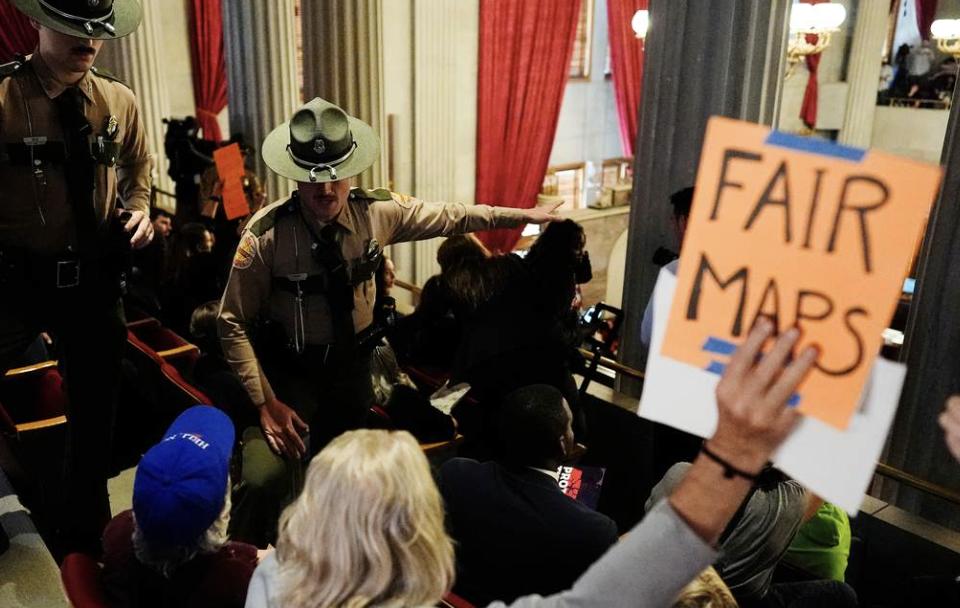
Alabama’s congressional map fight is once again headed toward a showdown at the Supreme Court after a federal district court panel blocked the state from using its 2023 congressional maps.
The legal battle has become increasingly convoluted, especially after the Supreme Court’s recent ruling in Louisiana v. Callais appeared to shift the legal landscape surrounding race-based redistricting claims under Section 2 of the Voting Rights Act.
Back in early May, SCOTUS vacated the lower court’s earlier ruling against Alabama and sent the case back for reconsideration in light of Callais. Many observers believed that signaled the district court would need to reassess whether Alabama’s 2023 maps were lawful under the Supreme Court’s updated framework.
Instead, the same three-judge district court panel effectively doubled down.
On Tuesday, the panel again blocked Alabama’s 2023 maps, arguing the state intentionally discriminated by failing to create a second majority-Black congressional district. The judges also claimed they were attempting to avoid voter confusion ahead of upcoming elections.
Critics say the ruling accomplished the exact opposite.
Rather than applying the Supreme Court’s latest guidance, the district court largely relied on the same reasoning SCOTUS had already called into question. That immediately prompted Alabama Attorney General Steve Marshall to seek emergency relief from the Supreme Court.
As expected, Alabama filed an emergency stay application on Wednesday asking SCOTUS to allow the state to proceed with the 2023 maps for upcoming elections.
Alabama Solicitor General A. Barrett Bowdre argued in the filing that the 2023 map directly addressed concerns previously raised by the Supreme Court while balancing race-neutral districting priorities and preserving existing communities of interest.
According to Bowdre, the state attempted to preserve both the Gulf Coast region and Alabama’s historic Black Belt “as little as possible” while still complying with earlier rulings.