



Ancient Greek Tombs Unveiled In Ashkelon, Israel, For Public Viewing
Dr. Elena Kogan-Zehavi of the Israel Antiquities Authority uncovered one of the tombs about 30 years ago, standing in one of the preserved sites. EMIL ALADJEM/ISRAEL ANTIQUITIES AUTHORITY. “> Two vaulted tombs dating…
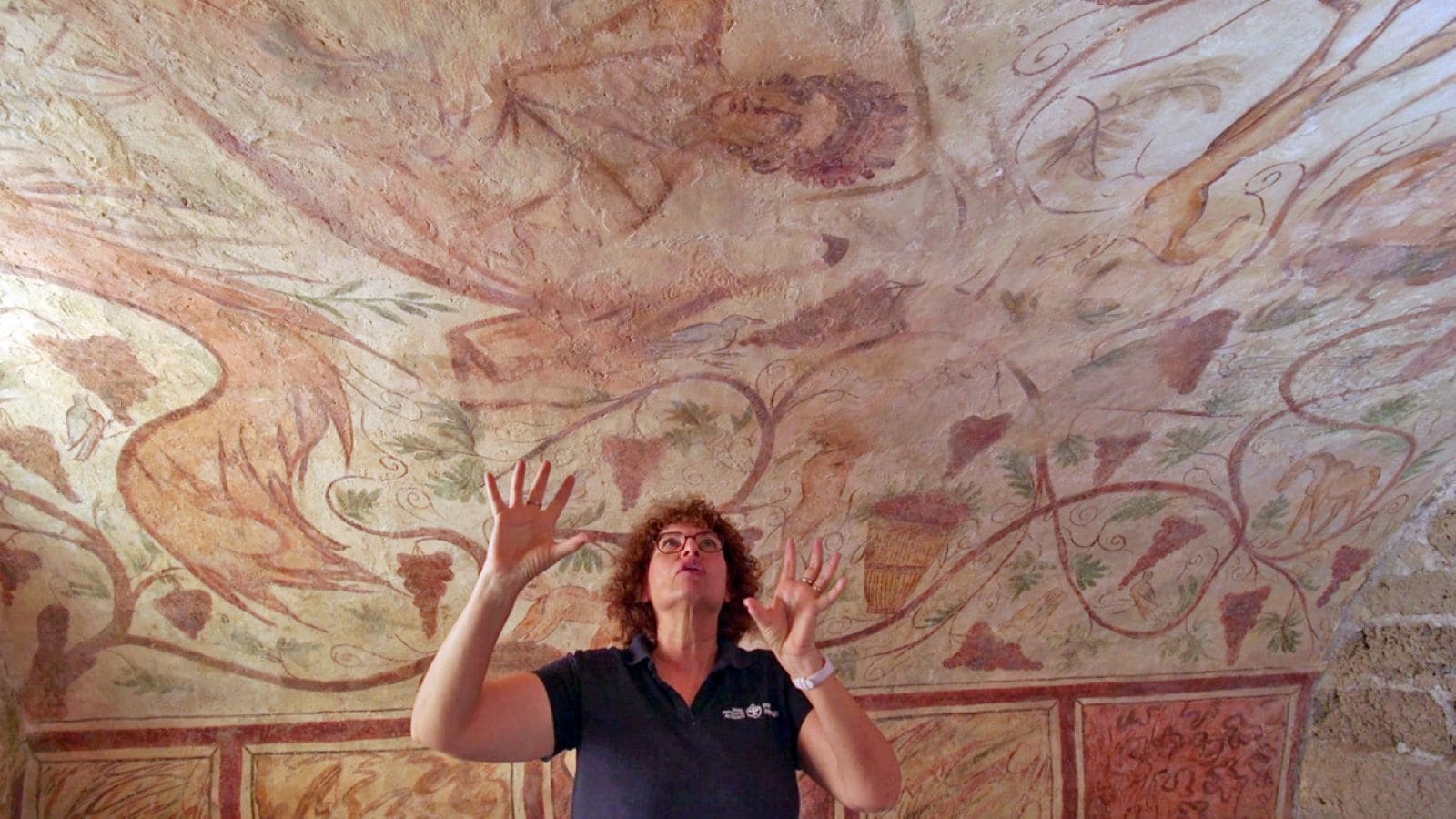

Dr. Elena Kogan-Zehavi of the Israel Antiquities Authority uncovered one of the tombs about 30 years ago, standing in one of the preserved sites. EMIL ALADJEM/ISRAEL ANTIQUITIES AUTHORITY.
“>
Two vaulted tombs dating back at least 1,700 years are soon to be revealed to the public for the first time in Ashkelon, Israel.
The unveiling of these tombs is part of a broader initiative by the southern seaside city and the Israel Antiquities Authority to integrate local heritage assets into public spaces.
This collaboration has already resulted in the development of several historical sites throughout Ashkelon, including a public park in the Wine City neighborhood featuring an ancient industrial complex; an ancient mosaic display near a public playground; and the upgrade of “sarcophagus courtyard” at the Ashkelon Outdoor Museum.
“In recent years, we have made a real revolution in the realm of historical site preservation,” said Ashkelon Mayor Tomer Glam. “ made sites accessible to the city’s residents and to the general public, and then organized events and produced educational, cultural, and touristic programs with the aim of connecting the city’s history to its present.”
Located near Ashkelon’s marina, these tombs showcase an artistic array of Greek mythological characters, people, plants, and animals. Discovered in the 1930s, they have undergone extensive conservation.
One tomb, dating to the early fourth century CE, features depictions of Demeter, the oft-pregnant Greek goddess of harvest, grain, and earth’s fertility, alongside various nature scenes, including vines, grape clusters, greenery, and some magic nature ladies (read: nymphs,) to tie it all together.
Fans of the late great Homer’s work will also be pleased to find a rendering of Medusa, a mythical gorgon with a notoriously problematic hairdo, among the many artistic portrayals in the tomb.
