



Archaeologists Uncover Evidence Of Ancient Roman Concrete Technology That May Have Healed Itself Over Time: Report
Archaeologists working at an excavation site in Pompeii have uncovered new evidence that helps explain why ancient Roman buildings have lasted for thousands of years. The discovery points to a special type of concrete…
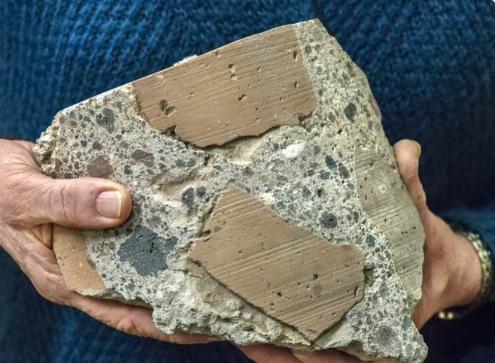
Archaeologists working at an excavation site in Pompeii have uncovered new evidence that helps explain why ancient Roman buildings have lasted for thousands of years. The discovery points to a special type of concrete that could repair itself over time, a finding that may offer lessons for modern construction.
The research was published earlier this month in the journal Nature Communications and focuses on a construction site frozen in time by the eruption of Mount Vesuvius in 79 AD. When the volcano erupted, ash buried the area and preserved it for nearly 2,000 years. Unlike finished buildings often studied by historians, this site was still under construction, giving researchers a rare look at how Roman workers actually built with concrete.
Archaeologists found unfinished walls, piles of dry building materials, and tools used for weighing and mixing concrete. The area included rooms meant for homes, a bakery with ovens, grain-washing basins, and storage spaces. When the eruption happened, workers left everything behind, allowing modern scientists to study their methods in detail.
It has long been known that the Romans used concrete to build major structures like the Colosseum and the Pantheon. Many of those buildings are still standing today, while modern concrete structures often crack and fail after only a few decades. Until now, the exact reason for the Roman concrete’s durability was not fully understood.
Researchers discovered that Roman builders used a technique called “hot mixing.” Instead of mixing lime after it had already reacted with water, they added quicklime directly to water, volcanic ash, and rock. This caused a chemical reaction that heated the mixture as it was being prepared.
This process created small white chunks inside the concrete known as lime clasts. For years, scientists believed these chunks were signs of poor mixing or low-quality work. The new study shows the opposite. When cracks formed in the concrete and water entered, the lime clasts dissolved and reacted, forming calcium carbonate. This material filled the cracks and sealed them, effectively allowing the concrete to heal itself.