US Attorney General Barr Fends off Democrats’ Attacks Over Protests
Attorney General William Barr on Tuesday fended off attacks in the Democratic-led House of Representatives, denying accusations he is doing President Donald Trump’s bidding by intervening in high-profile cases and…
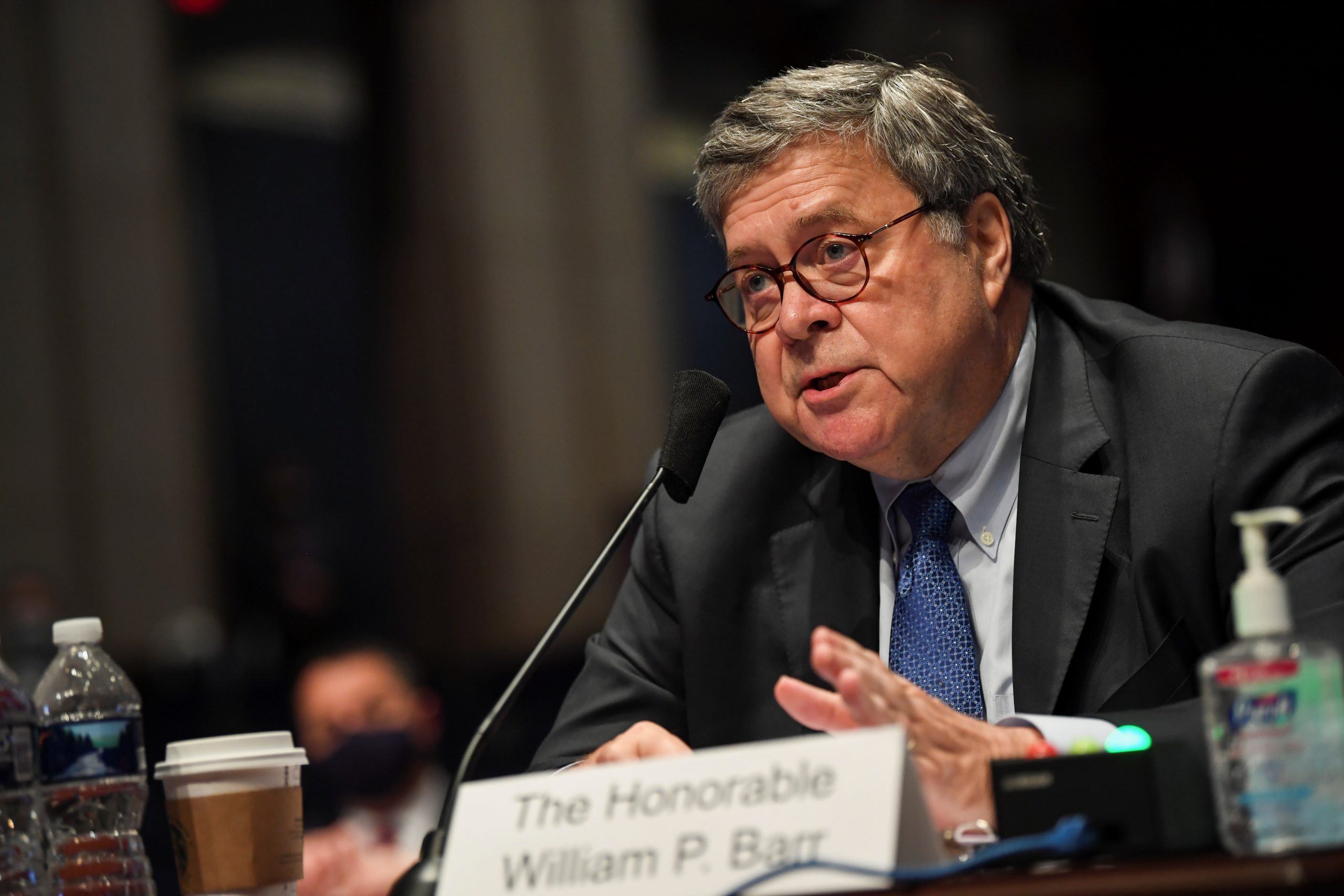
Attorney General 👤William Barr on Tuesday fended off attacks in the Democratic-led House of Representatives, denying accusations he is doing President 👤Donald Trump’s bidding by intervening in high-profile cases and sending federal agents into U.S. cities.
He testified to the House Judiciary Committee for the first time since taking office in February 2019 as the Justice Department faces criticism for sending federal officers to forcibly disperse anti-racism protesters in Portland and Washington, D.C.
Committee Democrats repeatedly interrupted Barr as he spoke, often running out the clock before he could answer their questions and drawing criticism from Trump’s fellow Republicans, who responded by letting him address the Democrats’ criticism during their own allotted time to ask questions – a tactic that made it easier for Barr to stay on message.
During an exchange about the deployment of federal agents to Portland, Oregon, where they have clashed nightly with anti-racism demonstrators who have also set fires and thrown objects, Barr responded, “We cannot just stand aside and watch the federal courthouse be destroyed.”
Committee Chairman 👤Jerrold Nadler opened the hearing by telling Barr: “Your tenure is marked by a persistent war against the Department’s professional core in an apparent effort to secure favors for the president.”
Barr pushed back, saying, “I feel complete freedom to do what I feel is right.”
Barr rejected Nadler’s assertion the deployment of federal agents to U.S. cities was an effort to boost Trump’s re-election campaign. Barr also denied taking actions to help Trump associates, saying they do not deserve special breaks but also should not be treated more harshly than other defendants.
Sponsored
Sponsored
US Attorney General Barr Fends off Democrats’ Attacks Over Protests — IJR
The department’s internal watchdog launched probes last week into federal involvement in the Portland and Washington, D.C., protests.
Widespread and mostly peaceful protests against racial bias and police brutality have taken place in the United States since May 25 when George Floyd, a Black man died under the knee of a white officer.
Barr has highlighted the arson and violence at some protests, blaming them primarily on far-left “antifa” elements – an assertion that is heavily disputed – and urging federal prosecutors to bring criminal charges whenever possible.
‘TRUMP REELECTION STRATEGY’
Committee Republicans – including ranking member Jim Jordan – highlighted the degree to which Democrats did not allow Barr to speak.
“I don’t think we’ve ever had a hearing where the witness wasn’t allowed to respond to points made, questions asked, and attacks made,” Jordan said at one point.
Some Democratic political commentators said the Democrats’ style of questioning had made it easier for Barr to avoid major missteps, instead highlighting scenes of violence at protests that have factored prominently in Trump’s campaign ads.
“Barr is having a great day re-announcing the Trump reelection strategy,” said Hank Sheinkopf, a veteran Democratic Party political consultant. He said Barr’s testimony likely would help Trump in his bid to win over crucial suburban voters.
Preet Bharara, the ex-U.S. Attorney in Manhattan, said on Twitter that the hearing was “disappointing” and “getting worse.”
Under questioning by Representative Sheila Jackson Lee, a Democrat who is Black, Barr also dismissed accusations of widespread racial discrimination in policing.
“You indicated that the killing of George Floyd was shocking. I disagree,” Jackson Lee said. “You seem to have a difficult time understanding systemic racism and institutional racism that has plagued so many.”
Barr replied: “I don’t agree that there’s systemic racism in police departments.”
HOUSE INQUIRY
The House Judiciary Committee launched a broad inquiry last month into whether the Justice Department had become overly politicized.
It followed Barr’s intervention in several high-profile criminal cases involving people close to Trump. In February, he moved to scale back the Justice Department’s sentencing recommendation for Trump’s longtime friend Roger Stone, prompting four career prosecutors to withdraw. Trump later commuted Stone’s sentence.
In May, Barr sought to drop the criminal charge against former national security adviser Michael Flynn, setting the stage for an ongoing legal battle with the federal judge who was due to sentence Flynn, who pleaded guilty to lying to the FBI.
Barr insisted that Trump “has not attempted to interfere in these decisions.”
In June, Barr ousted the top federal prosecutor in Manhattan, Geoffrey Berman, while that office was investigating Trump’s attorney Rudy Giuliani.
Berman later told the committee: “I do not know what the attorney general’s motives were, but the irregular and unexplained actions by the attorney general raised serious concerns for me.”
In July, the Bureau of Prisons, which reports to Barr, ordered Trump’s former attorney Michael Cohen out of home confinement and back to prison after he hesitated to sign a sweeping gag order that would have prevented him from releasing a book about the president.
A federal judge ordered Cohen released last week, saying there was evidence the Bureau of Prisons had retaliated against him.
(Reporting by Sarah N. Lynch in Washington and Jan Wolfe in Boston; Editing by Scott Malone, Matthew Lewis and Howard Goller)