



Attorney General Keith Ellison Comments On St. Paul Protest
Minnesota Attorney General Keith Ellison is dismissing federal concerns after a group of anti-ICE agitators stormed a Minneapolis church during Sunday service — despite growing indications that the protesters may have…
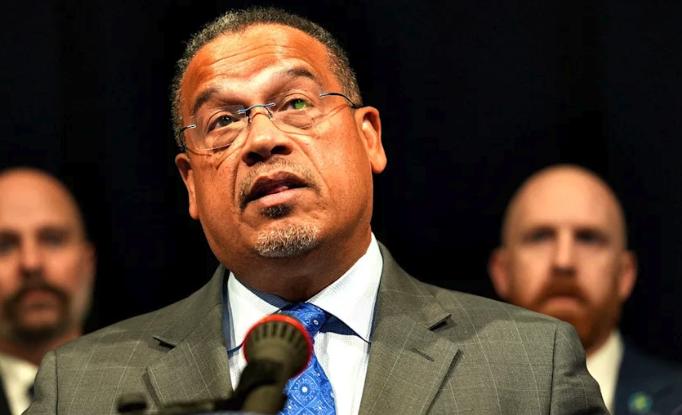
Minnesota Attorney General Keith Ellison is dismissing federal concerns after a group of anti-ICE agitators stormed a Minneapolis church during Sunday service — despite growing indications that the protesters may have violated federal law protecting religious institutions.
The Department of Justice is actively investigating whether the violent protest at Cities Church in St. Paul breached the Freedom of Access to Clinic Entrances (FACE) Act or the Ku Klux Klan Act — both designed to protect citizens from threats or obstruction while exercising their civil rights, including the right to worship.
The FACE Act makes it a federal crime to use or threaten force to interfere with individuals attending religious services. The KKK Act, enacted during Reconstruction, criminalizes conspiracies to deprive people of their constitutional rights. According to eyewitness reports and footage shared online, anti-ICE protesters interrupted the church’s worship service, shouting down congregants and causing chaos in the sanctuary.
But Ellison isn’t having it.
Appearing on Don Lemon’s YouTube show, the Democratic attorney general insisted that the FACE Act was never intended to cover churches and downplayed the severity of the protest.
“And the FACE Act, by the way, is designed to protect the rights of people seeking reproductive rights,” Ellison told Lemon. “How they are stretching either of these laws to apply to people who protested in a church over the behavior of a religious leader is beyond me.”
The DOJ isn’t buying it. Assistant Attorney General for Civil Rights Harmeet Dhillon made it clear that the protesters — and even Lemon himself — could be held accountable.
“A house of worship is not a public forum for your protest,” Dhillon wrote on X, formerly Twitter. “It is a space protected from exactly such acts by federal criminal and civil laws! Nor does the First Amendment protect your pseudo journalism of disrupting a prayer service. You are on notice.”
Lemon, who was reporting live from inside the church as the protest unfolded, insists he was there in his capacity as a journalist — not a participant. But federal officials say his embedded role raises serious questions.