


The Minneapolis teenager whose cellphone video of Derek Chauvinâs deadly arrest of George Floyd sparked worldwide protests began weeping as she was shown an image from the video at the former policemanâs murder trial on Tuesday.
Prosecutors have begun their case by calling witnesses to the arrest on May 25, 2020: a Minneapolis 911 dispatcher; a young woman who worked at the gas station across the street; a mixed martial arts fighter who was passing by.
Over the first two days of witness testimony, prosecutors have shown the jury video taken from multiple angles, including the teenagerâs video of Chauvin, who is white, pressing his knee into the neck of a dying Floyd, a 46-year-old Black man in handcuffs, for about nine minutes.
The footage, which prosecutors say shows excessive force, horrified people around the world and led to one of the largest protest movements seen in the United States in decades, with daily marches against disproportionate rates of police violence against Black people.
Lawyers for Chauvin, 45, say he followed his police training and is not guilty of the charges brought by the Minnesota attorney generalâs office of second-degree murder, third-degree murder or second-degree manslaughter.
Here is some of the main testimony heard by the jury on Tuesday:
DARNELLA FRAZIER, EYEWITNESS
Darnella Frazier, 18, was walking her 9-year-old cousin to buy some snacks at Cup Foods, where a worker had moments before accused Floyd of using a fake $20 bill, when she saw police arresting Floyd on the road outside.
She told the jury she saw âa man terrified, scared, begging for his life,â and so ensured her cousin was safely inside the store, out of sight, before pulling out her cellphone.
Frazierâs voice quavered when prosecutors brought up a still from her video, showing the moment when Chauvin, his knee on Floydâs neck, appears to look directly into Frazierâs camera lens. She said Chauvin had âthis cold look, heartless.â
Chauvinâs lawyers have said that Chauvin was distracted from âthe careâ of Floyd by the angry bystanders that joined Frazier on the sidewalk. Prosecutors asked her whether she heard any bystanders threaten the police, and she said no.
âWould you describe yourselves as an unruly mob?â Jerry Blackwell, a prosecutor, asked her.
âNo,â Frazier said, adding the only person she saw being violent was Chauvin, who she said appeared unflustered by the onlookers and the traffic passing behind him.
She was asked by both sides how producing the most famous record of Floydâs death had changed her life, and she again spoke through tears that she did not wipe away.
âWhen I look at George Floyd, I look at my dad, I look at my brothers, I look at my cousins, my uncles, because they are all Black,â she said. âIt could have been one of them.â
She said she would sometimes stay up late at night thinking of Floyd, apologizing to him for ânot saving his life.â
âItâs not what I should have done. Itâs what he should have done,â she said, referring to Chauvin. His lawyers objected to her answer.
Minutes later, Frazierâs young cousin, her hair in braids, took her place in the witness stand, saying in a small voice she recognized Chauvin as the man she saw kneeling on Floyd.
âI was sad and kind of mad,â the girl said.
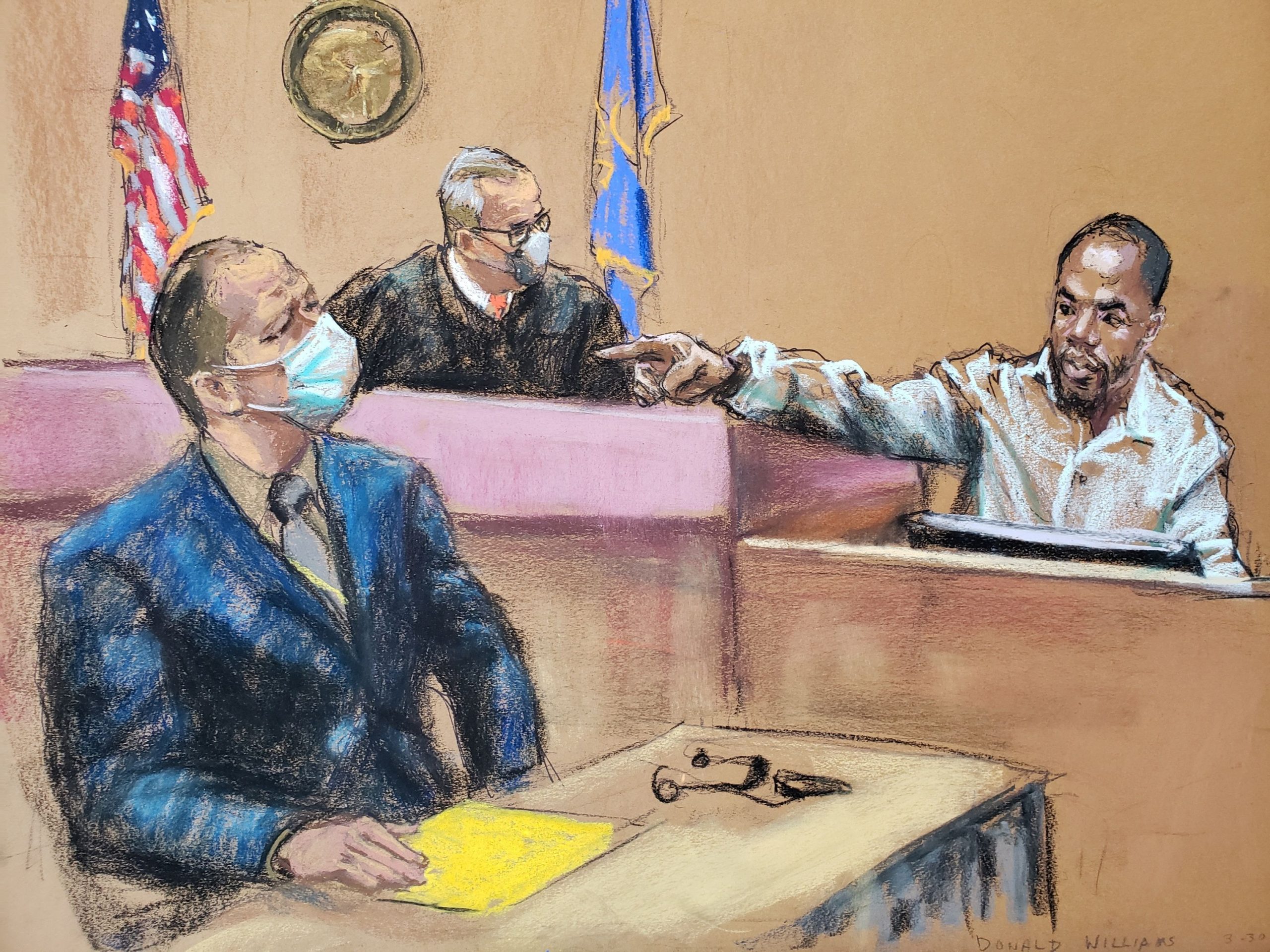
DONALD WILLIAMS, EYEWITNESS
Donald Williams, a professional mixed martial arts fighter, can be heard on the videos of the arrest of Floyd screaming insults at Chauvin and demanding police check for Floydâs pulse. He told jurors he believed that Chauvin was using his knee in a âblood chokeâ on Floyd, a wrestling move to knock an opponent unconscious, and a âshimmyâ move to tighten pressure on Floydâs neck.
âYou can see that heâs trying to gasp for air,â Williams, 33, said of Floyd.
A 911 call Williams made after the arrest was played. Williams dabbed his eyes with a white tissue as his distressed voice filled the courtroom.
âI believe I witnessed a murder,â Williams told the jury. âSo I felt I needed to call the police on the police.â
Chauvinâs lawyers have sought to convince the jury that Chauvin may have felt threatened by bystanders.
In a sometimes tense cross-examination, Eric Nelson, Chauvinâs lead lawyer, read aloud the insults, some of them obscene, that Williams hurls at Chauvin in the video.
âYou call him a âtough guyâ?â Nelson asked, demanding only a âyesâ or ânoâ answer. âYou call him a âreal man?'â
Williams looked away with a slight smile as each insult was read out.
âYou call him a âbumâ at least 13 times?â Nelson continued.
âIf thatâs what you count in the video,â Williams replied, smiling again, âthen thatâs what you got: 13.â
(Reporting by Jonathan Allen; Editing by Peter Cooney, Alistair Bell and Cynthia Osterman)