Biden Claimed For Months That Gaza Ceasefire Was In Sight — Now His Own Officials Reportedly Think It’s A Pipe Dream
Even after multiple assurances from President Joe Biden over recent weeks and months that an Israel-Hamas ceasefire could be right around the corner, U.S. officials are reportedly privately starting to concede that he…
Even after multiple assurances from President Joe Biden over recent weeks and months that an Israel-Hamas ceasefire could be right around the corner, U.S. officials are reportedly privately starting to concede that he won’t be able to help secure a deal before his term ends.
Hamas’ attack on Israel on Oct. 7 sparked a broader regional war and sent an already chaotic Middle East further into turmoil, prompting the Biden-Harris administration to try to pursue diplomatic solutions to end the conflict and reduce tensions between Arab states. Biden has routinely touted his efforts to secure a ceasefire agreement and hinted on several occasions that a deal was close at hand, but these efforts have largely been fruitless — and now U.S. officials are beginning to believe that it may be impossible to secure anything before Biden leaves office, given the roadblocks that remain between Israel and Hamas, according to sources with direct knowledge of the matter who spoke to The Wall Street Journal.
“No deal is imminent,” one of the U.S. officials told the WSJ. “I’m not sure it ever gets done.”
The private concerns that a deal is out of reach aren’t fully reflected in public statements recently made by Biden officials, who have maintained that an agreement is still on the table while expressing frustration with Hamas’ obstinance in negotiations. A senior administration official told reporters in early September that “90 percent” of the deal had been agreed to between Israel and Hamas, which White House spokesman John Kirby reaffirmed
Sponsored
Sponsored
Biden Claimed For Months That Gaza Ceasefire Was In Sight — Now His Own Officials Reportedly Think It’s A Pipe Dream — IJR
during a press briefing on Wednesday.
But former State Department official Gabriel Noronha told the 🏢Daily Caller News Foundation that it’s often the remaining, narrower aspects of such a deal that are the hardest to resolve.
“Generally, you take care of the easier-to-agree items first, and the last items are the ones that are the hardest,” Noronha told the DCNF, pointing to disputes over whether Israel should keep some troops in Gaza as one of the sticking points of a deal. “Those are the tough items.”
In recent weeks and months, Biden has seemed more positive about reaching a ceasefire agreement. Biden told reporters at the end of August that he was “optimistic” a deal could soon be reached because most of the terms had been agreed to and that talks were continuing between Arab partners.
Biden said weeks earlier that he “may have something” on a deal but didn’t want to “jinx it,” claiming that his team was “closer than we’ve ever been” to securing an agreement.
“It’s much, much closer than it was three days ago. So, keep your fingers crossed,” Biden told reporters on Aug. 16.
📺 Embedded media — coming soon
Biden had been adamant for months that a ceasefire was needed urgently, putting forward his own proposal for a deal in May, which has yet to be accepted, and before that warning that a deal had to be reached by March, which never happened. Even as early as February, Biden was predicting that a ceasefire could be reached within days.
“Well, I hope by the beginning of the weekend — I mean the end of the weekend ,” Biden told reporters in February.
In the last couple of months, U.S. officials have become increasingly pessimistic that a deal could be reached, largely due to Hamas, which has been stubborn in negotiations and set unrealistic terms for an agreement. Hamas has frequently set new demands for proposals — and after the U.S. and Israel agree to the terms, the terrorist group still rejects offers, according to the WSJ.
National Security Adviser Jake Sullivan met with the families of the remaining American hostages in Gaza on Wednesday, relaying the current status of negotiations and reaffirming that Biden won’t stop until their relatives are brought home, according to Hostage Aid Worldwide. But the families “expressed frustration with the lack of tangible progress and stressed that everyone needs to play a larger role in reaching an agreement.”
Adding to the complications are Israel’s tensions with Iran, and its terror proxy group, Hezbollah in Lebanon. Both Hezbollah and Iran have engaged in either direct or indirect skirmishes with Israel since the war broke out last October. Israel is suspected of carrying out a highly-targeted, remote attacks against Hezbollah in recent days, prompting warnings of retaliation from the terrorist group, which is already engaged in cross-fire skirmishes with Israel over the Israeli-Lebanese border.
“There’s no chance now of happening,” an Arab official told the WSJ following the attacks in Lebanon this week. “Everyone is in a wait-and-see mode until after the election. The outcome will determine what can happen in the next administration.”
With the convoluted rift between Israel and Hamas over a deal and the compounding factors emanating from Hezbollah and Iran, the Biden-Harris administration has too little control over negotiations at this stage in the game, and it’s unlikely that any deal will be reached between now and the end of Biden’s term, Noronha told the DCNF.
“They’re probably not going to get one before the election, or before January either. But that’s not on them, per se. It speaks to the difficulty of how far apart are,” Noronha said.
Still, securing a ceasefire agreement in Gaza would represent a notable success for Biden’s foreign policy approach and potentially unlock the possibility of broader regional peace. A deal could pave the way for talks to open up between Israel and Saudi Arabia over establishing formal diplomatic ties, although Saudi Arabia has said such relations aren’t possible until Israel agrees to a two-state solution with the Palestinians.
For the time being, the U.S. is continuing to help broker negotiations between Israel, Egypt, Qatar and Hamas negotiators, with a specific focus on how to overcome the hurdles currently barring a deal from being reached — if it is even possible at this juncture.
“We have run into some resistance,” Kirby told reporters Wednesday. “And we’re just not … any closer today than we were a few days ago.”
The State Department and White House did not respond to a request for comment.
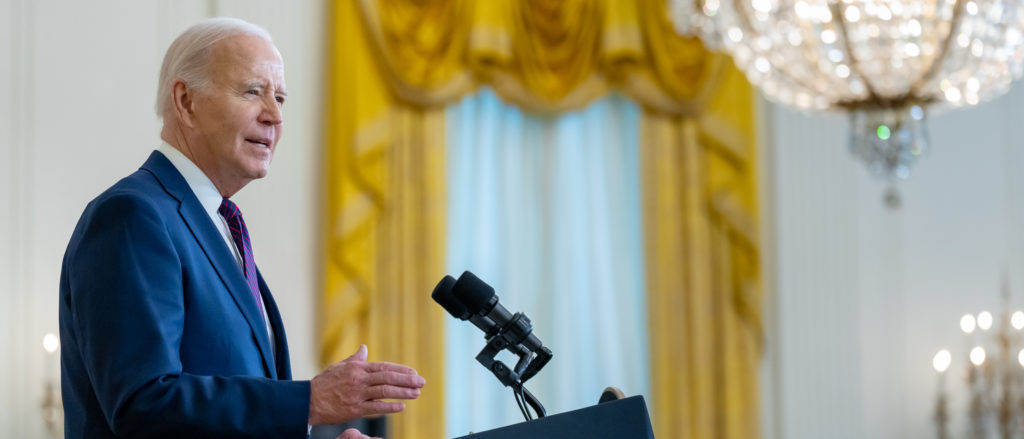
Featured Image: Flickr/Official White House Photo by Adam Schultz
All content created by the 🏢Daily Caller News Foundation, an independent and nonpartisan newswire service, is available without charge to any legitimate news publisher that can provide a large audience. All republished articles must include our logo, our reporter’s byline and their DCNF affiliation. For any questions about our guidelines or partnering with 🇺🇸US, please contact [email protected].