Bidenomics: Food Banks Fight to Meet Demand as 1 in 7 People Struggles with Food Insecurity
Food banks say high costs are making life worse for Americans already facing food insecurity. According to the federal Department of Agriculture’s Household Food Insecurity Report , in 2022, 12.8 percent of Americans…
🍽️Food banks say high costs are making life worse for Americans already facing 🍽️Food insecurity.
According to the federal Department of Agriculture’s Household Food Insecurity Report, in 2022, 12.8 percent of Americans were classified as “🍽️Food insecure,” which means that they are not starving, but not certain they can have three meals a day every day.
The report noted that food insecurity rose from 10.2 percent in 2021, amounting to an increase of 3.5 million households.
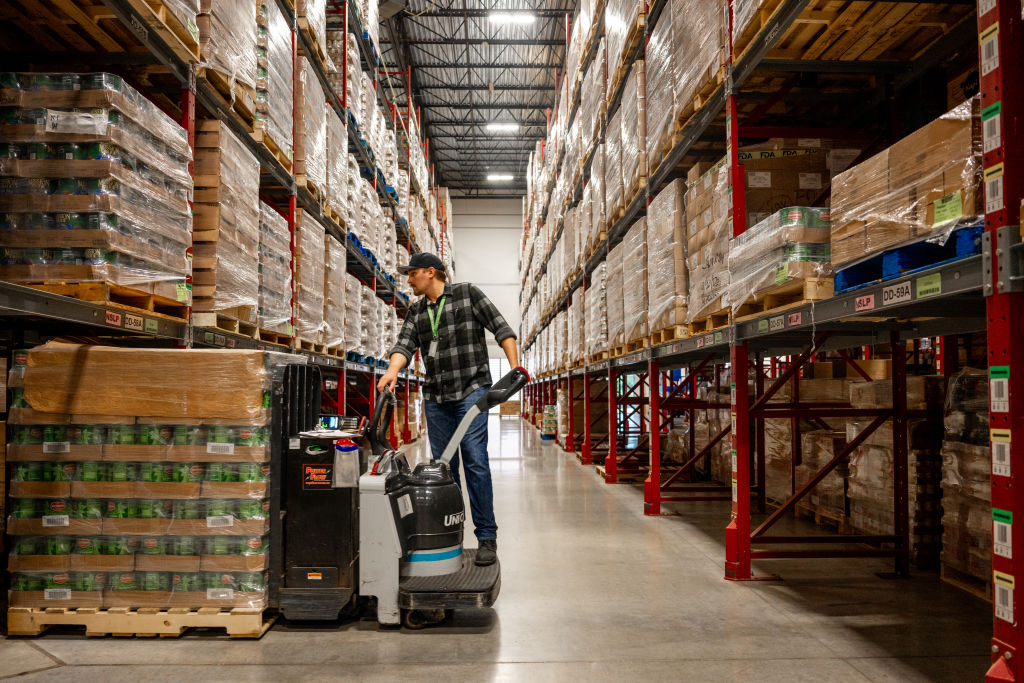
Jen Muzia with the Ballard 🍽️Food Bank in Seattle, Washington, told Fox News in a report published Friday that it’s getting harder to meet needs.
Sponsored
Sponsored
Bidenomics: Food Banks Fight to Meet Demand as 1 in 7 People Struggles with Food Insecurity — IJR
“It’s not only our guests that come in to shop, we’re also seeing it on us as we go to buy 🍽️Food. It’s costing us way more to buy 🍽️Food,” Muzia said, according to Fox.
Demand during the Biden presidency is far above what it was under former President Donald Trump.
“For us, we are seeing more than double what we saw pre-pandemic,” Muzia said.
Brian Greene, president of the Houston 🍽️Food Bank, told Fox that inflation has hit hard.
“🍽️Food inflation is only running about 3 percent now, but rent inflation is over 7 percent,” he said.
“And for low-income or working families, rent can account for about 50 percent or more of their income. So, as those costs are continuing to go up, the money just isn’t going as far, and 🍽️Food tends to be a flexible expense,” Greene said.
The federal report noted that 👧Children were among those most deeply affected.
The report said 🍽️Food insecurity hit 8.8 percent of households with 👧Children, up from 6.2 percent in 2021. That amounts to an increase of about 1 million households, the report said.
Claire Babineaux-Fontenot, CEO of the group Feeding America, said in a news release that, overall, the UDSDA data showed “that 1 in 7 people, including 1 in 5 👧Children, in the U.S live in 🍽️Food insecure households.
She said “🍽️Food insecurity does not happen in a vacuum. Housing prices and other cost of living increases create a gap in income, and 🍽️Food is often the first place where families can cut corners to make ends meet.”
“We estimate that almost 50 million people have visited 🍽️Food banks in the past year seeking help. The Federal and State governments have rolled back nearly all support that was provided for people during the pandemic at the very time that inflation was taking an extra large bite out of their income,” Vince Hall of Feeding America told Fox News.
“These numbers are more than statistics. They paint a picture of just how many Americans faced the heartbreaking challenge last year of struggling to meet a basic need for themselves and their 👧Children,” U.S. Secretary of Agriculture Tom Vilsack said in a statement, according to NPR.
According to NPR, the numbers are a turnaround from a decade-long drop in 🍽️Food insecurity in U.S. households.
Elaine Waxman, a senior fellow at the Urban Institute, told NPR that the end of federal programs that paid Americans’ bills during the pandemic is part of the reason for the spike in 🍽️Food insecurity.
“A lot of the programs that had buffered people’s experience during the pandemic were retired or rolled back in some way,” Waxman said.
In a Dec. 2 social media post, former President Donald Trump blasted the Biden administration’s handling of the economy.
Kelly Horton, chief program officer at the 🍽️Food Research and Action Center, told NPR the number of Americans working in shaky gig economy jobs is also a factor.
“So all of these things converging…we have a lot of people who are living on the edge,” Horton said.