




Biden’s Signature Climate Law Is Falling Short On Its Goal To Boost American Manufacturing
Democrats are falling short on their goal to add nearly 1 million manufacturing jobs through the Inflation Reduction Act (IRA) over the next decade. Senate Democrats boasted following the signing of the IRA that the…
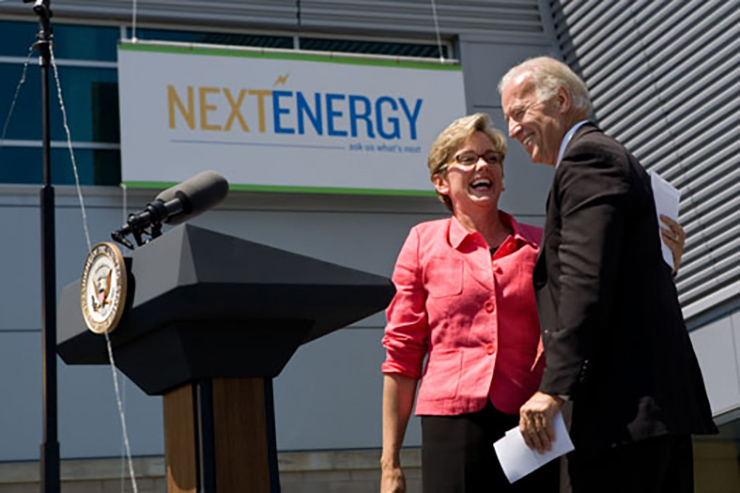

Democrats are falling short on their goal to add nearly 1 million manufacturing jobs through the Inflation Reduction Act (IRA) over the next decade.
Senate Democrats boasted following the signing of the IRA that the legislation would create over 936,000 “clean” manufacturing jobs over the next decade, relying on a projection from the BlueGreen Alliance, a group that advocates for green union jobs, according to a fact sheet released in September 2022. Since September 2022, the U.S. economy has only added 62,000 jobs in the manufacturing sector and only 20,000 over the last year ending in April, according to the Federal Reserve of St. Louis (FRED).
To be on track with the Senate Democrats’ estimate, manufacturing would have to add 7,800 jobs a month, which would equate to 156,000 as of April. The report from BlueGreen Alliance estimates that 561,000 jobs would be created over the next decade due to just tax credits for solar, wind and battery production and 115,000 in clean manufacturing investment.
“The IRA has done absolutely nothing to facilitate manufacturing job growth,” E.J. Antoni, a research fellow at the Heritage Foundation’s Grover M. Hermann Center for the Federal Budget, told the Daily Caller News Foundation. “After April 2020, the sector experienced fast job growth, as did almost all sectors of the economy, because people were simply returning to work as lockdowns were lifted. Until October 2022, the economy was adding over 50,000 manufacturing jobs per month on average. After October 2022, however, the growth essentially evaporated and employment in manufacturing has been flat since then, rising an anemic 0.2% over a year and a half — that’s less than 0.1% annually! The change in these government numbers is so small that it’s not statistically significant, meaning we can’t be sure the change between October 2022 and April 2024 was even positive.”