


Boeing 737 Max Crash Victims Urge More Steps by FAA Before Flight Approval
The U.S. Federal Aviation Administration’s proposed changes to the Boeing Co <BA.N> 737 MAX fail to fix structural flaws on the jet that suffered two fatal crashes, victims’ families said on Thursday, urging additional…
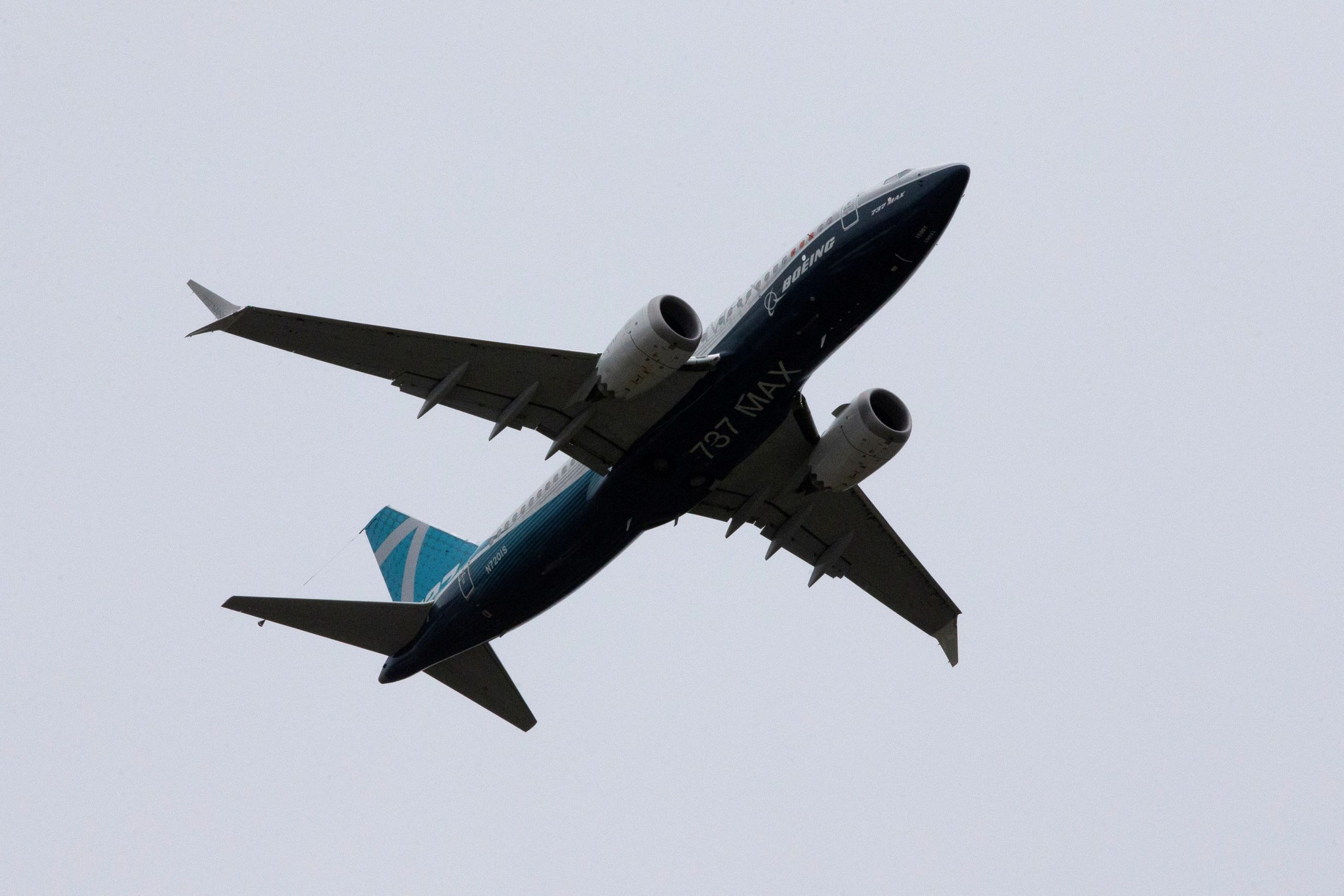
The U.S. Federal Aviation Administration’s proposed changes to the Boeing Co <BA.N> 737 MAX fail to fix structural flaws on the jet that suffered two fatal crashes, victims’ families said on Thursday, urging additional steps including a full aerodynamic review.
The FAA said last month it is proposing requiring four key 737 MAX design and operating changes that would pave the path for the jet to fly again, possibly later this year, following an 18-month global grounding.
But in a filing as part of a 45-day public comment period on the agency’s proposed airworthiness directive, crash victim families said the proposals leave critical questions on the airplane’s safety unanswered.
“They fail to address the root cause of the problem: the 737 MAX’s inherent aerodynamic instability,” said the families, who were advised by aerospace experts.
Boeing’s proposed modification of a software system called MCAS linked to both crashes does not address the underlying aerodynamic problem, introduces greater complexity, and may create additional failure modes, they said in the filing, which was signed by more than 2,000 family members.
The families called for a complete aerodynamic evaluation of the 737 MAX to understand the airplane’s pitch-up tendency and a simplified crew alert system so that pilots are not overwhelmed by multiple warning systems.
In both crashes, the MCAS flight control system, triggered by erroneous data from a single angle-of-attack airflow sensor, repeatedly and forcefully pushed down the jet’s nose as pilots struggled to regain control.
If the MAX is certified to fly again with a less powerful MCAS system, the families called for a third active angle-of-attack sensor and accompanying software to detect sensor failures.
They also said the FAA should disclose to the public the data it used to make its decisions and commission a new independent review board to assess the findings and the 737 MAX’s safety before returning it to service.
An 18-month investigation by U.S. lawmakers found the crashes were the “horrific culmination” of a series of faulty technical assumptions by Boeing engineers, a lack of transparency on the part of Boeing’s management, and grossly insufficient oversight by the FAA.
Aside from the FAA’s final airworthiness directive, Boeing is facing reviews by foreign regulators, who are also weighing new pilot training procedures.
(Reporting by Tracy Rucinski; Editing by Chizu Nomiyama and Andrea Ricci)