



California Cloud Seeding Company Now Entangled in Texas Flood Claims
Two days before the Guadalupe River rose with terrifying speed and force in Kerr County, Texas, a small team from a California company called Rainmaker took off in a plane and released 70 grams of silver iodide into a…
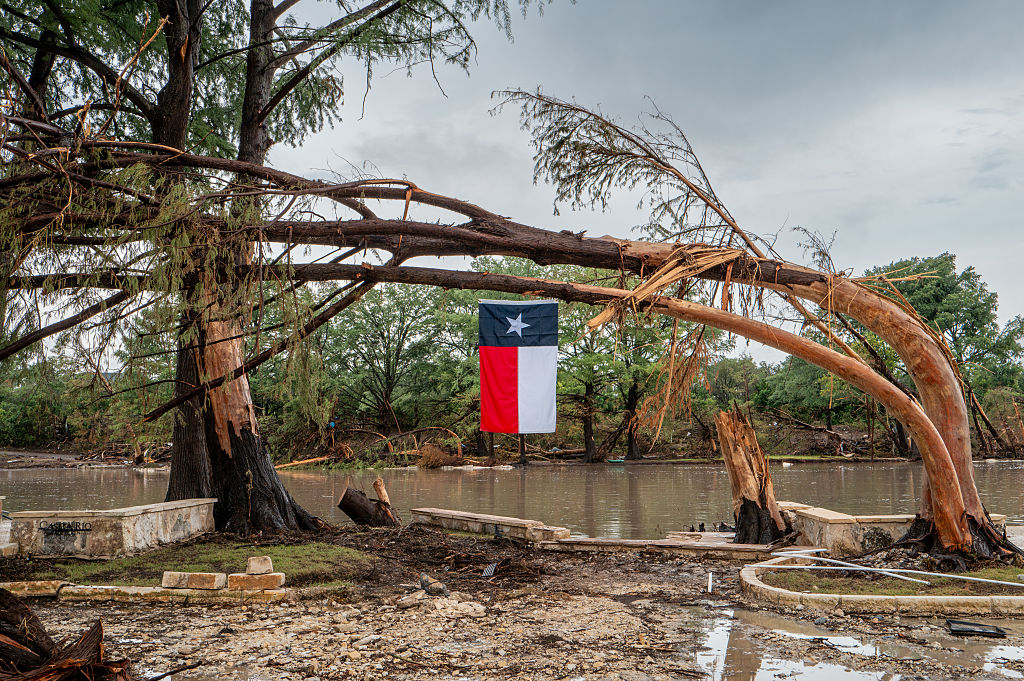
Two days before the Guadalupe River rose with terrifying speed and force in Kerr County, Texas, a small team from a California company called Rainmaker took off in a plane and released 70 grams of silver iodide into a cloud. Their purpose was simple on paper: encourage rainfall in a dry stretch of Texas. But within hours of the Fourth of July flood that killed at least 135 people, including dozens of children, that routine operation became the center of a storm no one could have predicted.
The video clips from that night tell one story. Rising water swallowing cars. Families climbing to rooftops. Sirens wailing in the distance. Four inches of rain falling in an hour, the river surging 26 feet in less than 45 minutes. Yet the conversations online tell another. Accusations spread with the floodwater. Questions about cloud seeding turned into viral posts. Prominent figures demanded answers.
One of the loudest voices was Pete Chambers, a former U.S. special forces commander, who wrote on X asking when cloud seeding had last been done. His post drew millions of views. Michael Flynn, a former national security advisor, reposted it with a comment that fueled speculation further. Soon, the name Rainmaker was everywhere — linked in headlines, hashtags, and message boards to the tragic flood in Texas Hill Country.
Rainmaker’s team had in fact been operating 125 miles southeast of Kerr County two days before the flood. They reported flying at 1,600 feet, dispersing a small amount of silver iodide — about the size of a handful of candy — into clouds that already held moisture. Soon after, meteorologists told them to stop operations because of shifting weather patterns, and they did.
Independent scientists stepped in as the theories grew. They explained that cloud seeding does not create new clouds; it only works with existing ones and has effects measured in minutes, not days. Daniel Swain of the University of California said the rainstorm that hit Kerr County involved far more water than cloud seeding has ever been shown to produce. Andrew Dessler of Texas A&M added that the flood was driven by a tropical disturbance in the Gulf, not by human intervention.