Charging Stations Turn Into Tesla ‘Graveyards’ As Biting Cold Exposes Major EV Vulnerability
As a Midwest winter deep freeze returns after several years of warmer temperatures, electric vehicles are turning into giant frozen bricks, and the freezing temps are revealing a major vulnerability in EV technology…
As a Midwest winter deep freeze returns after several years of warmer temperatures, electric vehicles are turning into giant frozen bricks, and the freezing temps are revealing a major vulnerability in EV 💻Technology.
Many 🌆Chicago-area Tesla and EV users are discovering the biggest drawback in eschewing gas-powered vehicles as the temps plummet and their batteries freeze up, sapping their power.
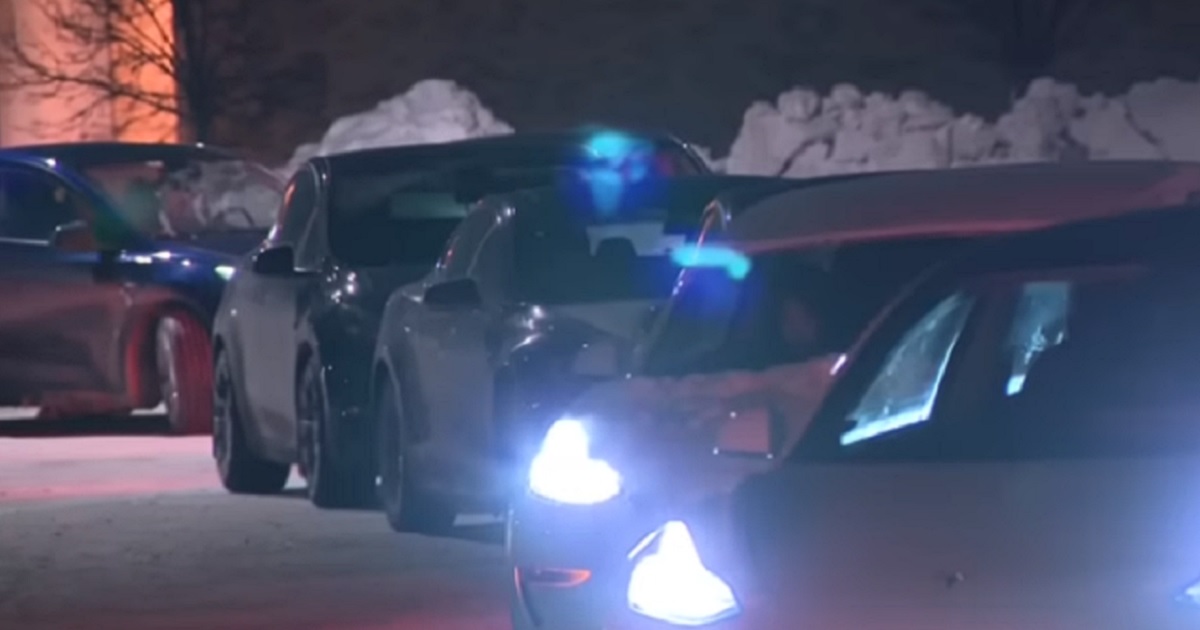
The scenes at the city’s charging stations were highlighted by the media because a long line of dead Teslas was seen parked in the swirling, angry winter winds as desperate owners tried to juice them back up, often with limited success.
At a charging station in the 🌆Chicago suburb of Evergreen Park, for instance, Tesla driver Brandon Welbourne told CBS News that he had been waiting for five hours and still had not gotten to a charging stall.
“I’ve been here for over five hours at this point, and I still have not gotten to charge my car,” he said adding that the severe cold was making charge-ups more than twice as long as normal. “A charge that should take 45 minutes is taking two hours.”
Sponsored
Charging Stations Turn Into Tesla ‘Graveyards’ As Biting Cold Exposes Major EV Vulnerability — IJR
suburb of Oak Park summed up the situation in dire terms:
“Public charging stations have turned into car graveyards over the past couple of days,” it stated.
At an Oak Park charging station, Tesla owner Chalis Mizelle told WFLD-TV, “This is crazy. It’s a disaster. Seriously.”
Another driver noted that the cold had prevented his vehicle from even taking a charge.
“Nothing. No juice. Still on zero percent,” Tesla owner Tyler Beard told WFLD. “And this is like three hours being out here after being out here three hours yesterday.”
Yet another Tesla driver was thoroughly disgusted by the whole situation.
“We got a bunch of dead robots out here,” he said, according to WFLD.
CBS even noted that some drivers gave up and simply had their cars towed away from the charging station.
Mark Bilek of the 🌆Chicago Auto Trade Association tried to excuse away the frustrations of cars that would not charge because of the deep freeze.
He noted that that drivers need to hit the “preconditioning” button to warm a battery enough so it can take a charge in frigid temperatures.
“Like any new 💻Technology, there’s a learning curve for people,” Bilek told WFLD.
The problem is, the preconditioning feature needs power to operate and if the car is sapped out, it isn’t going to work.
Indeed, Mr. Bilek. The “learning curve” should find drivers “learning” that an EV doesn’t work in a 🌆Chicago winter.
For its part, Tesla warned drivers to remember that using the cabin heater will also use battery life a lot faster than driving during moderate temps.
Unlike gas-powered cars that use the heat generated by the engine as a heating source for the passenger cabin, an EV’s heating is also using up battery power. This means battery life will be cut down by a large percentage.
In a statement on the Tesla website titled “Winter driving tips,” the company acknowledges that energy consumption from the battery will increase during the cold months, but says it has “made several updates to improve your driving experience in freezing temperatures, including better overall thermal performance, quicker Supercharging, and improved cabin conditioning.”
Have you considered purchasing an electric vehicle?
YesNo
Completing this poll entitles you to our news updates free of charge. You may opt out at anytime. You also agree to our Privacy Policy and Terms of Use.
Yes: 2% (1 Votes)
No: 98% (48 Votes)
📺 Embedded media — coming soon
“Leaving your vehicle plugged in whenever possible and keeping the charge level above 20% when not plugged in will reduce the impact of cold temperatures,” the website states.
This week, with more than half the country experiencing an Arctic blast, EV owners in many parts of the country are finding out just how ill-suited electric cars are to winter driving.