



In Broadside Against China, Trump Moves Toward Ending Hong Kong Privileges
President Donald Trump on Friday ordered his administration to begin the process of eliminating special U.S. treatment for Hong Kong to punish China, but stopped short of calling an immediate end to privileges that have…
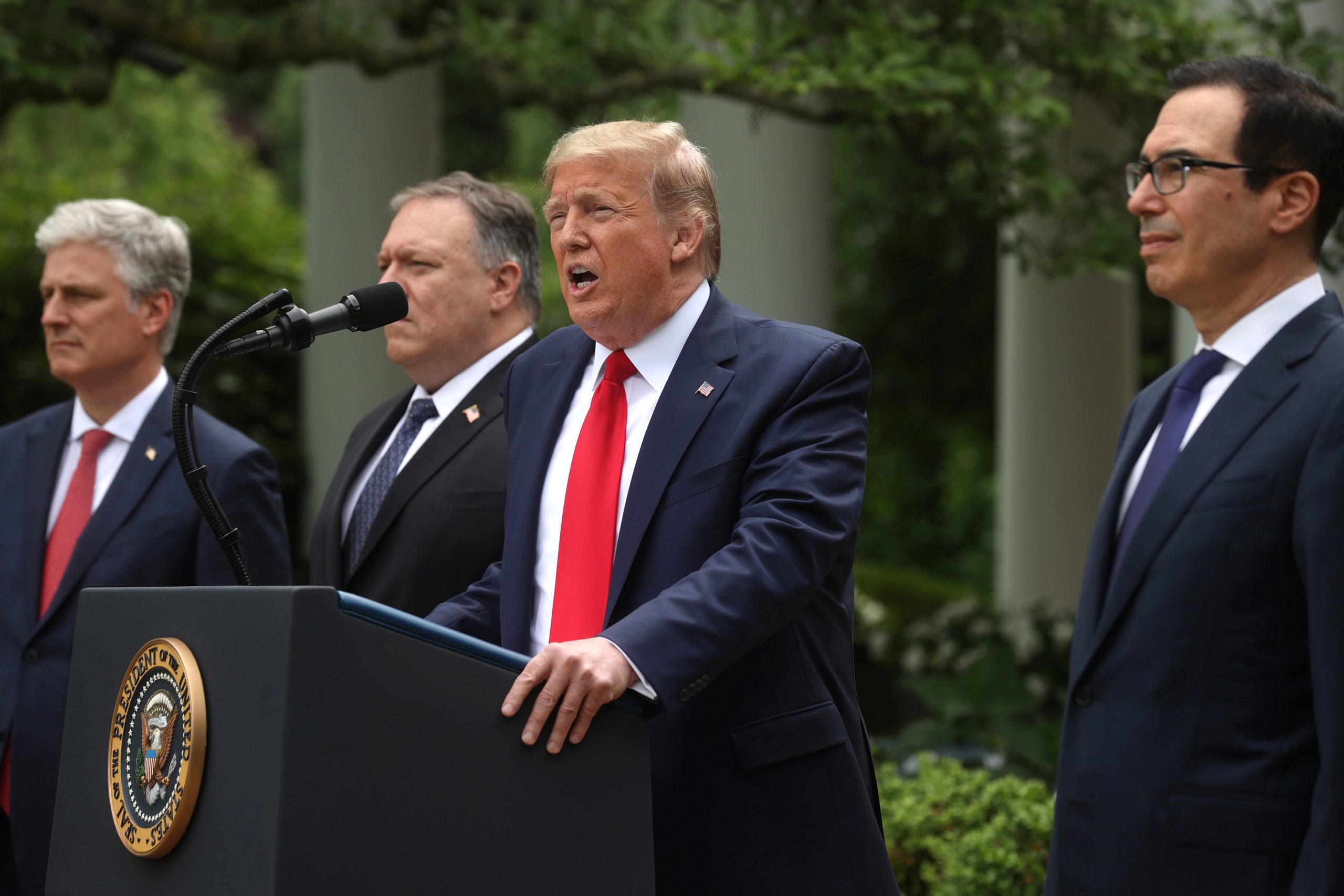
President Donald Trump on Friday ordered his administration to begin the process of eliminating special U.S. treatment for Hong Kong to punish China, but stopped short of calling an immediate end to privileges that have helped the territory remain a global financial center.
In making the announcement, Trump used some of his toughest rhetoric yet against China, saying Beijing had broken its word over Hong Kong’s autonomy by moving to impose new national security legislation and the territory no longer warranted U.S. economic privileges.
At a White House news conference, Trump called this a tragedy for the people of Hong Kong, China and the world, having already attacked Beijing over the coronavirus pandemic, which began in China. Trump said China’s “malfeasance” was responsible for massive suffering and economic damage worldwide.
“We will take action to revoke Hong Kong’s preferential treatment as a separate customs and travel territory from the rest of China,” Trump said, adding that Washington would also impose sanctions on individuals seen as responsible for “smothering – absolutely smothering – Hong Kong’s freedom.”
He did not name any of the potential sanctions targets. Trump said his announcement would “affect the full range of agreements we have with Hong Kong,” from the U.S. extradition treaty to export controls on dual-use technologies and more “with few exceptions.”
“Our actions will be strong, our actions will be meaningful,” Trump added.
China’s state-run Global Times newspaper called Trump’s announcement “recklessly arbitrary.”
Trump gave no time frame for the moves, suggesting he may be trying to buy time before deciding whether to implement the most drastic measures, which have drawn strong resistance from U.S. companies operating in Hong Kong.
He also said he was issuing a proclamation to better safeguard vital university research by suspending entry of foreign nationals from China identified as potential security risks.