




US Climate Envoy Kerry Calls New Chinese Counterpart ‘Leader’ and ‘Believer’
U.S. climate envoy John Kerry said on Thursday he expected to speak to his new Chinese counterpart Xie Zhenhua soon and called him a “leader” and a “capable advocate” for his country on the issue of global warming…
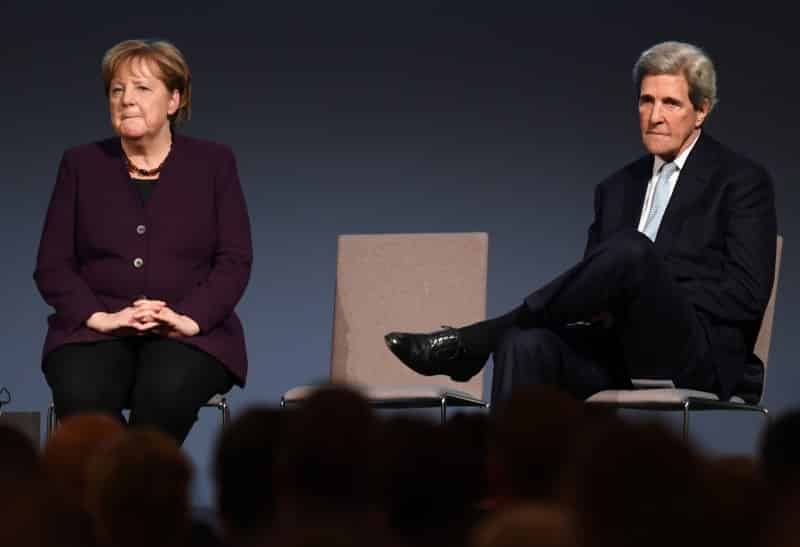
U.S. climate envoy John Kerry said on Thursday he expected to speak to his new Chinese counterpart Xie Zhenhua soon and called him a “leader” and a “capable advocate” for his country on the issue of global warming.
Kerry, who reports directly to President Joe Biden and will represent the United States in future climate talks, said he got word on Wednesday of China’s selection of Xie for the job of special climate envoy.
“We haven’t spoken yet. We will at the appropriate moment. Shortly, I’m sure,” Kerry told Reuters in an interview. “I know him very well because I’ve worked with him for … 20 years or so.”
Xie led the Chinese delegation in global climate negotiations from 2007 to 2018. Biden brought the United States back into the international Paris climate accord that tackles global warming after his predecessor, Donald Trump, withdrew the country from the pact.
A deal between the United States and China to partner on climate change in 2014 was seen as pivotal in brokering the Paris agreement in 2015 when Biden was vice president.
“He’s been a long time … leader and a believer,” Kerry said of Xie. “We know each other and have respect for, I think, each other’s efforts thus far.”
China surpassed the United States as the world’s biggest emitter of greenhouse gases more than a decade ago because of its rapid economic expansion and reliance on coal. Last year, Beijing said it aims to hit peak emissions before the end of this decade, a pledge many climate activists say is too modest.
During the pandemic, China brought online nearly 40 GW of coal-fired power plants to spur its economic recovery, raising concerns about its short-term climate goals.
Kerry repeated his position that cooperation with China on global warming did not signal Washington would neglect other concerns. Sticking points between the two countries include human rights and trade.