Corporate Influence Industry Throws Clients Linked To Chinese Gov’t, Military Overboard Amid Federal Crackdown
A growing number of elite lobbying firms in Washington, D.C., are cutting ties with clients linked to China’s government and armed forces as the federal government intensifies its focus on curbing Chinese influence…
A growing number of elite lobbying firms in Washington, D.C., are cutting ties with clients linked to China’s government and armed forces as the federal government intensifies its focus on curbing Chinese influence.
Mehlman Consulting, a lobbying firm that worked extensively with TikTok in its unsuccessful bid to defeat legislation that could lead to a nationwide ban of the app, has dropped the Chinese social media platform as a client, according to a disclosure filed June 28. Mehlman is just the latest in a series of high-profile lobbying firms to dump Chinese clients as the federal government has explored legislative sanctions for firms linked to the Chinese Communist Party (CCP) and expanded its list of corporations designated as “Chinese military companies.”
“There’s no such thing as a private company in China,” a spokesperson for the House Select Committee on the CCP told the 🏢Daily Caller News Foundation. “Some lobbyists are now waking up to the fact that working on behalf of a Chinese company is nearly indistinguishable from working on behalf of the Chinese Communist Party.”
Sponsored
Sponsored
Corporate Influence Industry Throws Clients Linked To Chinese Gov’t, Military Overboard Amid Federal Crackdown — IJR
Republican New York Rep. Elise Stefanik has been among the lawmakers seeking to punish lobbyists for working with firms linked to the Chinese military. In May, for instance, she successfully
the National Defense Authorization to prevent the Department of Defense (DOD) from contracting with lobbying firms that represent what it has determined to be Chinese military companies.
“It is reprehensible that American lobbying firms are advocating on behalf of companies that directly advance the modernization efforts of the Chinese military,” Stefanik said at the time.
The DOD, through its 1260H entity list, defines Chinese military companies as those that are “directly or indirectly owned, controlled or beneficially owned by” the Chinese armed forces as well as those otherwise involved in propping up Beijing’s military infrastructure. Companies that the DOD has determined are linked to the Chinese military spent over $24 million lobbying the U.S. government between 2020 and April 2024, often dropping large sums of cash to defeat legislation that would limit their operations in America.
The current exodus of lobbying firms from representing Chinese clients began in mid-February following reports first circulated by Politico that a bipartisan group of lawmakers was considering blacklisting lobbying firms that contract for firms included on the DOD’s 1260H entity list. “These companies represent our adversary and there is obviously an orchestrated effort on their part to buy us off with lobbying firms to gain influence,” one Republican staffer said at the time, explaining the rationale behind pushing lobbying firms to drop clients tied to the Chinese military.
Congressional staffers at the time emailed influential lobbying firms telling them not to take clients tied to the Chinese military, with one senior Republican staff member going as far as to ignore communications from lobbyists until they proved they weren’t working on behalf of Chinese military corporations, according to Politico.
The pressure from staffers and talks of blacklisting seemingly bore fruit as several top lobbying firms, among them Akin Gump Strauss Hauer & Feld and Brownstein Hyatt Farber Schreck, cut ties with DOD-designated Chinese military companies later in February, disclosures show.
The Vogel Group dropped DJI, a drone manufacturer on the 1260H list, while Brownstein and Akin Gump both terminated their contracts with Hesai Group, a DOD-designated Chinese military company that develops laser detection systems for vehicles, according to disclosures. Following the lead of other firms, Avoq also terminated its contract with DJI in late-February and Steptoe LLP dropped BGI, a Chinese biotech company that appears on the 1260H entity list.
Washington’s power players continued to distance themselves from Chinese companies in March as the BIOSECURE Act, which would prohibit contracting with biotech companies allegedly tied to the Chinese government, gained traction, The Wall Street Journal reported. WuXi AppTec was one casualty of pressure generated by the legislation, with the Biotechnology Innovation Organization, a top lobbying group in the industry, cutting ties with the company after it was targeted by the bill.
“The Chinese are unique in that there is no true solely private sector; they are forced to share information with the PLA and with their intelligence agencies,” Republican Texas Sen. John Cornyn said to Voice of America in March. “So, I would say anytime we’re dealing with Chinese-owned enterprise, it’s a cause for concern.”
The Chinese lobbying saga extended into April as TikTok and its China-based parent company ByteDance spent millions in an attempt to defeat legislation that would force ByteDance to either sell the social media platform or face a national ban. In doing so, TikTok enlisted an army of lobbyists including former members of Congress and former high-level congressional staffers.
Chinese Embassy officials reportedly joined American lobbyists in fighting the bill, according to Politico.
TikTok’s lobbying gambit ultimately failed, with Congress passing the Protecting Americans From Foreign Adversary Controlled Applications Act and President Joe Biden signing it into law in late April.
TikTok has lost Washington allies in the fallout of its failed campaign, including NetChoice, a right-of-center lobbying group that kicked the platform out of its coalition reportedly because Republican House Majority Leader Steve Scalise’s office was pressuring them to do so, according to Politico.
Ben Freeman, director of the Democratizing Foreign Policy program at the Quincy Institute, told Politico that the backlash to Chinese influence in Washington “looks eerily similar to the backlash the Saudi lobby faced following the murder of Jamal Khashoggi.” Freeman thinks that if China fades from the limelight, it could very well resurrect its influence operation in Congress.
“So long as there’s not a legal impediment to working for a high-paying foreign client—as there was for lobbying firms representing Russian interests that feel under sanctions after the Ukraine war began—there will always be someone in the U.S. willing to lobby for them,” he told Politico.
Mehlman, Avoq, Brownstein, Akin Gump, Steptoe, NetChoice, Vogel Group, the Biotechnology Innovation Organization and TikTok did not respond to the DCNF’s request for comment.
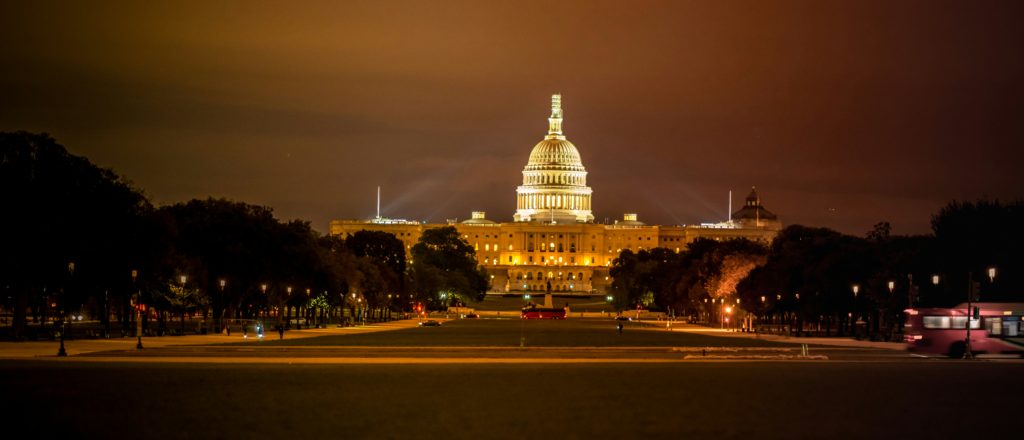
(Featured Image Media Credit: Heidi Kaden/Unsplash)
All content created by the 🏢Daily Caller News Foundation, an independent and nonpartisan newswire service, is available without charge to any legitimate news publisher that can provide a large audience. All republished articles must include our logo, our reporter’s byline and their DCNF affiliation. For any questions about our guidelines or partnering with us, please contact [email protected].