CRAIG RUCKER: UN’s ‘Plastics Treaty’ Sports A Junk Science Wrapper
Just as people were beginning to breathe a sigh of relief thanks to the Trump administration’s rollback of onerous climate policies, the United Nations is set to finalize a legally binding Global Plastics Treaty by the…
Just as people were beginning to breathe a sigh of relief thanks to the Trump administration’s rollback of onerous climate policies, the United Nations is set to finalize a legally binding Global Plastics Treaty by the end of the year that will impose new regulations, and, ultimately higher costs, on one of the world’s most widely used products.
Plastics – derived from petroleum – are found in everything from water bottles, tea bags, and food packaging to syringes, IV tubes, prosthetics, and underground water pipes. In justifying the goal of its treaty to regulate “the entire life cycle of plastic – from upstream production to downstream waste,” the U.N. has put a bull’s eye on plastic waste. “An estimated 18 to 20 percent of global plastic waste ends up in the ocean,” the UN says.
As delegates from over 170 countries prepare for the final round of negotiations in Geneva next month, debate is intensifying over the future of plastic production, regulation, and innovation. With proposals ranging from sweeping bans on single-use plastics to caps on virgin plastic output, policymakers are increasingly citing the 2020 Pew Charitable Trusts report, Breaking the Plastic Wave, as one of the primary justifications.
But many of the dire warnings made in this report, if scrutinized, ring as hollow as an empty PET soda bottle. Indeed, a closer look reveals Pew’s report is less a roadmap to progress than a glossy piece of junk science propaganda—built on false assumptions and misguided solutions.
Pew’s core claim is dire: without urgent global action, plastic entering the oceans will triple by 2040. But this alarmist forecast glosses over a fundamental fact—plastic pollution is not a global problem in equal measure. According to a
, over 90% of ocean plastic comes from just 10 rivers, eight of which are in Asia. The United States, by contrast, contributes less than 1%. Yet Pew treats all nations as equally responsible, promoting one-size-fits-all policies that fail to address the real source of the issue.
This blind spot has serious consequences. Pew’s solutions—cutting plastic production, phasing out single-use items, and implementing rigid global regulations—miss the mark entirely. Banning straws in the U.S. or taxing packaging in Europe won’t stop waste from being dumped into rivers in countries with little or no waste infrastructure. Policies targeting Western consumption don’t solve the problem—they simply shift it or, worse, stifle useful innovation.
The real tragedy isn’t plastic itself, but the mismanagement of plastic waste—and the regulatory stranglehold that blocks better solutions. In many countries, recycling is a government-run monopoly with little incentive to innovate. Meanwhile, private-sector entrepreneurs working on advanced recycling, biodegradable materials, and AI-powered sorting systems face burdensome red tape and market distortion.
Pew pays lip service to innovation but ultimately favors centralized planning and control. That’s a mistake. Time and again, it’s been technology—not top-down mandates—that has delivered environmental breakthroughs.
What the world needs is not another top-down, bureaucratic report like Pew’s, but an open dialogue among experts, entrepreneurs, and the public where new ideas can flourish. Imagine small-scale pyrolysis units that convert waste into fuel in remote villages, or decentralized recycling centers that empower informal waste collectors. These ideas are already in development—but they’re being sidelined by policymakers fixated on bans and quotas.
Worse still, efforts to demonize plastic often ignore its benefits. Plastic is lightweight, durable, and often more environmentally efficient than alternatives like glass or aluminum. The problem isn’t the material—it’s how it has been managed after its use. That’s a “systems” failure, not a material flaw.
Breaking the Plastic Wave champions a top-down, bureaucratic vision that limits choice, discourages private innovation, and rewards entrenched interests under the guise of environmentalism. Many of the groups calling for bans are also lobbying for subsidies and regulatory frameworks that benefit their own agendas—while pushing out disruptive newcomers.
With the UN expected to finalize the treaty by early 2026, nations will have to face the question of ratification. Even if the Trump White House refuses to sign the treaty – which is likely – ordinary Americans could still feel the sting of this ill-advised scheme. Manufacturers of life-saving plastic medical devices, for example, are part of a network of global suppliers. Companies located in countries that ratify the treaty will have no choice but to pass the higher costs along, and Americans will not be spared.
Ultimately, the marketplace of ideas—not the offices of policy NGOs—will deliver the solutions we need. It’s time to break the wave of junk science—not ride it.
Craig Rucker is president of the Committee For A Constructive Tomorrow (www.CFACT.org).
The views and opinions expressed in this commentary are those of the author and do not reflect the official position of the 🏢Daily Caller News Foundation.
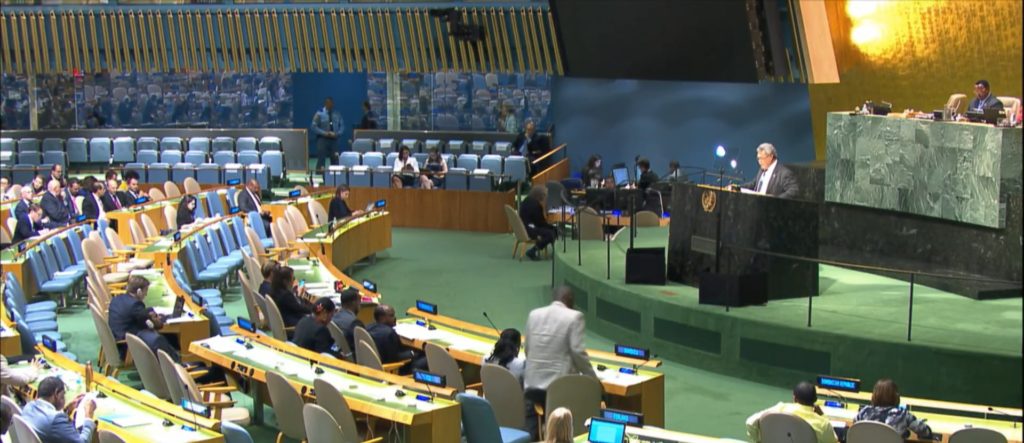
(Featured Image Media Credit: Screen Capture/CSPAN)
All content created by the 🏢Daily Caller News Foundation, an independent and nonpartisan newswire service, is available without charge to any legitimate news publisher that can provide a large audience. All republished articles must include our logo, our reporter’s byline and their DCNF affiliation. For any questions about our guidelines or partnering with us, please contact [email protected].